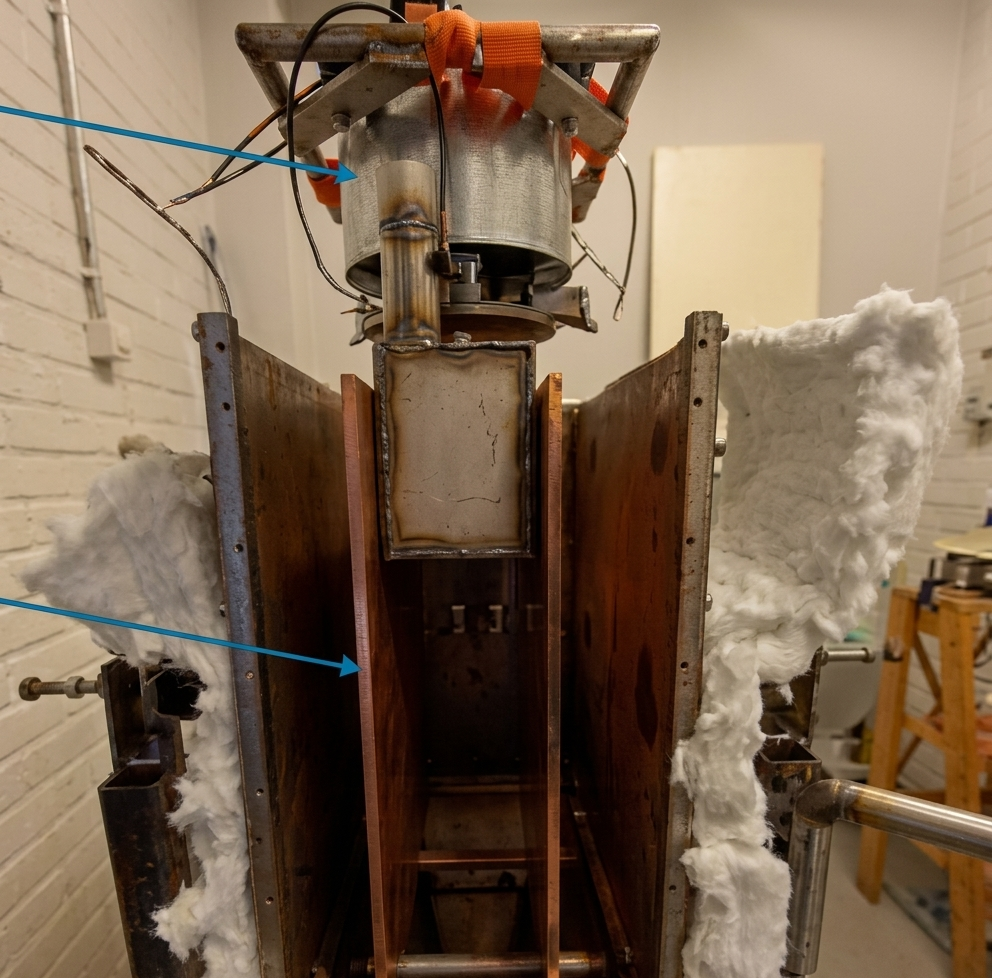
Aalto researchers are testing whether cheap materials can support thermal electricity storage
Researchers at Finland’s Aalto University have experimentally evaluated a Stirling engine-based Carnot battery prototype that uses sand as thermal energy storage. The concept targets one of the harder problems in energy systems: how to store electricity in forms that are inexpensive, scalable, and suitable for longer durations than many electrochemical batteries can readily provide.
A Carnot battery stores electricity as heat and later converts that heat back into electricity. In the Aalto team’s prototype, low-cost sand serves as the thermal storage medium, while a Stirling engine converts stored heat back into mechanical motion and then electricity. The approach belongs to a broader class of electricity-to-heat-to-electricity systems that are drawing attention as grids absorb more variable renewable generation.
The core appeal is straightforward. Sand is abundant and inexpensive, and thermal storage can in principle scale without depending on the same materials supply chains that shape lithium-ion batteries. If such systems can be engineered efficiently enough, they could become part of the long-duration storage mix needed to balance solar and wind output over time.
The prototype worked, but efficiency remains the major challenge
The researchers combined experimental and numerical evaluation of the Stirling engine-based Carnot battery, or SECB, to test how the prototype behaved under different conditions. Their reported result was mixed but useful: higher engine temperatures improved both power output and the duration of operation, showing that the basic conversion pathway functions as expected. At the same time, round-trip efficiency remained low.
According to the summary, the main reasons were thermal losses and limited heat transfer within the sand bed. Those are not minor engineering details. They strike at the heart of whether thermal batteries can become economically competitive as systems that return electricity to the grid, rather than simply storing heat for direct use.
That distinction matters because thermal storage is already easier to justify when the stored energy is used as heat. Once a system has to reconvert a significant share of that energy back into electricity, every stage of loss becomes more consequential. The Aalto result suggests the concept is technically plausible but still constrained by a familiar hurdle: moving and preserving heat efficiently enough to make the full cycle compelling.

Why Carnot batteries keep attracting interest
Despite these limits, Carnot batteries occupy an increasingly interesting niche. Energy systems with high shares of renewables need multiple forms of storage, not just fast-responding batteries for short balancing. They also need technologies that can absorb surplus electricity, hold it at lower cost over longer periods, and discharge when the grid needs it.
Thermal storage offers one route to that goal, especially when paired with simple or abundant materials. Sand has already attracted attention in other heat-storage designs because it is cheap, non-flammable, and easy to source. What the Stirling engine-based design adds is an attempt to complete the loop back to electrical output.
A Stirling engine is a closed-cycle heat engine that uses a permanent working gas such as air or another gas to generate mechanical motion from temperature differences. In theory, that makes it a natural candidate for extracting useful work from a stored thermal reservoir. In practice, the system still has to manage insulation, heat exchange, and conversion losses with enough discipline to avoid squandering the low-cost advantage of the storage medium.
The value of this result is that it is concrete
Energy storage concepts often circulate as simulations or high-level design proposals. What makes the Aalto work worth noting is that it advances the discussion through a built prototype and measured results. Even a low-efficiency demonstration can be valuable if it clarifies which losses dominate and what design changes matter most.
Here, the source points to two areas that would likely define the next stage of development. One is reducing thermal losses so the stored heat remains available long enough to justify the charge-discharge cycle. The other is improving heat transfer in the sand bed so the system can access stored energy more effectively. Both are design and materials problems, but both also shape the economic case.
If higher temperatures improve performance, then the system may benefit from configurations that better tolerate and exploit elevated operating conditions. But those gains have to be balanced against durability, system complexity, and cost. A thermal battery only becomes attractive at grid scale if its simplicity survives the engineering needed to raise its output.

Where this fits in the storage landscape
The Aalto prototype is unlikely to displace established battery systems anytime soon. Its low round-trip efficiency makes that clear. But that does not mean the concept is marginal. Storage markets are broadening, and technologies do not all need to solve the same problem. Some will be optimized for frequency response, others for multi-hour arbitrage, still others for industrial heat or seasonal balancing.
In that landscape, a sand-based Carnot battery could become relevant if it matures into a low-cost option for situations where cheap storage media and long duration matter more than peak efficiency. That is a difficult proposition, but not an implausible one if engineering improvements meaningfully reduce losses.
For now, the clearest takeaway is that the promise of sand-based thermal electricity storage remains real but unresolved. Aalto’s prototype shows the idea can work in principle. It also shows that making it work well is the harder and more important step.
This article is based on reporting by PV Magazine. Read the original article.
Originally published on pv-magazine.com




