A Cautionary Tale in Hydrogen Transit
The Orange County Transportation Authority (OCTA) is investing another $27.6 million in hydrogen infrastructure as it expands its fuel-cell bus fleet from 10 to 50 vehicles. At first glance, this seems like routine fleet growth—more buses require more fueling capacity. But OCTA's history reveals a more complex and cautionary story about the vulnerabilities of hydrogen as a transit fuel.
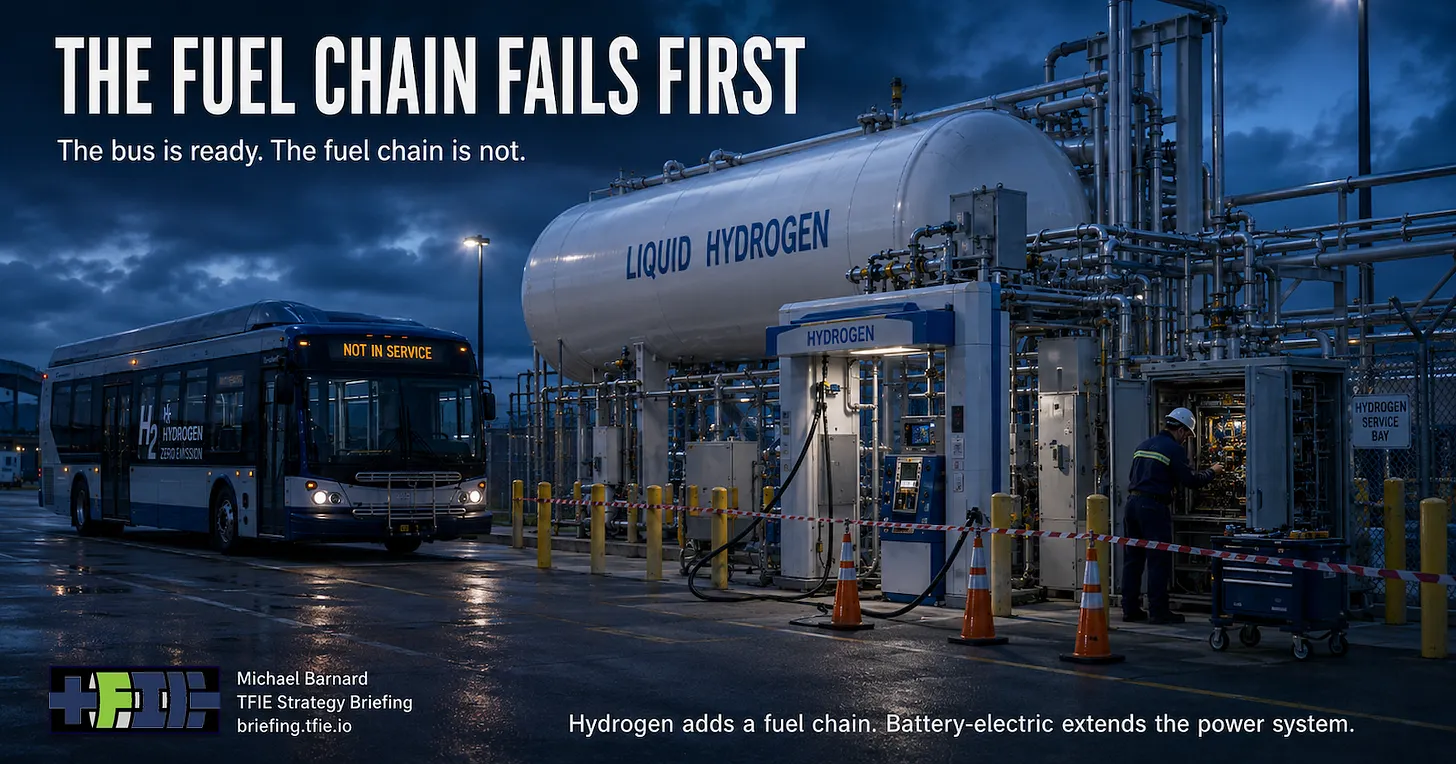
In 2020, OCTA opened a state-of-the-art hydrogen station at its Santa Ana depot, designed to support 40 to 50 buses daily. The station was a cornerstone of the agency's zero-emission bus strategy. However, in January 2026, the station became inoperable after OCTA and Air Products failed to reach a new commercial agreement for leased liquid-hydrogen equipment. Air Products removed its tank and vaporizers, leaving OCTA with a fleet of fuel-cell buses that still had years of service life but no way to fuel them at the depot.
The Operational Impact: A 95% Drop in Mileage
The consequences were immediate and severe. In 2024, OCTA's ten fuel-cell buses traveled 270,462 miles. By 2025, that number plummeted to just 14,232 miles—a staggering 95% decrease. The agency was forced to rely on an off-site commercial station and temporary mobile fueling, which proved inadequate for maintaining normal service levels.
This dramatic decline underscores a critical lesson: a fuel-cell bus is only as reliable as the entire fuel supply chain behind it. Unlike battery-electric buses, which can be charged using existing electrical infrastructure, hydrogen buses depend on a complex network of production, liquefaction, transport, storage, and dispensing—all of which must function seamlessly.

Battery-Electric vs. Hydrogen: OCTA's Own Comparison
OCTA also operates battery-electric buses, providing a natural comparison. The agency reported no lost bus deployments due to charging infrastructure unavailability. The charging infrastructure for its electric fleet cost approximately $6 million, a fraction of the investment needed for hydrogen. This real-world data offers valuable insights into the operational reliability and cost-effectiveness of the two zero-emission technologies.
While battery-electric buses have their own challenges, such as range and charging time, they benefit from a well-established and resilient electrical grid. Hydrogen, on the other hand, requires a highly specialized and fragile supply chain that can be disrupted by commercial disputes, equipment failures, or logistical issues.
The Hidden Complexity of Hydrogen Stations
The new $27.6 million contract, awarded for the Garden Grove facility, illustrates how much of a hydrogen "station" is actually fuel-system support. The contract bundles design and construction with facility modifications, hydrogen supply, operations, maintenance, and training for the opening period. This comprehensive approach is necessary because the agency is not merely installing a dispenser; it is securing a working fuel ecosystem.
Transit agencies need hydrogen that arrives every day, meets strict purity requirements, is affordable at the nozzle, and is genuinely low-carbon across its entire production and delivery lifecycle. The station is only the last visible part of a system that includes production facilities, compression or liquefaction plants, transport vehicles, storage tanks, and specialized maintenance crews. Any weakness in this chain can bring the entire operation to a halt.

A Broader Lesson for Hydrogen Adoption
OCTA's experience is a stark reminder that hydrogen transit is about much more than the bus. It is about building and maintaining a resilient fuel supply chain. The failure at OCTA was not due to the buses themselves—they remained mechanically sound—but to the commercial and logistical infrastructure around them.
As more transit agencies consider hydrogen fuel-cell buses, they must weigh the risks highlighted by OCTA's ordeal. The upfront costs are substantial, but the ongoing operational risks and dependencies may be even more significant. The agency's decision to invest another $27.6 million demonstrates a continued commitment to hydrogen, but it also raises questions about the long-term viability of such investments.
Conclusion: A Costly Lesson in Fuel Chain Resilience
OCTA's hydrogen bus program has become a case study in the fragility of hydrogen supply chains. The 95% drop in mileage, the commercial dispute with Air Products, and the need for a massive new investment all point to the same conclusion: hydrogen transit requires a level of infrastructure resilience that is difficult to achieve and maintain.
For now, OCTA is doubling down on hydrogen, but the path forward is fraught with challenges. The agency's experience serves as a warning to other transit authorities that the fuel chain is as important as the vehicle itself. As the world transitions to zero-emission transportation, the lessons from Orange County will resonate far beyond California.
This article is based on reporting by CleanTechnica. Read the original article.

Originally published on cleantechnica.com