NERC escalates concern over a new kind of grid instability
The North American Electric Reliability Corp. has issued a rare Level 3 alert, its highest warning level, after instances in which data centers unexpectedly dropped load or rapidly oscillated their electricity demand. For an electric system already bracing for fast-rising consumption, the message is direct: large computational loads are not just expanding demand forecasts, they are introducing immediate operational risk.
The alert requires certain grid entities to implement seven actions by Aug. 3. Transmission planners and operators, system planners, and balancing authorities are among the groups expected to respond. NERC says the required steps are meant to address the modeling, study, operation, protection, and control of computational loads, including artificial intelligence training facilities and cryptocurrency mining sites.
Why sudden load loss matters
Power systems are built around balance. Operators must continuously match generation and demand while maintaining frequency and stability. A large industrial load that suddenly disconnects, or one that swings consumption sharply up and down, can disrupt that balance in ways that conventional planning assumptions may not fully capture.
That is the crux of NERC’s warning. The reliability watchdog says grid participants generally lacked sufficient processes, procedures, or methods to address these emerging loads when it issued a Level 2 warning last year. The new Level 3 alert signals that the concern has moved from caution to mandatory response.

AI and crypto are changing load behavior, not just load size
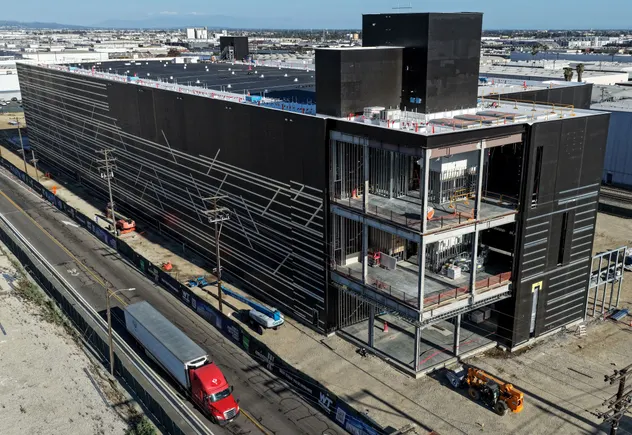
Much of the public discussion around data centers focuses on scale: how many gigawatts new campuses will require and how quickly utilities can serve them. NERC’s alert emphasizes a second problem. Computational loads may behave differently from many traditional customers, especially when clusters of servers or mining operations disconnect unexpectedly or respond to internal conditions in ways the broader grid cannot easily predict.
The organization’s recent long-term assessment projected that summer peak demand across the bulk power system could rise 24% over the next decade, with data centers accounting for most of the increase. That demand surge alone would be a major challenge. What NERC is now flagging is that the operational profile of these facilities can be as important as the megawatts they consume.
What the required actions are trying to fix
The Level 3 alert calls for more detailed data collection and better planning assumptions. Among the steps highlighted in the source report, transmission planners and planning coordinators are expected to develop and share detailed lists of modeling data, settings, and parameters needed from computational loads. Operators are then expected to reflect those requirements in interconnection standards.
The broader aim is to force the grid to stop treating large computational customers as a generic class of demand. Instead, planners want the information needed to understand minimum and maximum consumption, operating characteristics, and the ways these loads may respond during disturbances. That is the kind of engineering detail required to study grid performance realistically rather than abstractly.

A sign of how fast the power landscape is shifting
Level 3 alerts are unusual, and their use here underscores how quickly the electricity system is changing under pressure from digital infrastructure. AI training clusters and crypto mining sites can appear in markets faster than traditional large loads, and they may concentrate demand in places where utilities and operators are still adapting their tools and assumptions.
For regulators, utilities, and developers, the alert is also a warning against simplistic narratives. The issue is not only whether the grid can supply enough power to the next wave of data centers. It is whether the system can model, connect, and operate around those facilities safely once they are online.
NERC’s intervention makes that challenge harder to ignore. The grid is entering an era in which some of its fastest-growing customers are also among its least familiar. Mandatory corrective action suggests the industry has run out of time to treat that as a future problem.
This article is based on reporting by Utility Dive. Read the original article.
Originally published on utilitydive.com