ADB is betting on regional infrastructure rather than isolated national systems
The Asian Development Bank has unveiled a $70 billion plan aimed at strengthening energy and digital infrastructure across Asia and the Pacific by 2035, with a centerpiece effort to connect power systems across borders and move more renewable electricity through the region. The initiative marks a notable scale-up in ADB’s regional ambition, shifting attention from individual projects toward interconnected networks that can support energy trade, grid stability and digital growth.
At the center of the announcement is the Pan-Asia Power Grid Initiative, which seeks to link national and subregional electricity systems to enable cross-border renewable energy flows. ADB said it plans to raise $50 billion by 2035 for the power component alone, working with governments, utilities, development partners and the private sector. The bank intends to fund about half of that amount itself, with the rest expected to come through co-financing.
The strategy is notable not only for its size but for its orientation. Rather than focusing primarily on generation inside national boundaries, the plan emphasizes transmission, substations, storage and grid digitalization. It also supports renewable generation tied directly to electricity trade, including export-oriented projects, regional hubs and hybrid generation-storage systems.
What the initiative is supposed to deliver
ADB’s targets are expansive. By 2035, the bank says it wants to integrate around 20 gigawatts of renewable energy across borders and establish 22,000 circuit-kilometers of transmission lines. It also aims to improve energy access for 200 million people, create 840,000 jobs and reduce power-sector emissions in the region by 15%.
Those numbers should be read as program goals rather than guaranteed outcomes, but they illustrate the scale of the intervention being proposed. If even a substantial portion is achieved, the plan would help move the regional energy conversation beyond domestic renewable deployment toward the more complex challenge of making power systems work together. That is especially important in a geography where resource endowments, demand patterns and grid maturity vary sharply across countries.
Cross-border power trade can allow countries with abundant solar, wind or hydro resources to export electricity, while importers can diversify supply and reduce dependence on fossil fuels. But those benefits depend on physical interconnections, compatible standards, commercial arrangements and political trust. ADB is positioning itself as a convener and financier for that broader architecture.
Infrastructure is only part of the challenge
The bank has also set aside up to $10 million in technical assistance to help harmonize regulations, adopt common technical standards and prepare feasibility studies for major projects. That detail may be less eye-catching than the headline funding number, but it is crucial. Regional grids fail as policy projects before they fail as engineering projects. Without common rules and workable market structures, transmission assets alone do not create efficient electricity trade.
ADB’s statement reflects that reality. The initiative builds on existing subregional cooperation frameworks, including the South Asia Subregional Economic Cooperation platform, the Bay of Bengal Initiative, the ASEAN Power Grid and the Central Asia Regional Economic Cooperation Energy Strategy 2030. The bank is therefore not starting from scratch. Instead, it is trying to thicken and connect existing layers of regional collaboration.
That approach could make the plan more realistic, but it also means progress will depend on many governments moving in parallel. Cross-border energy systems require long time horizons and high institutional discipline. They are vulnerable to changes in domestic politics, utility finances, industrial policy and security perceptions. The financing challenge is large; the coordination challenge may be larger.
Why this matters for the energy transition
For Asia and the Pacific, the case for grid integration is strong. The region contains some of the world’s fastest-growing electricity demand, some of its largest renewable resource bases and some of its biggest infrastructure gaps. It also includes energy systems still heavily reliant on coal, imported fuels or isolated grids that cannot easily absorb variable renewable generation at scale.
Regional transmission can help solve several of those constraints at once. Larger, more connected systems can balance variable supply across time zones and climates, reduce curtailment and make storage investments more useful. They can also support countries that want to expand renewable power but lack sufficient domestic grid flexibility. If paired with digital infrastructure improvements, the result could be more responsive and better-coordinated electricity systems.
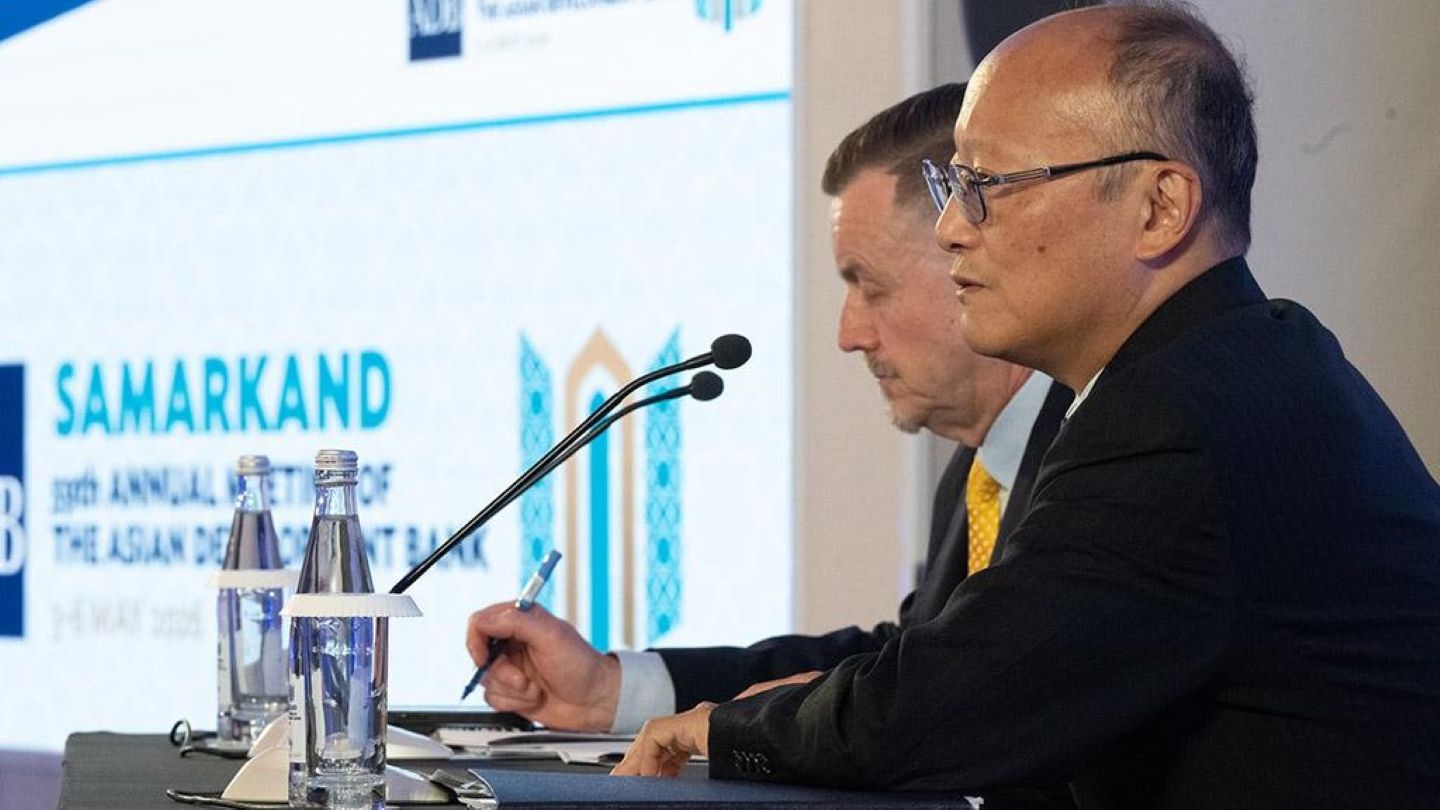
ADB president Masato Kanda framed the broader vision succinctly in the source text, arguing that energy and digital access will define the region’s future. That is a defensible read of the moment. Electrification, industrial competitiveness, AI deployment, connectivity and climate goals all increasingly depend on whether countries can build modern infrastructure fast enough and at sufficient scale.
A strategic signal as much as a funding package
The announcement is also a geopolitical signal. By backing regional energy trade and digital systems, ADB is trying to shape the terms of development in a part of the world where infrastructure competition is intense and strategic alignment often follows financing. A well-funded regional grid effort could influence how states think about energy security, industrial location and decarbonization pathways over the next decade.
The hard part, as always, starts after the announcement. Turning a 2035 vision into usable infrastructure will require bankable projects, consistent regulation and political durability across a diverse region. But the direction is clear. ADB is arguing that Asia’s next stage of growth will depend less on standalone national systems and more on shared networks capable of moving power, data and opportunity across borders.
That is an ambitious bet. It is also one increasingly hard to avoid.
This article is based on reporting by Energy Monitor. Read the original article.
Originally published on energymonitor.ai