Italy maps out its next big renewables round
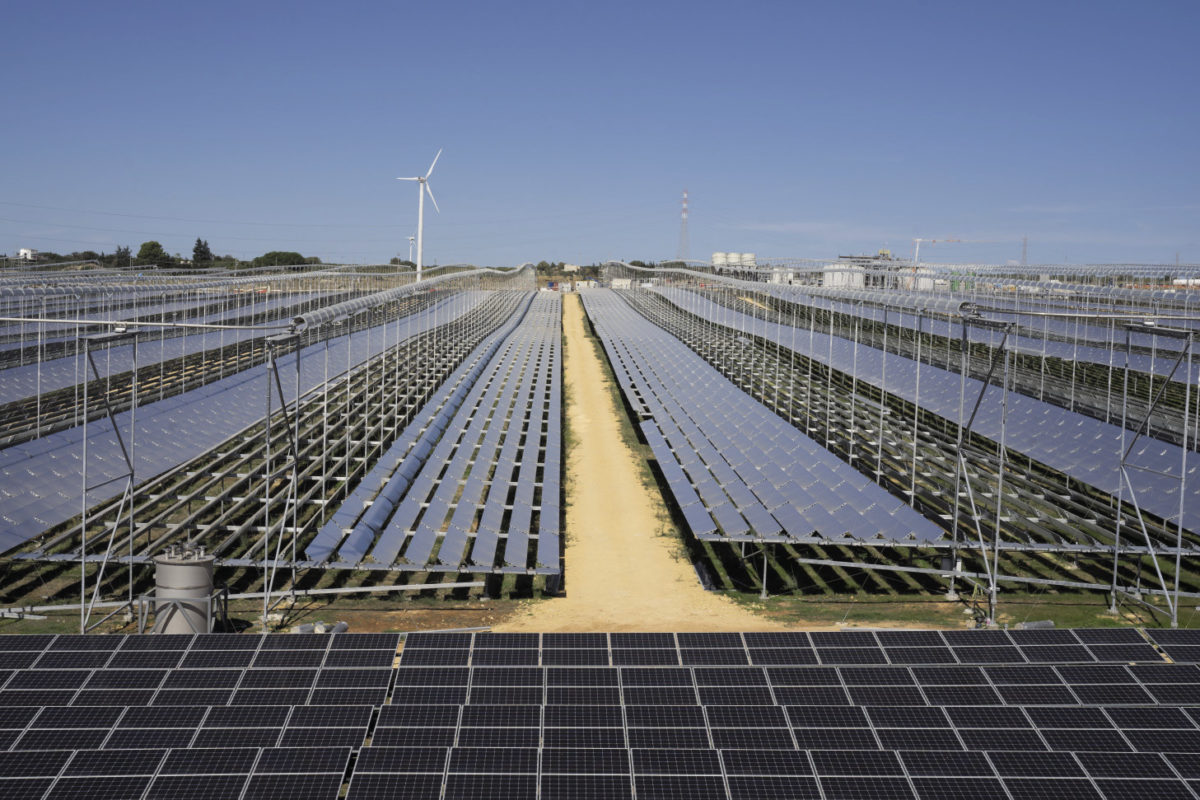
Italy is preparing a major new procurement cycle for renewable power, with state energy agency Gestore dei servizi energetici planning to allocate 10 gigawatts of solar capacity and 16 gigawatts of wind power through FerX auctions scheduled for 2026 and 2027. The announcement gives developers a clearer sense of the scale Rome intends to put into the market and suggests that solar will remain one of the country’s central tools for expanding generation quickly.
According to GSE Chief Executive Vinicio Mosè Vigilante, the goal is to hold one auction before the end of 2026 and two more in 2027. He also said negotiations with the European Union over approval of the tenders are in their final stages, an important detail because the pace of deployment will depend not only on project readiness but also on regulatory clearance.
For investors and developers, the message is simple: Italy is not treating its first renewables auction as a one-off event. It is building toward a multi-round pipeline large enough to shape supply chains, grid planning, and project finance decisions over the next two years.
What the first FerX results revealed
The scale of the coming auctions matters partly because the first FerX round already showed very strong appetite. In that procurement exercise, finalized in December, GSE awarded 7,700 megawatts of photovoltaic capacity across 474 projects. Interest far exceeded that amount. The auction initially attracted 1,387 project proposals representing a combined 17,537 megawatts, indicating that Italy has a substantial queue of developers ready to compete if policy support remains stable.
Pricing in the first round also sent a notable signal. The average awarded solar price came in at €0.05682 per kilowatt-hour, or about 37.34% below the ceiling price set by Italian authorities. The highest accepted solar bid was €0.06267 per kilowatt-hour. Those figures suggest competitive pressure is already strong and that developers believe they can deliver projects at prices meaningfully below the government’s cap.
Wind participated as well, though at a smaller awarded volume in the first round. GSE assigned 940 megawatts of wind capacity across 29 projects at an average final price of €0.07285 per kilowatt-hour.

Why the next auctions matter
The headline numbers for 2026 and 2027 point to a much larger combined buildout than the first auction alone. Ten gigawatts of solar is a large block of capacity for any European market, and it signals confidence that project economics, permitting progress, and grid integration can support substantial additions in a relatively short window.
There is also a strategic reason for pushing both solar and wind together. Solar can be deployed quickly and has become highly cost-competitive, while wind contributes generation diversity and can complement solar output patterns. By offering 10 gigawatts of photovoltaic capacity alongside 16 gigawatts of wind, Italy is not just adding clean electricity. It is trying to build a broader portfolio that improves resilience and reduces dependence on a single generation profile.
The scale of procurement could have knock-on effects across Italy’s energy system. Developers will be watching interconnection timelines and land availability. Equipment providers will assess whether local demand justifies capacity commitments. Grid operators will need to consider where the awarded capacity is likely to cluster and how transmission planning should adapt.
Competition, pricing, and EU approval
The final-stage negotiations with the European Union are a critical piece of the story because auction design often determines who can participate successfully and at what pace capacity actually gets built. Even with strong demand, delayed approvals or changed conditions can alter financing assumptions.
Still, the first auction gives some confidence that the market can respond quickly once terms are fixed. Heavy oversubscription suggests a deep pool of ready projects, and the discount to the ceiling price implies that developers are willing to compete aggressively for long-term support.
That is a constructive sign for policymakers. If competition stays high, Italy may be able to secure large volumes of new capacity while maintaining pressure on prices. But low awarded prices can also become a risk if they prove too optimistic relative to actual construction costs, connection delays, or supply chain volatility. The next rounds will show whether the pricing discipline of the first auction holds at larger scale.
A signal beyond Italy
Italy’s plan is notable not only for domestic reasons but also for what it says about European power market direction. Large auction programs remain one of the most direct ways governments can convert climate and energy targets into bankable project pipelines. By putting concrete gigawatt figures on the table, Italy is offering more than ambition. It is defining an investable framework.
The country’s first FerX results suggest the market is prepared to respond. The coming 2026 and 2027 rounds will test whether that momentum can be sustained across larger procurement volumes and whether regulators can keep policy certainty high enough for developers to move from bids to delivery.
If the process stays on schedule, Italy will have set up one of the more substantial near-term auction pipelines in Europe. For solar in particular, the planned 10 gigawatts marks a clear statement that utility-scale deployment is still accelerating, not plateauing. The next phase now hinges on execution: European approval, auction timing, and the ability of awarded projects to translate headline capacity into power on the grid.
This article is based on reporting by PV Magazine. Read the original article.
Originally published on pv-magazine.com