Introduction
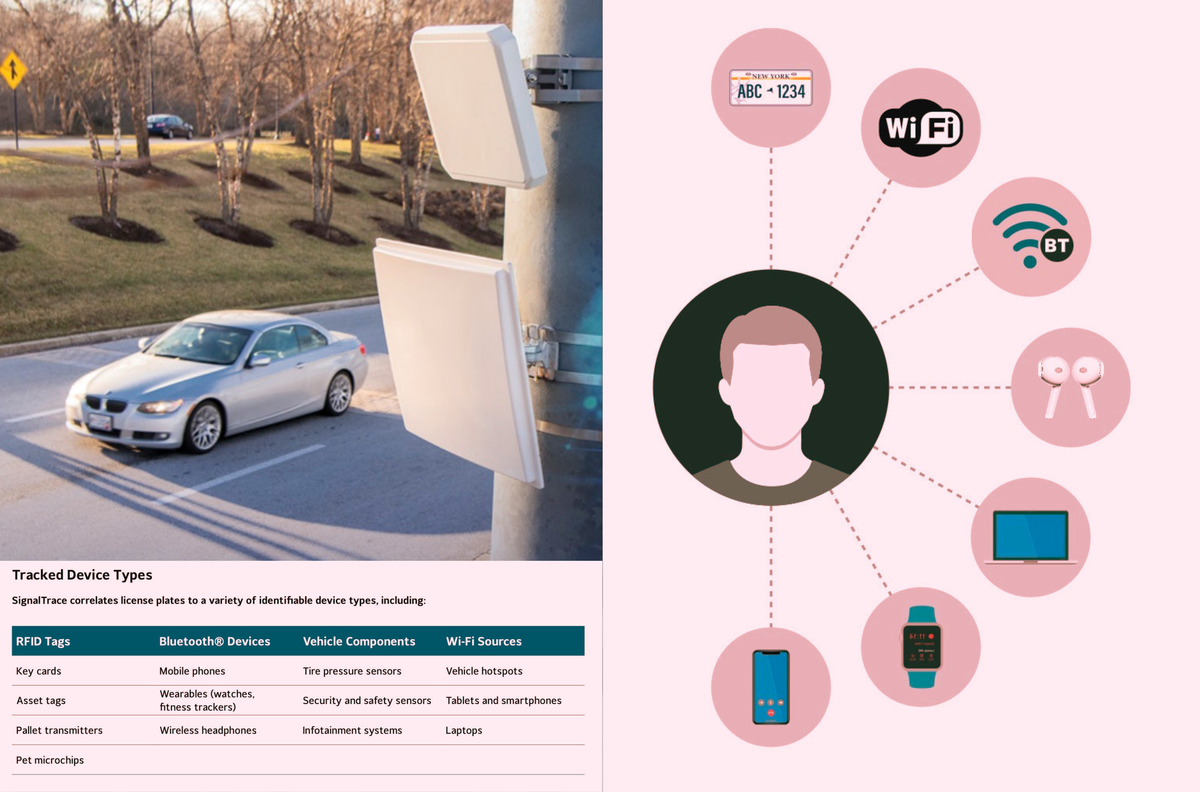
A surveillance company is expanding the capabilities of automatic license plate readers (ALPRs) by integrating sensors that capture unique identifiers from mobile phones, wearables, and other Bluetooth-enabled devices. The technology, called SignalTrace, transforms ALPR cameras from vehicle-focused tracking tools into systems that can more readily identify and track specific individuals. As ALPR cameras have become ubiquitous across the United States, SignalTrace represents a significant escalation in surveillance capabilities, raising privacy and civil liberties concerns.
How SignalTrace Works
SignalTrace adds sensors to existing ALPR cameras that sweep for Bluetooth and Wi-Fi signals emitted by devices such as smartphones, AirPods, smartwatches, and other wearables. These devices broadcast unique identifiers—MAC addresses—that can be used to recognize and track them over time. By correlating these device identifiers with license plate data, SignalTrace can link a specific person to a vehicle, even if the driver or passengers are not using their phones actively. The system “links devices that regularly travel together, correlating them to license plate,” according to the company behind it.
Data Collection and Correlation
The technology collects MAC addresses from devices within range of the ALPR camera. Over time, it builds a profile of which devices frequently appear together and associates them with a particular license plate. This means that if a person regularly travels with their phone and AirPods, those devices become linked to their vehicle. Law enforcement can then query the system to identify all devices that have been near a specific license plate or to find a vehicle associated with a particular device.

Implications for Privacy
The expansion of ALPR capabilities to include personal devices represents a major step toward mass surveillance. Unlike license plates, which are publicly displayed and regulated, personal devices are carried intimately and often contain sensitive data. The collection of MAC addresses can reveal patterns of movement, associations between individuals, and even locations visited. Privacy advocates warn that this technology could be used to track individuals without their knowledge or consent, and that the data could be retained indefinitely or shared with other agencies.
Potential for Abuse
The ability to link a person to a vehicle through their devices could be used to identify passengers in a car, not just the driver. This could have chilling effects on activities such as attending protests, visiting medical facilities, or meeting with lawyers. Moreover, the data could be vulnerable to breaches or misuse by employees. Without clear regulations, the deployment of SignalTrace could lead to a surveillance infrastructure that erodes anonymity in public spaces.
Current Deployment and Future Plans
The company behind SignalTrace is already in discussions with law enforcement agencies to deploy the technology. While ALPR cameras are widespread, the addition of device tracking sensors is new. The company has not disclosed which agencies have signed up or where the systems will be installed. However, given the existing footprint of ALPRs, SignalTrace could be rolled out incrementally, upgrading existing cameras rather than installing entirely new ones.
Technical Details
SignalTrace captures Bluetooth and Wi-Fi probe requests, which devices send out to discover networks or paired devices. These requests contain unique MAC addresses. The system can also capture other metadata such as signal strength, which can be used to estimate distance. By combining this with license plate images and timestamps, the system creates a comprehensive log of vehicle and device movements.

Legal and Regulatory Landscape
The legality of SignalTrace is uncertain. While license plate data is generally considered public, the collection of device identifiers raises Fourth Amendment questions about unreasonable search and seizure. Courts have yet to rule definitively on the warrantless collection of MAC addresses from public spaces. Some states have laws restricting the use of ALPR data, but these may not cover device tracking. The company may argue that the data is voluntarily broadcast and therefore not protected, similar to arguments made about cell site location information.
Comparison with Other Surveillance Technologies
SignalTrace is reminiscent of other device tracking systems, such as Stingrays (cell site simulators) and Wi-Fi tracking systems used in retail. However, those are typically used in targeted investigations or commercial analytics. SignalTrace’s integration with ALPRs makes it a passive, wide-area surveillance tool that can collect data on everyone who passes a camera, not just suspects. This bulk collection is more akin to the NSA’s metadata programs, but operated by local law enforcement.
Public Reaction and Concerns
Civil liberties organizations have expressed alarm. The American Civil Liberties Union (ACLU) has called for a moratorium on the technology until privacy safeguards are in place. Critics argue that the system could be used to track protesters, journalists, or political opponents. The lack of transparency about which agencies are using SignalTrace and how long data is retained exacerbates these concerns.
Potential Benefits
Proponents of the technology argue that it can help solve crimes more quickly by identifying suspects and their associates. For example, if a stolen vehicle is involved in a crime, SignalTrace could identify devices that were in the vehicle, potentially leading to the suspect. However, the broad scope of data collection may outweigh these benefits, especially if the system is used for general surveillance rather than specific investigations.

Conclusion
SignalTrace represents a new frontier in surveillance, merging vehicle tracking with personal device tracking. As the technology rolls out, it will likely spark legal challenges and legislative action. The balance between public safety and privacy will be tested as more agencies adopt this capability. For now, the expansion of ALPRs to include device tracking is a reality that demands scrutiny and oversight.
This article is based on reporting by 404 Media. Read the original article.
Originally published on 404media.co