Southeast Asia’s rapid data-center expansion is running into a more difficult phase: the region’s ambitions to host digital infrastructure are now colliding with questions over power, water, environmental review and the capacity of regulators to keep pace.
Thailand, which began 2026 with major planned investments in data centers, paused construction on 49 projects and put approval decisions for another 117 on hold in September. The move followed concerns that authorities lacked sufficient detail for regulation and monitoring.
The pause is a sharp change from the optimism that accompanied the country’s earlier plans. Thailand’s Board of Investment had announced approvals for projects involving TikTok, the UAE-based Skyline Data Centre and Singapore’s Bridge Data Centres, with planned investment totaling $27 billion.
That reversal matters beyond Thailand. Demand for data centers is rising alongside global AI use, and Southeast Asia has become an important growth market in the Asia-Pacific region. But the same factors attracting investment—growing digital demand, available land and an expanding regional economy—are exposing constraints that can no longer be treated as an afterthought.
Growth meets infrastructure limits
Data centers are the physical foundation for cloud services, online platforms and AI workloads. Their expansion brings construction spending and technical investment, but facilities also require significant supplies of electricity and water. Those needs can become especially contentious when sites are near established communities or when local infrastructure is already under pressure.
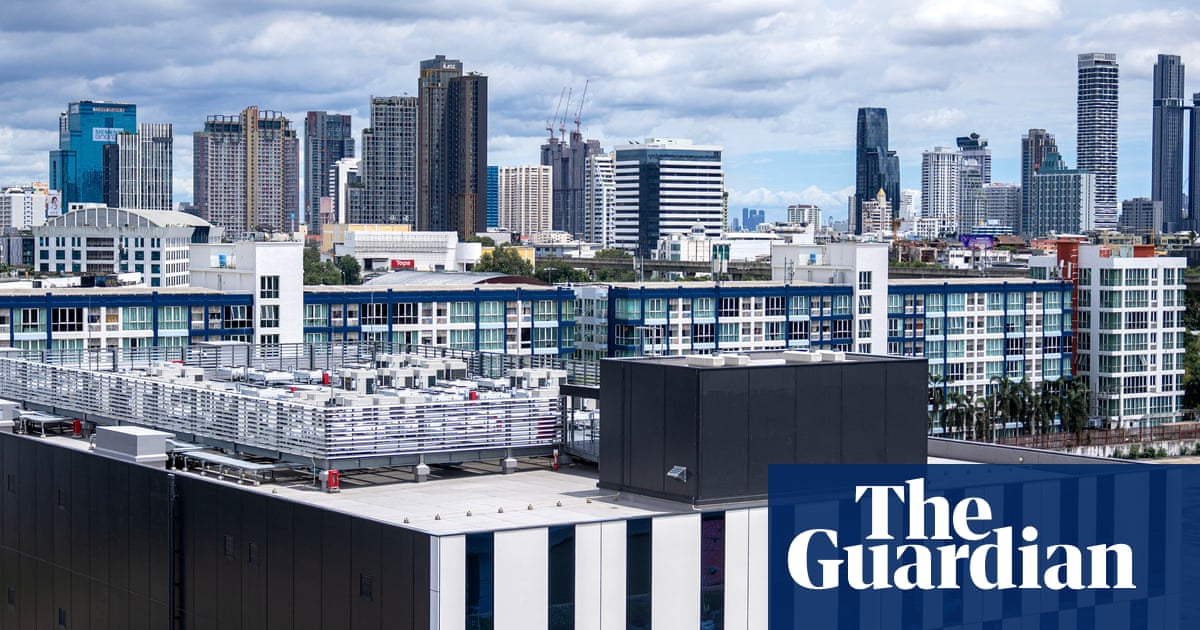
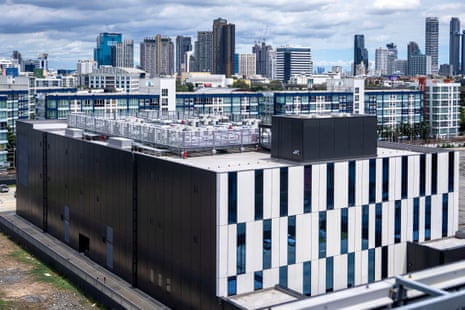
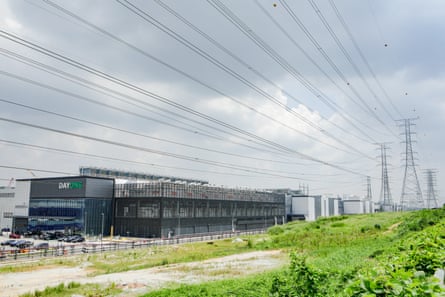
The concerns are visible in an aerial view of the Rama 9 data-center facility, which sits directly within a densely populated residential community in Thailand. The image captures the central policy tension: digital infrastructure can be economically strategic while still creating local questions about resource use, oversight and proximity to homes.
Thailand’s decision to pause projects was framed around the need for sufficient detail to regulate and monitor the sector. That is not merely a bureaucratic hurdle. Large clusters of facilities can alter demand forecasts for grids and water systems, and weak or incomplete information makes it harder for authorities and communities to assess those effects.
The country is not the only one taking a harder look at development. In Indonesia, the governor of West Java, the nation’s most populous province, halted construction on a data center because it lacked permits and had an incomplete environmental assessment process.

A regional race with uneven capacity
Southeast Asia has emerged as a surprise focal point for data-center construction in Asia Pacific. China has the region’s largest operational data-center capacity, but a 2026 report by real-estate firm Cushman & Wakefield found that Southeast Asia accounts for about half of the data-center capacity under construction in Asia Pacific.
Malaysia and Thailand make up a substantial share of that pipeline. The concentration illustrates both the scale of opportunity and the risk of moving too quickly. Projects can be announced and approved faster than power networks, water planning and environmental-monitoring systems are updated to reflect the industry’s growing footprint.
AI is an important part of that pressure. As more businesses and consumers use AI services, the computing infrastructure behind them requires additional capacity. Governments looking to capture investment may see data centers as a route into a strategic sector. Yet the buildout cannot be separated from the physical systems that support it.
For countries in the region, the challenge is not simply whether to welcome data centers. It is how to determine where they should be located, how their resource demands should be evaluated, and what information developers must provide before construction proceeds.
Singapore’s earlier warning
Singapore offers an earlier example of the dilemma. It was Southeast Asia’s leading data-center hub through the 2010s, as companies including Alibaba and Facebook opened facilities there. But the city-state imposed a moratorium on new data centers from 2019 to 2022 because of their intensive use of resources.
That experience helped set the context for the wider regional expansion. As constraints tightened in Singapore, other Southeast Asian markets became more attractive for new capacity. The current pauses in Thailand and Indonesia suggest that shifting projects to a neighboring market does not remove the underlying questions about electricity, water and environmental accountability.
The region’s data-center race is therefore becoming less about announcing the largest pipeline and more about proving that growth can be governed. Countries that can provide credible permitting, monitoring and infrastructure planning may be better positioned to sustain investment than those that rely on speed alone.

From pause to policy test
Thailand’s halted projects do not necessarily signal the end of its data-center ambitions. Rather, they mark a test of whether the country can convert an initial investment boom into a regulated and durable industrial strategy. The same applies to other governments that want to capitalize on AI-driven demand while maintaining public confidence.
Developers, too, will face a more demanding environment. Incomplete permits and assessments can now stop projects after momentum has built. Detailed plans for resource use, environmental review and community impacts are likely to become central to whether new facilities proceed.
Data centers remain a major opportunity for Southeast Asia, but the pause shows that computing capacity has real-world limits. The next stage of the region’s expansion will depend on whether policymakers and builders can match digital ambition with the energy, water and oversight required to support it.
This article is based on reporting by The Guardian. Read the original article.
Originally published on theguardian.com