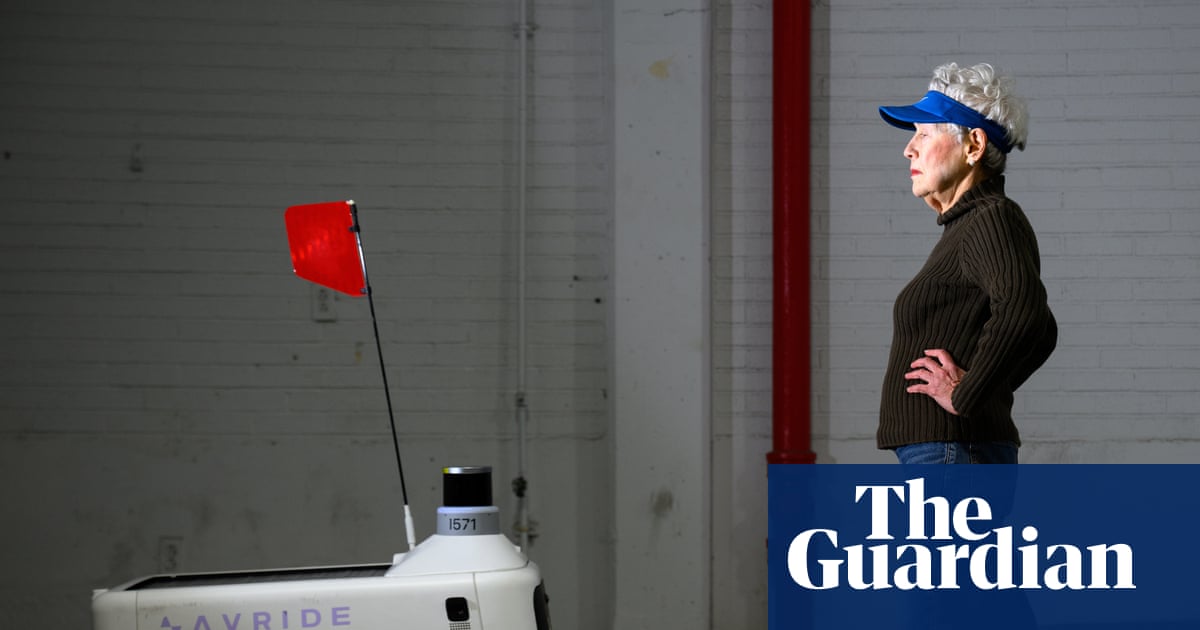
On Philadelphia sidewalks, the arrival of food delivery robots has produced a small but vivid form of resistance. Carolyn Marvin, a 78-year-old semi-retired communications professor at the University of Pennsylvania, has become a local figure for stopping the machines in their tracks.
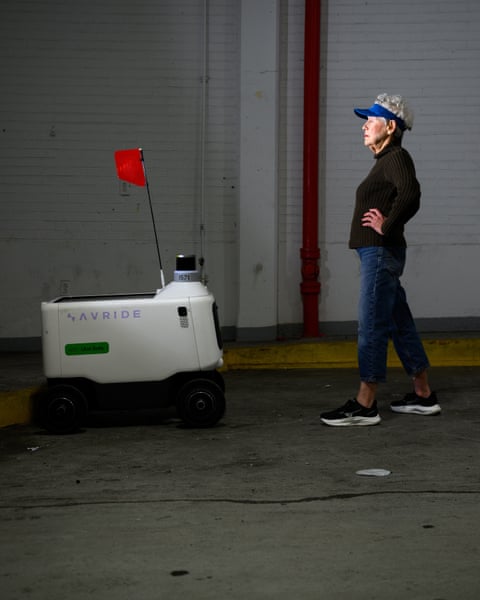
Marvin’s protests are simple. When she sees an Uber Eats delivery robot, she may follow it to a busy stretch of pavement and stand in its way. The robot stops; passersby gather; an argument begins. For Marvin, the action is not chiefly about one delivery or one machine. It is a way to insist that residents should have a say over technologies introduced into the public spaces they share.
A protest staged on the sidewalk
In an account from Philadelphia, Marvin described organizing a robot-disrupting outing with a photographer and reporter. Her approach included a practical concern: while she blocked the machine, someone should watch for police. The image is humorous on its surface, but the issue she raises is serious. Delivery robots are no longer a distant proposal or an experiment hidden behind a laboratory door. They occupy sidewalks, navigate around pedestrians and carry purchases through city streets.
Marvin does not say she spends every day confronting robots. “I have a life,” she said. But she has repeatedly stopped them when she encounters them. The encounters have made her recognizable enough that some Philadelphians reportedly dressed as Marvin and a delivery robot for Halloween.
Her actions have also drawn disagreement. Supporters see a challenge to companies that are extending commercial systems into shared urban space. Critics point out that blocking a robot can interfere with a customer’s paid-for delivery. The clash captures a recurring problem in technology adoption: the same service can represent convenience to one person and an unwelcome imposition to another.

Access, work and the use of public space
Marvin argues that delivery robots raise concerns beyond their immediate function. She has said they can take jobs and create hazards for people with mobility issues. Those concerns place robot delivery inside a much broader debate about who benefits from automation and who bears its costs.
Sidewalks are not controlled environments. They are used by people walking to work, pushing prams, using wheelchairs, carrying groceries, waiting for buses and navigating crowded areas. Even a compact robot designed to move at pedestrian pace changes that setting. It becomes another moving object that people must notice, predict and negotiate around.
The question is not solely whether a robot can complete a delivery without a crash. It is also whether a city has adequately considered the experience of people who use its streets and pavements every day. Marvin’s protest turns that question into a visible interruption. By stopping a robot, she forces a conversation that normally remains hidden inside an app: who authorized this service, what rules govern it and what happens when residents object?
A police encounter sharpened the dispute
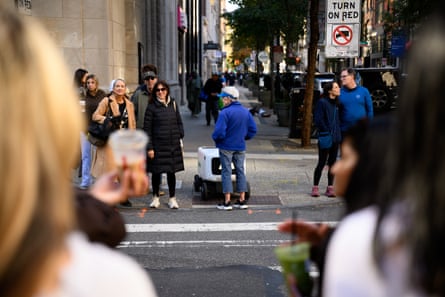
A few weeks before the Guardian’s report, Marvin said she had stopped a robot after returning from a flu shot. The incident took place in a heavily trafficked area and attracted a crowd. She said some people agreed with her concerns, while others focused on the person waiting for the order.
Police were called over what was described as “criminal mischief” involving a delivery robot. Marvin said three officers arrived and asked her to move. She refused, framing her action as a First Amendment protest against corporations operating in the same public space as the robots.
The encounter highlights a point that will likely become more common as automated devices spread through cities. A delivery robot is a commercial service, but it travels through public infrastructure. When someone obstructs it, the legal and civic questions are not always intuitive. Is it comparable to blocking a courier, impeding traffic, staging a demonstration or simply standing on a sidewalk? Those distinctions matter for residents, companies and public authorities.
Automation’s social negotiation
Technology is often introduced as if its success will be determined only by engineering performance. Yet city services depend on social acceptance as well as hardware and software. A robot may be able to identify a route, avoid an obstacle and reach a destination, while still provoking unresolved questions about accessibility, employment, surveillance, accountability and control of shared space.
Marvin’s intervention is deliberately low-tech. It relies on the basic fact that an autonomous delivery machine cannot proceed through a person standing in front of it. That physical vulnerability gives an individual a way to register dissent in a system otherwise built around frictionless transactions and automated logistics.
Her method will not settle the debate over delivery robots, nor does it answer every practical question about their operation. But it makes the trade-offs visible. For customers, the machines promise convenience. For companies, they offer a potential new logistics model. For critics such as Marvin, they are evidence that changes to the urban environment can arrive before the public has meaningfully discussed them.
Philadelphia’s sidewalk dispute is therefore about more than “slop bowls,” as the protest’s colorful framing puts it. It is a test of how cities negotiate automation when it moves from screens and warehouses into the paths people travel together.
This article is based on reporting by The Guardian. Read the original article.
Originally published on theguardian.com