A rare aircraft at the center of an unusual orbital rescue
NASA is preparing an uncommon kind of space mission: not a new observatory launch, but an attempt to keep an old one from falling out of the sky. Later this month, the agency is set to launch a servicing spacecraft designed to boost the orbit of the Neil Gehrels Swift Observatory, which has been gradually losing altitude after more than two decades in low Earth orbit.
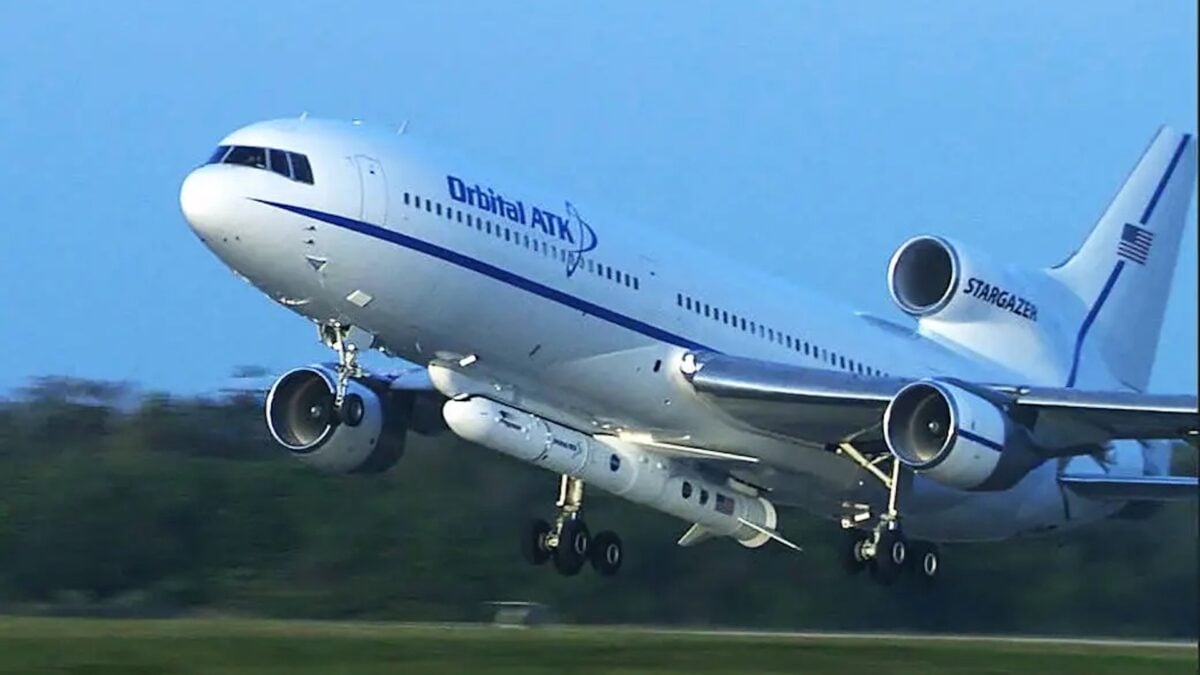
The mission would already stand out because of its objective. What makes it especially distinctive is how it will leave Earth. The launch is scheduled to use a Pegasus XL rocket carried aloft by the Lockheed L-1011 Stargazer, a 1974-built aircraft described in the source report as the world’s last flying mothership of its kind and the only remaining L-1011 still in operation.
That pairing of an aging but still useful aircraft with an active space telescope in need of orbital help turns the mission into more than a routine launch. It is a test of whether air-launch architecture, commercial servicing, and older orbital assets can be combined to extend the life of science missions that might otherwise drift toward an uncontrolled end.
Why Swift needs help now
Swift was launched on November 20, 2004, to study gamma-ray bursts, the most powerful explosions observed in the cosmos. Over the years, atmospheric drag has gradually lowered the spacecraft’s orbit. According to the source material, the observatory now faces a 50% chance of uncontrolled reentry by mid-2026 if nothing is done.
That risk has turned orbital maintenance into a practical necessity. Rather than simply waiting for reentry, NASA has chosen to try a rescue. The agency tapped Arizona-based startup Katalyst Space to provide a spacecraft called LINK, which is intended to rendezvous with Swift and raise it into a more stable orbit. The basic goal is to keep the observatory high enough to avoid being dragged into denser layers of the atmosphere, where reentry would eventually become unavoidable.
In that sense, the mission is both protective and experimental. It is meant to preserve a valuable science asset, but it also serves as a demonstration of in-orbit servicing as a viable tool for mission life extension.
The last operational L-1011 still has a job
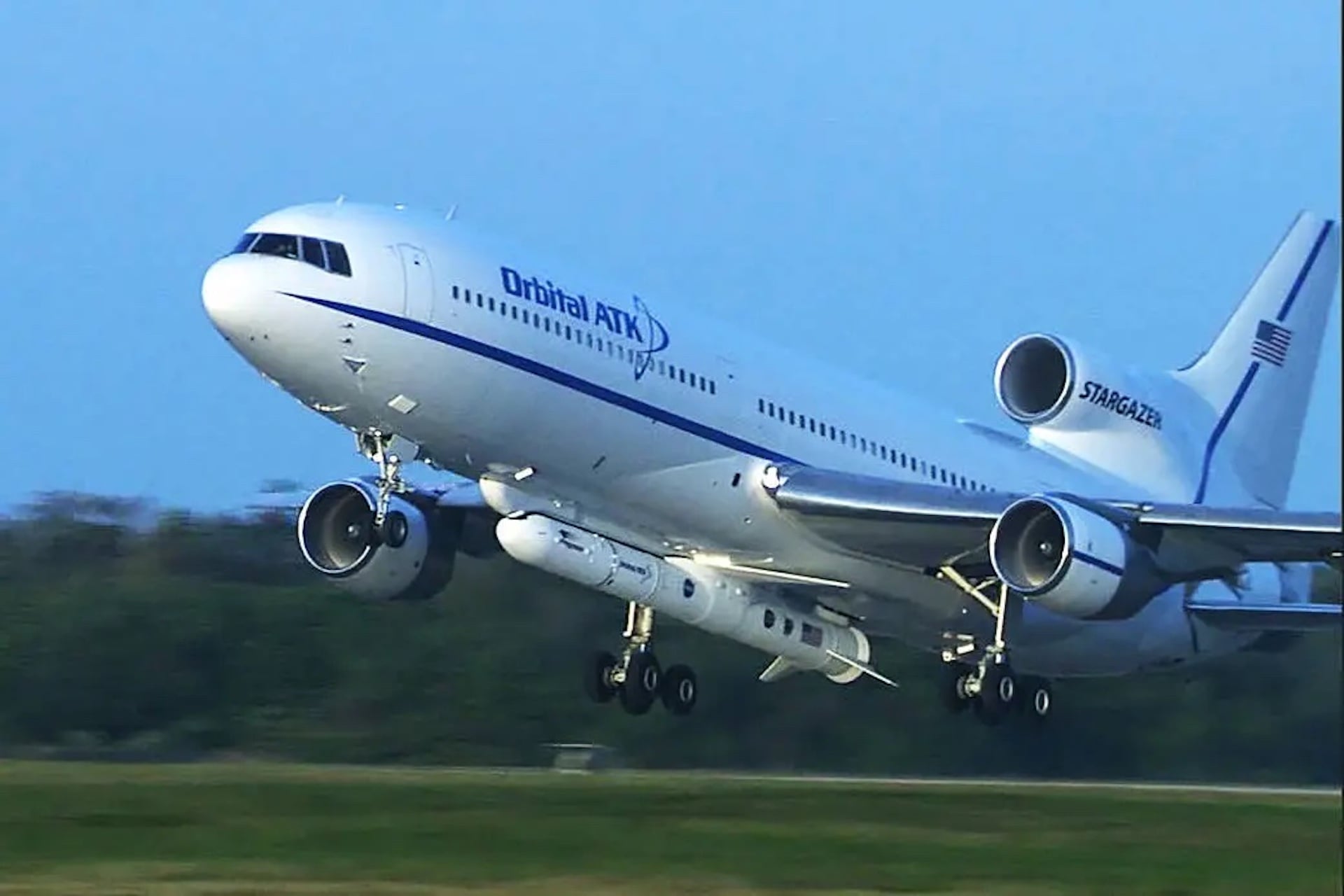
The Stargazer aircraft is central to the launch plan. Built as a wide-body passenger airliner in 1974, the Lockheed L-1011 TriStar was among the early twin-aisle commercial aircraft. In 1994, the plane was converted for a different role: carrying Northrop Grumman’s Pegasus XL rocket beneath its fuselage for air-launch missions.
The conversion allows the aircraft to transport the rocket to high altitude before release. As described in the source text, Stargazer carries Pegasus to about 40,000 feet, where the rocket is dropped into a brief free fall before igniting its first-stage motor and continuing to orbit under its own power.
Over the past 32 years, Stargazer has supported nearly 50 Pegasus XL launches. Today, it occupies an unusually narrow niche. The report describes it as not only the sole surviving operational L-1011, but also the only aircraft currently being used to launch orbital rockets.
That exclusivity gives the Swift mission a layer of historical texture. The aircraft is not just a nostalgic artifact pressed into ceremonial service. It remains an active component of launch infrastructure for missions that benefit from air-launch flexibility.
Why an air launch fits this mission
The choice of Pegasus and Stargazer is not just about spectacle. The source report says the air-launch design is particularly well suited to Swift’s orbital geometry. A conventional ground launch would need a large amount of propellant to reach the required orbital plane for this specific mission profile.
Swift’s orbit has a 20.6-degree inclination, selected to avoid the South Atlantic Anomaly, a region where Earth’s magnetic field is weaker and satellites are exposed to increased radiation. Reaching that inclination efficiently from a ground pad is not trivial. By releasing the rocket from an aircraft at altitude, the mission can better align with its target trajectory and reduce some of the constraints associated with a purely terrestrial launch.
This is one of the enduring arguments for air-launch systems. They do not replace conventional rockets for all missions, but they can offer useful flexibility for specialized payloads, inclinations, and operational timelines. The Swift rescue attempt is a case where those advantages appear directly tied to mission feasibility.
A broader test for servicing in orbit
Although the human-interest angle of the mission centers on the vintage aircraft, the larger strategic significance may lie with LINK itself. If the spacecraft succeeds in rendezvousing with Swift and nudging it into a safer orbit, it will reinforce the case for servicing satellites and observatories rather than abandoning them once orbital decay becomes a serious threat.
That idea has been discussed for years across commercial and government space programs, but each real mission matters because orbital servicing remains technically demanding. Rendezvous operations require precision, and any life-extension mission must justify its cost and complexity against the value of the spacecraft being saved.
Swift offers a compelling target because it is a functioning observatory with an established scientific role. Extending its life could preserve ongoing observations and defer the loss of a mission that has already delivered more than two decades of space science.
The mission also reflects a broader trend in space operations: treating orbital assets less as disposable payloads and more as infrastructure that can be maintained, repositioned, or upgraded when economics and engineering align.
What to watch on June 27
The launch is scheduled for June 27, when the Pegasus XL rocket will be carried aloft by Stargazer before release. If the launch proceeds as planned, attention will quickly shift from the aircraft and rocket to the servicing spacecraft’s rendezvous work in orbit.
For NASA, a successful outcome would do more than preserve Swift. It would show that a targeted intervention can reduce reentry risk for aging spacecraft and keep productive missions operating longer. For commercial servicing companies, it would add evidence that orbital maintenance is maturing from concept into routine capability.
And for the launch system itself, the mission is a reminder that specialized hardware can remain relevant long after its original era has passed. A 1970s airliner, repurposed in the 1990s for rocket duty, may soon help rescue a 2004 space telescope from a 2026 orbital deadline. That convergence of old platforms and new operational needs is exactly the kind of hybrid engineering story that still defines much of today’s space industry.
This article is based on reporting by Gizmodo. Read the original article.
Originally published on gizmodo.com