A massive proposal is forcing a bigger debate
A proposed AI-focused data center complex on the outer edge of Melbourne has become more than a local planning dispute. The project, backed by Syncline Energy and pitched as the Victorian AI hub, is now acting as a focal point for broader public unease over how quickly large-scale digital infrastructure is spreading, how much land and power it consumes, and how communities are expected to absorb that change.
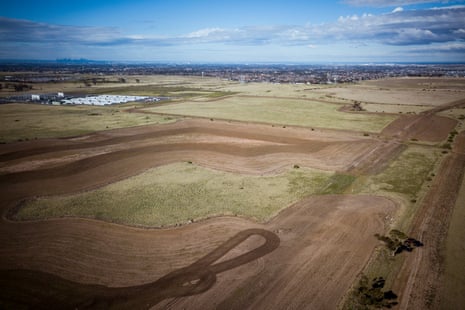
The site in question sits in Plumpton, about 30 kilometers north-west of Melbourne’s central business district. Today it is an empty paddock near transmission lines and Melbourne’s renewable energy hub, close to a fast-growing suburban area and just off the Calder Freeway. On paper, though, it is being framed for a far more consequential role in Australia’s computing future.
According to the details reported so far, the full site spans 350 hectares. Syncline says 40% of that area, or 140 hectares, would be used for four data center buildings with a maximum capacity of 2.4 gigawatts, while the remaining 60% would remain open land. That scale is central to why the plan has drawn such a strong reaction. The developed portion alone is described as just under six times the size of Chadstone shopping centre, and the proposed power demand would exceed the output of Victoria’s largest power station, Loy Yang A.
From mailbox letter to organized resistance
For some residents, the issue began not with a formal planning hearing or a government announcement, but with direct outreach from the developer. A letter introduced the “Victorian AI hub” and said construction would not begin for at least two years while planning and environmental approvals were completed. The message also emphasized consultation, saying the company wanted to explain its intentions and listen to concerns.
But by the time those letters were arriving, the project had already started circulating through news reports and social media. That meant the company was entering a conversation it did not fully control. In fast-growing suburbs, a proposal of this size can quickly become a proxy for worries about noise, visual change, land use, electricity demand and whether local residents are being asked to carry the burden of an infrastructure boom whose benefits may be distributed elsewhere.
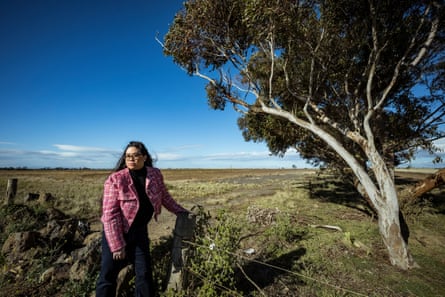
The reaction has been significant even at this early stage. More than 3,600 people have signed a petition calling for careful assessment of the project. That is notable because no construction has started, and the site remains years away from any groundbreaking if it secures approvals. Opposition, in other words, is forming at the concept stage rather than after shovels hit the ground.

Why data centers are becoming cultural as well as industrial issues
The Plumpton dispute reflects a larger shift in how data centers are perceived. For years, these facilities often sat outside mainstream public attention, treated as technical back-end infrastructure rather than visible civic questions. The current AI cycle is changing that. As demand for computing power increases, projects are becoming larger, more energy-intensive and harder to separate from debates over electricity systems, water, land and planning legitimacy.
That is part of why this proposal is resonating beyond one suburb. The Guardian’s reporting places the site within a national pattern of growing resentment toward data center construction across Australia. An April report from Data Centres Australia said Victoria already had 30 data centers in operation and another 30 in the pipeline. That suggests the Plumpton project is not an isolated exception but part of an accelerating buildout.
Once that context is visible, the argument changes. The issue is no longer only whether one company should be allowed to build one campus. It becomes a question of whether governments, utilities and local communities have established a credible framework for deciding where AI-era infrastructure belongs, how much power it should be allowed to draw and what level of public scrutiny projects should face before they become locked in.
Scale is the project’s opportunity and its political risk
Supporters of large compute hubs will argue that projects of this kind can anchor investment, attract advanced industry and position regions to benefit from the next wave of AI development. Even without those claims being fully detailed in the supplied material, the project’s branding as an AI hub makes clear that it is being tied to a strategic technology narrative rather than presented as an ordinary industrial estate.
Yet the same scale that may appeal to investors and policymakers is what makes the proposal politically vulnerable. A 2.4GW ceiling is not an abstract technical figure when residents can compare it to a major power station. A 140-hectare built footprint is not just a planning statistic when it can be translated into a landmark shopping centre multiplied several times over. The project is large enough that analogies become part of the politics, and those analogies make the proposal legible to people who may know little about data center design.
That creates a difficult path for both developer and government. Promises of open land on 60% of the site may help, but they do not erase concerns about electricity demand or cumulative infrastructure pressure. Likewise, a long approvals runway may reduce the perception of urgency, yet it also gives opponents more time to organize and widen the debate.

A test case for the AI buildout
The Plumpton proposal now looks like an early test of how democracies will handle the physical footprint of AI systems. The public increasingly encounters AI as software, assistants and automated services, but the enabling infrastructure is intensely material: land, buildings, cables, substations and energy supply. That infrastructure cannot be scaled invisibly forever.
What happens next in outer Melbourne will therefore matter beyond Victoria. If the project advances, it may establish a benchmark for how giant AI-linked facilities are assessed and justified. If it stalls or is significantly reshaped, it may signal that communities and regulators want a stricter social license before accepting the next generation of hyperscale computing sites.
Either way, the debate has already moved beyond one paddock on the city’s fringe. It has become a referendum on whether the AI economy’s appetite for physical infrastructure can be reconciled with local consent, environmental review and an electricity system that is already under pressure. That is why this proposal has turned into a national flashpoint so quickly: it makes the hidden costs of the digital economy unusually visible.
This article is based on reporting by The Guardian. Read the original article.
Originally published on theguardian.com