A campaign video has ignited a wider AI debate
Spain’s general election campaign is heading into a new and unsettled phase after the country’s conservative People’s party (PP) used AI-generated likenesses of people associated with the governing Socialist party in a campaign video. The advert, posted through the PP’s official social-media accounts, has prompted outrage from government figures and a legal challenge from one of the people depicted.
The dispute is not simply about a sharp-edged political message. It is about the use of synthetic media to make recognizable public figures appear to speak in their own voices and acknowledge alleged wrongdoing. As AI tools become easier to use and distribute, the episode illustrates how quickly the line between political satire, attack advertising and deceptive impersonation can become contested.
The video appeared this week and had accumulated nearly 2 million views by Friday, according to reporting by the Guardian. It used AI to manipulate the likenesses of several people linked to prime minister Pedro Sánchez’s Socialist party. The generated clips appeared to show them making statements about conduct including soliciting prostitutes and taking kickbacks.
Targets included people tied to the governing party
Among the most prominent depictions was an AI-generated version of Begoña Gómez, Sánchez’s wife. In the video, the synthetic Gómez speaks about receiving a university post because of her husband’s position. The reference touches on an ongoing investigation in which Gómez has denied wrongdoing.
The advert also depicted former Socialist prime minister José Luis Rodríguez Zapatero, appearing to speak about hiding jewellery in a safe. That element similarly alluded to continuing allegations and investigations; Zapatero has denied wrongdoing.
Such details matter because generated video can attach the force of apparent first-person testimony to a political allegation, even where the viewer is not given an obvious, sustained explanation that the footage is fabricated. The PP’s video did include an AI-created label, but it was displayed at the bottom in tiny, nearly transparent text, according to the report.
That disclosure has become central to the criticism. A disclosure may technically signal that AI has been used, yet still fail to give many viewers a practical opportunity to understand that the faces and voices on screen are not genuine. In fast-scrolling social feeds, a clip can be watched, reposted or encountered out of context long after a subtle label has disappeared from attention.

Government criticism centers on the risk of confusion
Óscar López, Spain’s digital transformation minister, criticized the PP’s use of the material in comments to broadcaster TVE. He said the party was telling a major lie through its official channels and argued that the format made it especially easy for people unfamiliar with AI to confuse the video with reality.
The criticism is significant because it comes from the government official responsible for digital transformation rather than only from a partisan campaign spokesperson. It places the incident within a broader policy question: whether elections can rely on traditional norms of attribution and correction when convincing synthetic content can be made cheaply, shared at scale and seen before factual context catches up.
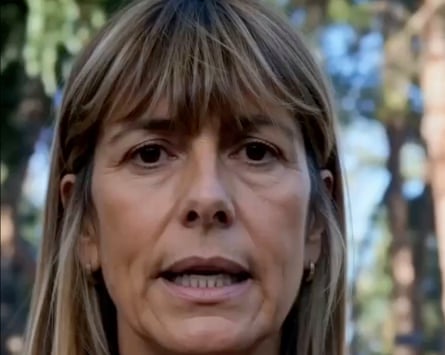
The PP video has also produced a more immediate legal confrontation. Leire Díez, a former Socialist party member whose likeness was used, filed a court complaint calling on the PP to remove the advert. According to the Guardian’s report, the complaint alleges defamation and digital identity theft. Díez said the video used her likeness to suggest that she had worked to undermine judicial and law-enforcement bodies in aid of the Socialists.
A difficult boundary between legality and legitimacy
The emerging legal picture appears less clear-cut than the political reaction. A majority of nine legal experts consulted by El País reportedly concluded that the PP’s conduct was not illegal. That reported assessment does not resolve the dispute over whether the advert is responsible campaign practice, nor does it determine the outcome of Díez’s specific complaint.
Instead, it highlights a gap that is likely to recur in democratic systems. A political communication can be provocative, misleading in effect or harmful to public confidence without clearly falling outside existing law. When AI-generated impersonation is involved, regulators and courts may have to distinguish among parody, obvious fiction, disclosure practices, reputational harm and the likelihood that an ordinary viewer would be misled.
For political parties, the case shows that a small technical disclaimer may not settle the public question. Authentic-looking synthetic faces and voices create a different kind of persuasive claim than a caption, illustration or conventional edited montage. They can make allegations feel directly witnessed rather than merely asserted.

Why this matters beyond one Spanish campaign
The Spanish row arrives as the country prepares for a general election next month and as political polarization remains high. In that environment, synthetic media is not only a communications tool; it can become an accelerant. A clip designed to reinforce existing beliefs can circulate rapidly among voters already inclined to distrust political opponents or institutions.
There is also a practical asymmetry. Producing a manipulated video may require little time compared with the effort required to explain that it is fabricated, establish who created it, seek its removal and reach viewers who have already shared it. The issue is especially acute when the original message is released through an official party account, which can lend it an initial presumption of legitimacy.
Spain’s episode will not by itself decide how democracies govern political deepfakes. But it provides a concrete early test of the limits of disclosure, voluntary restraint and current legal remedies. The campaign response, the pending legal challenge and the public reaction will offer a close look at how political institutions respond when synthetic media moves from a theoretical election risk into a high-visibility campaign tactic.
This article is based on reporting by The Guardian. Read the original article.
Originally published on theguardian.com