Rare fossils reopen a foundational question in evolution
A newly reported fossil analysis is challenging one of the long-standing assumptions about how the earliest vertebrates made the transition from water to land. According to a study described by 404 Media and published in Science, ancient tetrapods may not have passed through a tadpole-like larval stage before becoming land-capable adults. If that interpretation holds, it would force a reassessment of a developmental model that has shaped thinking about vertebrate evolution for generations.
The study focuses on stem tetrapods, early four-limbed vertebrates tied to the evolutionary passage from finned aquatic ancestors to animals able to move on land. For decades, paleontologists broadly assumed these animals followed a life cycle analogous in some ways to modern frogs and toads: an aquatic larval phase followed by metamorphosis into an adult body plan better suited to terrestrial life.
That framework made intuitive sense. A fish-like juvenile stage seems like a plausible bridge during a gradual move from water to land. But intuitive evolutionary narratives and direct fossil evidence are not the same thing. According to the report, the new research argues that the supporting fossil evidence for such a larval phase was never actually established in the way many had assumed.
What the researchers were looking for
The work was led by Jason Pardo, a research associate at the Field Museum and postdoctoral fellow at Vilnius University, and Arjan Mann, the Field Museum’s assistant curator of early tetrapods. Their goal was unusually specific: find fossils from the earliest hatchling stages of animals spanning the fin-to-limb transition and examine them for direct signs of metamorphosis.
That is a demanding task because hatchling fossils from such ancient animals are exceptionally rare. Young animals were small, their bones were still developing, and preservation required unusually favorable conditions. Even when such specimens survive, they can be difficult to interpret with confidence.
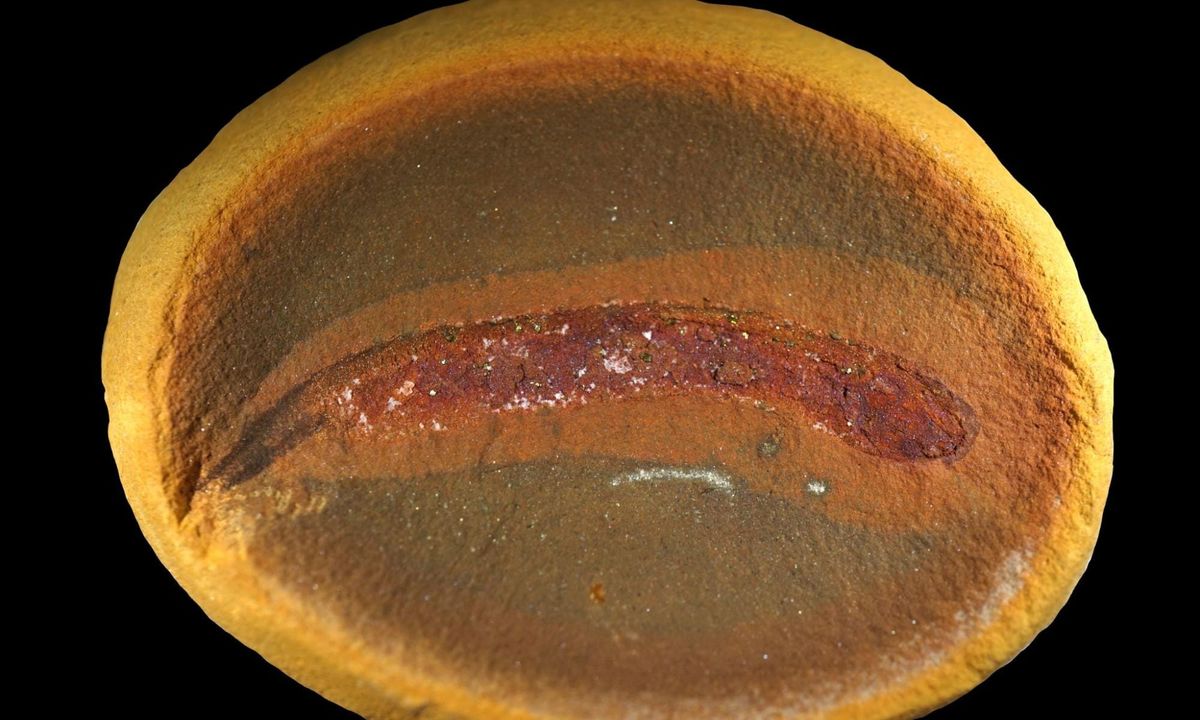
Despite those challenges, the researchers assembled a set of rare fossils from both public museum archives and private collections. The report identifies material from the Mazon Creek fossil beds in northern Illinois as especially important. Those deposits are known for exceptional preservation, making them one of the few places where fragile developmental stages might be captured well enough to answer questions about anatomy and life history.
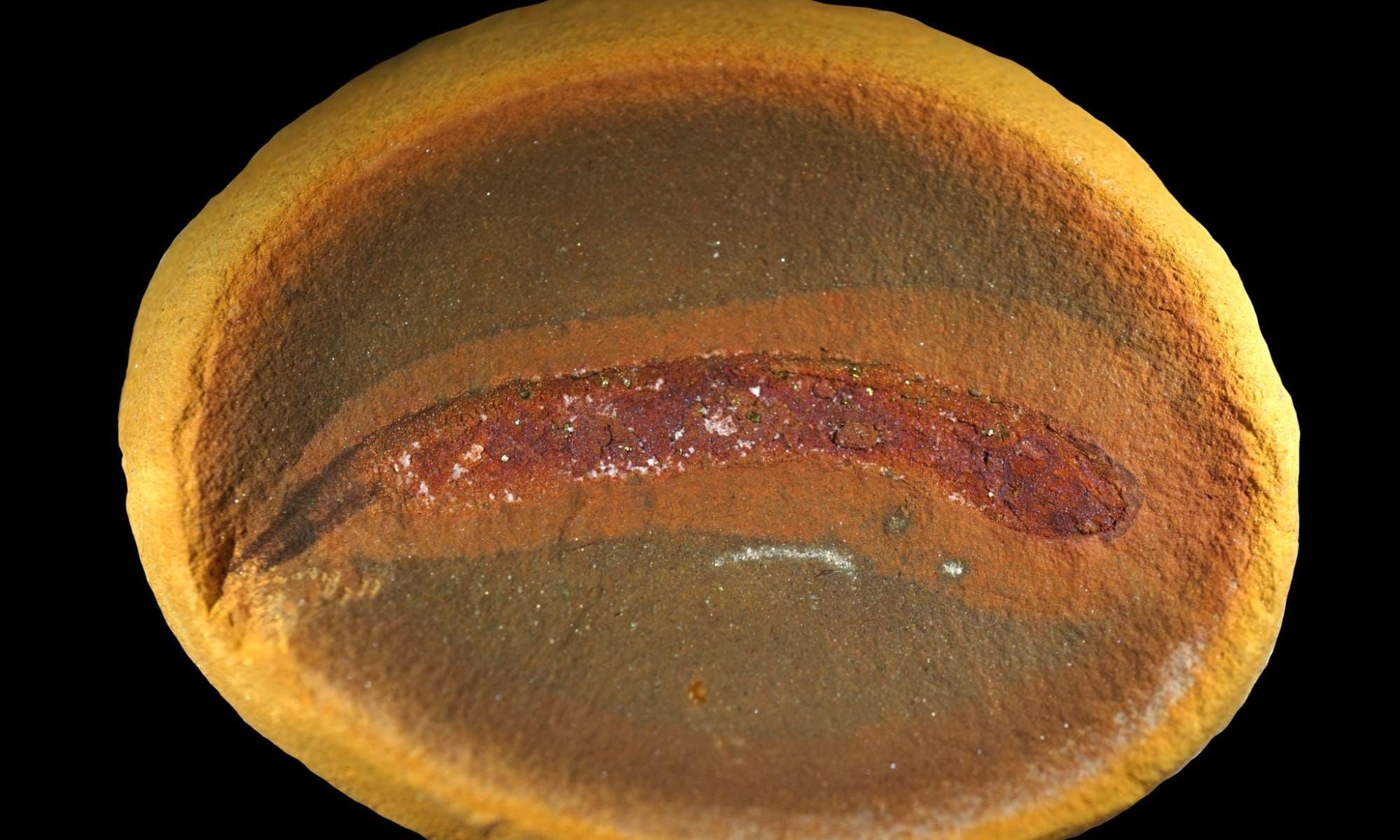
The researchers were specifically looking for evidence comparable to external gills, the kind associated with the aquatic larval forms of modern amphibians. Finding such structures would have strengthened the long-standing metamorphosis model. Not finding them, especially across the relevant developmental window, would weaken it substantially.

No clear sign of a tadpole-like phase
According to 404 Media’s account of the study, Pardo and Mann found no evidence for a transient larval stage in these early tetrapods. The report says their findings therefore “falsify hypotheses of an ancestral origin of metamorphosis,” meaning the familiar frog-like developmental pattern may not trace back to the earliest land vertebrates after all.
Pardo described the prior assumption as understandable but under-evidenced. As summarized by the report, he said there had long been a sense that these early tetrapods had a gilled larval stage fundamentally different from the terrestrial adult. He also noted why that idea was attractive: it offers a seemingly neat explanation for how vertebrates could move gradually from aquatic to terrestrial environments. Yet the key point from the new work is that researchers did not previously have direct evidence pointing decisively in that direction.
The new fossils appear to shift the burden of proof. Instead of asking why early tetrapods might not have resembled modern amphibians, researchers may now need to ask why the analogy to modern amphibian metamorphosis became so central in the first place.
Why the result matters beyond paleontology
This is not just a niche disagreement about anatomy. The origin story of land vertebrates has consequences for how scientists think about the evolution of development itself. Humans, reptiles, birds, mammals, and amphibians all descend from lineages tied to those first tetrapods. If the earliest members of that lineage developed more directly, without a dramatic amphibian-style metamorphic transition, then a developmental pattern often treated as ancient and foundational may instead be more specialized and derived.
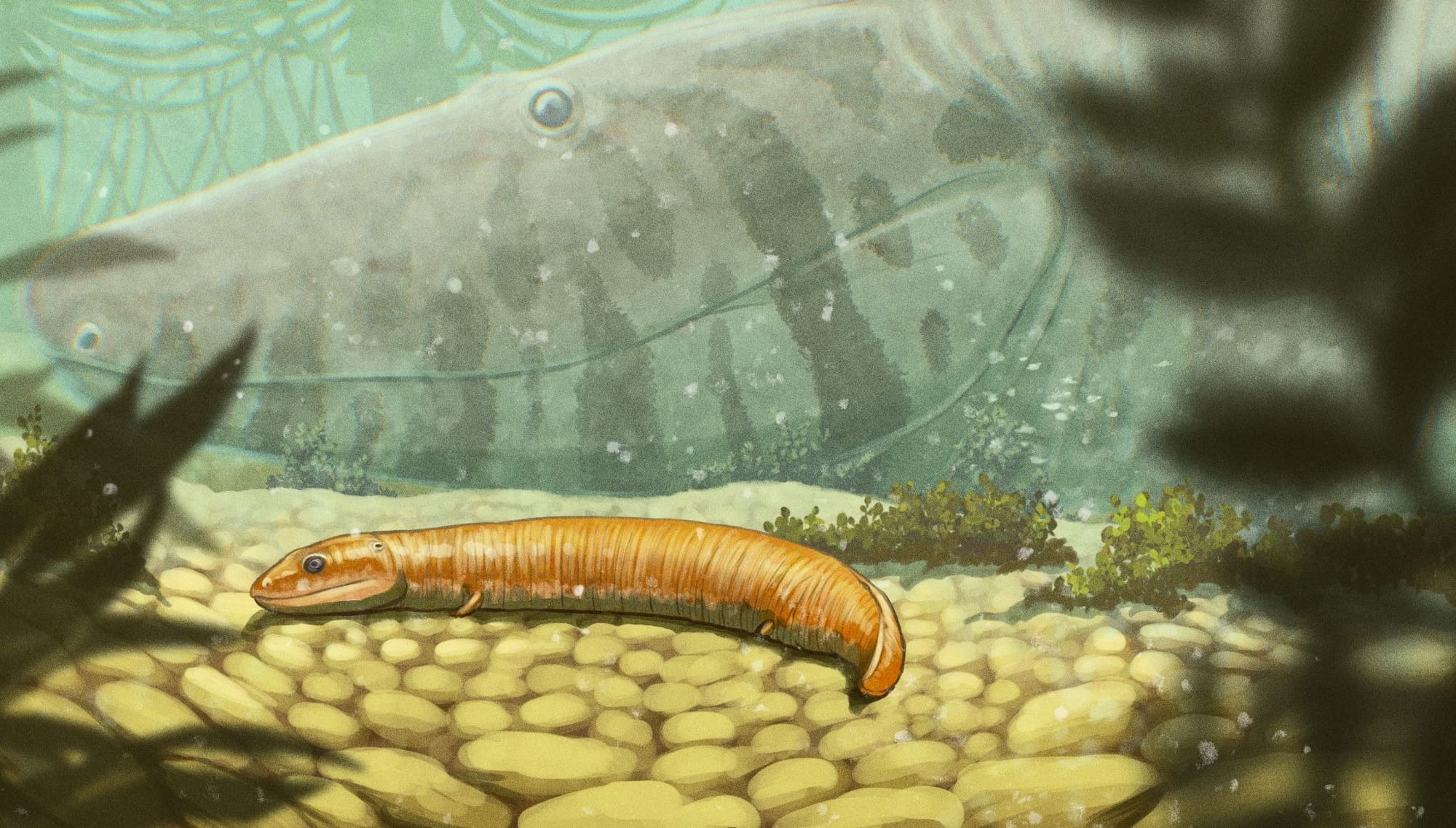
That distinction matters because modern amphibians are sometimes used as living analogs for deep evolutionary history. Such analogies are valuable, but they can also become misleading if present-day traits are projected too far back in time. The study described here suggests that at least one prominent analogy may have outlived the evidence supporting it.
The result also underscores how developmental fossils can reshape large-scale evolutionary narratives. Much of paleontology depends on adult skeletons, which are more likely to survive. Juveniles and hatchlings are rarer, but they can reveal how an animal changed as it grew, and that can be as important as the final adult form. In this case, the hatchling stage becomes central because the debate is not merely about what early tetrapods looked like, but how they lived and transformed over time.
A reminder that classic stories can change
The study’s appeal lies partly in its simplicity. A familiar textbook narrative said the first vertebrates to colonize land likely went through a tadpole-like phase. The new fossil evidence, as reported, argues otherwise. That does not erase the broader fin-to-limb transition or the importance of amphibians in vertebrate evolution. It does, however, narrow the confidence with which a specific developmental story can be told.
It also illustrates a broader pattern in science: longstanding ideas can persist because they are coherent, teachable, and biologically plausible, even when direct evidence remains thin. When rare specimens finally emerge, they can overturn assumptions that have been repeated for more than a century.
Here, the consequence is a more complicated but more evidence-driven picture of the first land vertebrates. Rather than emerging through a frog-like metamorphic script inherited from the dawn of tetrapod history, these animals may have developed more directly. If future work supports that conclusion, the evolutionary road from fins to limbs will look less like a replay of modern amphibian life cycles and more like a distinct experiment in vertebrate development.
That is why this finding stands out. It does not merely add another fossil species to the record. It challenges the developmental logic researchers used to interpret one of evolution’s most consequential transitions, and it does so using the rarest kind of evidence available: the preserved beginnings of life itself.
This article is based on reporting by 404 Media. Read the original article.
Originally published on 404media.co