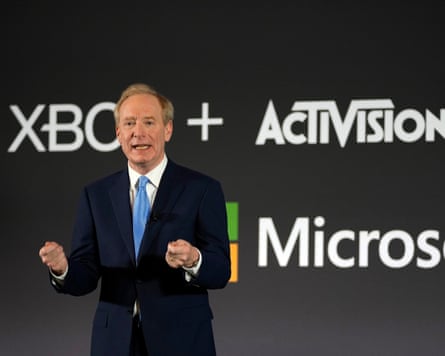
Microsoft President Brad Smith has called for more urgent artificial-intelligence safety rules, arguing that AI is regulated less tightly than everyday products such as milk and washing machines. His comments add to a widening public debate over how companies and governments should manage systems that can increasingly produce recommendations, answers and actions at scale.
Speaking to the BBC, Smith described AI as both a potential tool and a weapon. He said the technology should be governed by stronger safety requirements and argued that companies should have a legal obligation to a victim when their system is breached by rogue AI agents. The comments were reported as Britain’s AI minister, Kanishka Narayan, prepared to urge frontier-model developers to do more to address risk and improve safeguards.
The call for emergency brakes
A central part of Smith’s argument was that AI systems need “emergency brakes,” also called kill switches, that can pause or slow a system if it begins to move outside acceptable control. The idea reflects a basic governance question for increasingly capable AI: whether the organizations operating a system can observe its behavior, test its limits and intervene reliably when something goes wrong.
Microsoft Chief Executive Satya Nadella made a related appeal the previous day. He said highly capable AI should not be treated as a collection of opaque, nested black boxes whose recommendations or actions are simply accepted or rejected after the fact. Instead, he argued for contained systems whose behavior can be observed, whose limits can be tested and whose actions can be contained.
The two executives’ statements do not set out a specific legislative text or technical standard. But together they place Microsoft among companies publicly pressing for mechanisms that would give operators a way to halt or constrain AI behavior under defined circumstances.

Why the comparison matters
Smith’s comparison with washing machines and cartons of milk was intended to make a regulatory point: ordinary consumer goods commonly face inspection and safety requirements, while AI’s rapid development has outpaced an equivalent set of broadly applied controls. The comparison is rhetorical, but it captures the concern that systems capable of affecting people through automated decisions or actions need clearer accountability than voluntary commitments alone may provide.
His proposed obligation to victims also raises the question of responsibility when an AI-enabled system is compromised or used by rogue agents. The article does not specify what such an obligation would require, who would determine a breach, or how liability would be allocated among model developers, infrastructure providers and deployers. Those details would be central to any eventual regulation.
Pressure on frontier developers
The remarks arrive amid calls from experts, politicians and regulators for tougher AI rules, as well as warnings from Anthropic, Google DeepMind and OpenAI about the speed of the technology’s development. The shared concern is not that all AI deployment should stop. Rather, it is that developers of the most capable systems should do more to identify and manage severe risks before systems are widely deployed.
Britain’s AI minister was expected to make a similar case, calling on firms developing frontier AI to strengthen safeguards. That alignment between a major technology company’s leadership and a government minister does not guarantee agreement on policy. It does show that the conversation is increasingly centered on operational controls, accountability and demonstrable safety practices rather than broad principles alone.

From principle to implementation
“Kill switch” is an intuitive phrase, but implementing one is not a simple on-off decision. A useful emergency-control system would need to identify the conditions that trigger intervention, establish who has authority to use it, and ensure the intervention is technically effective. It would also need to avoid becoming merely a public-relations promise that fails when a system is under pressure.
Smith and Nadella’s comments point to a more concrete expectation: companies should be able to observe AI behavior, test boundaries and retain the ability to contain actions. That standard shifts attention from claims about a model’s intended behavior to evidence about how an organization can monitor and control systems in operation.
- Brad Smith said AI needs more urgent safety rules and stronger safeguards.
- He called for emergency brakes and a legal obligation to victims after breaches by rogue AI agents.
- Satya Nadella separately argued for AI systems whose limits and actions can be observed and contained.
A policy debate with practical stakes
The debate is likely to extend beyond whether regulation is needed to how it should be structured. Policymakers must consider how rules apply across developers, cloud and infrastructure operators, and organizations that deploy AI in real settings. Companies, meanwhile, face questions about whether their oversight systems can keep pace as models are integrated into products and workflows.
Smith’s warning frames the issue in accessible terms: if society expects safety checks for familiar products, it may also expect robust controls for technology that can shape information, automate tasks and potentially be misused. The next test will be whether those calls produce specific, enforceable practices rather than another round of general commitments.
This article is based on reporting by The Guardian. Read the original article.
Originally published on theguardian.com