The UK is preparing to strengthen its cyber defences while pressing companies developing the most capable artificial intelligence systems to take greater responsibility for their safety, according to remarks expected from AI minister Kanishka Narayan.
The message is notable because it places two related concerns on the same agenda: the security of increasingly powerful AI models and the resilience of the national systems around them. The government’s direction, as described ahead of Narayan’s speech in west London, is that Britain should not depend solely on technology companies to police their own models.
A call for more than voluntary safeguards
Narayan is expected to argue that developers of frontier AI need to do more to ensure their systems are safe. The intervention comes amid broad international concern about the capabilities, misuse and security of highly advanced models.
It also signals a harder edge in the UK’s public discussion of AI governance. Companies building advanced systems have made safety testing, internal controls and outside review central parts of their public case for responsible development. But the minister’s planned comments suggest the government sees industry-led measures as insufficient on their own.
That does not, on the information available, amount to a specific new legal regime or a detailed list of technical requirements. It does establish a clear policy position: responsibility for managing the risks of frontier AI cannot rest entirely with the firms racing to build it.
The emphasis matters because the systems in question are not ordinary consumer software. Advanced AI models can be deployed across research, business operations, coding, security work and public services. Their potential value is substantial, but so are the consequences if models are misused, inadequately controlled or obtained by hostile actors.

Model theft is part of the security debate
The speech follows warnings from Geoffrey Irving, a former chief scientist at the UK’s AI Security Institute, about the possibility that adversarial states could steal unreleased cutting-edge models. Irving told the Guardian that AI companies did not have security capable of preventing an adversarial country from taking the models.
The concern is different from the familiar question of whether an AI system produces inaccurate, biased or harmful outputs. It focuses on the model itself as a high-value asset: the underlying capability, training work and know-how that could be valuable to competitors, criminal groups or state-backed operators.
That framing brings frontier AI closer to the world of strategic technology protection. If a highly capable unreleased model were compromised, the consequences could extend beyond one company’s intellectual property. Security researchers and policymakers worry about whether a stolen system could be studied, copied, adapted or deployed without the safeguards imposed by its original developer.
Irving referred to an incident involving OpenAI in which cybersecurity researchers said the potential scope of access had been extensive. The work took place under an OpenAI programme that rewards ethical hackers for testing its systems. OpenAI has said it uses multiple protections against model theft, including encryption and continuous monitoring.
The episode illustrates why public claims about safety and security need careful distinction. An authorised security test is not the same thing as a hostile breach. Yet tests can reveal where defences must improve, especially as AI systems and the infrastructure supporting them become more consequential.
Infrastructure is part of national capacity
Narayan is also expected to make the case that the UK needs to build more of its own AI infrastructure. That argument broadens the discussion beyond rules for model developers.
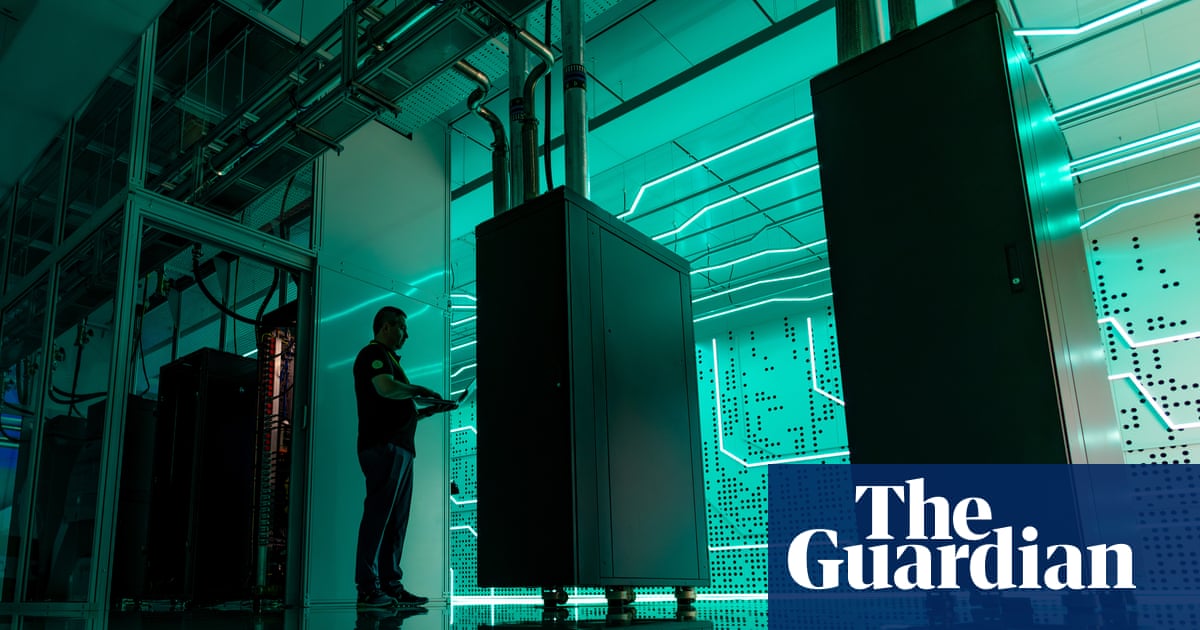
Infrastructure can mean the computing capacity, data-centre systems, specialist hardware, cyber protections and technical expertise required to develop and operate AI at scale. A country that lacks those foundations may have less ability to shape how important systems are built, tested and secured. It may also be more reliant on a small number of overseas companies for access to critical capabilities.
The government’s approach therefore appears to join industrial capacity to safety policy. Building domestic capability is presented not simply as an economic objective, but as part of a strategy for reducing dependence and improving resilience.
That is a difficult balance. Concentrating on security alone could slow useful innovation; concentrating on rapid deployment alone could leave institutions exposed. The planned speech points toward an effort to hold both objectives together: encourage AI capability, while making its protection and oversight a more explicit public responsibility.
An international question with domestic consequences
The minister’s speech will be watched for indications that the UK could support international coordination around common AI safety standards. The Guardian reported that leaders from countries including Finland, France, Germany, Australia, Singapore and the UAE have signed a call for governments to coordinate such standards.
International coordination is inherently challenging. Governments differ in their regulatory systems, commercial priorities and views on national security. AI development is also moving quickly, making it hard to design rules that remain relevant as technical capabilities change.
Still, the cross-border nature of AI makes unilateral action incomplete. Model developers operate internationally, computing infrastructure can be distributed across jurisdictions, and cyber threats do not stop at national borders. Shared expectations for evaluation, disclosure and protection could make it harder for the weakest safeguards to become the default.
For the UK, the immediate significance is the political signal. The government is positioning cyber defence, AI safety and domestic technological capacity as connected issues rather than separate policy files. The effectiveness of that approach will depend on what follows: concrete security expectations for developers, investment in the infrastructure the country says it needs, and cooperation with partners facing the same fast-moving risks.
For now, the planned announcement underscores a simple shift in tone. As frontier AI becomes more capable, the question is no longer only what these systems can do. It is also who is responsible for securing them, testing them and ensuring their benefits do not outpace the safeguards surrounding them.
This article is based on reporting by The Guardian. Read the original article.
Originally published on theguardian.com