A former IBM town puts a pause on large data centers
East Fishkill, New York, is confronting a question increasingly facing communities near prospective artificial intelligence infrastructure: what local benefits are sufficient to justify the electricity, water and land demands of a major data center?
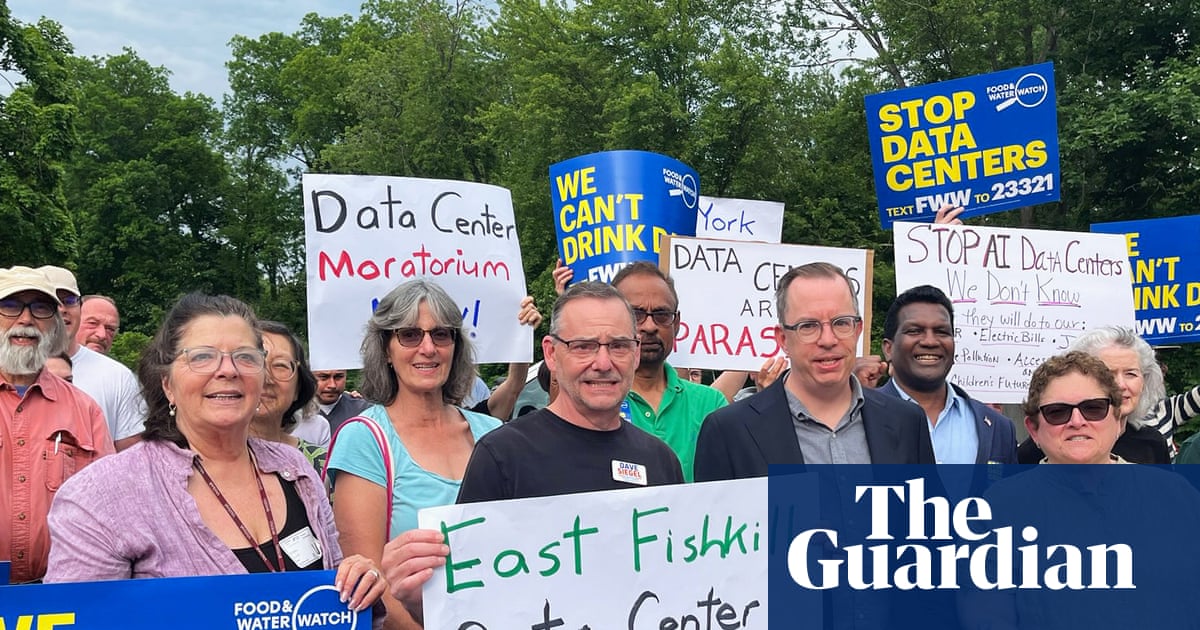
The hamlet, about 70 miles north of New York City, has imposed a three-year moratorium on new data centers larger than 20 megawatts. The unanimous measure, adopted in late June, prevents the town from considering such projects until July 2029 while officials study possible effects on water resources and local ecosystems.
The action follows a backlash to exploratory plans by developer Treetop Companies for an AI data-center campus that could span more than one million square feet across roughly 143 acres and draw around one gigawatt of power. According to the Guardian’s report, the project had not yet reached the municipal permit-application stage when residents began organizing, attending town-board meetings and advocating for a temporary ban.
Why the proposal struck a nerve
East Fishkill is not an obvious candidate for a generalized anti-technology reaction. For nearly 50 years, a 460-acre local campus was home to IBM semiconductor research and manufacturing. That history helped build New York’s technology industry and gave the town a direct relationship with high-tech employment and industrial development.
But the scale and operating profile of a modern AI data center pose a different local proposition. The reported campus would be among the country’s largest, and community opposition emerged before a formal project application was filed. Residents’ concerns focused on how substantial new energy use could affect water, ecosystems, environmental quality and the long-term character of the community.
Existing zoning laws already did not allow large data centers in East Fishkill. The town nevertheless adopted the moratorium, signaling that officials wanted time to assess an issue that goes beyond whether a specific proposal conforms to current rules. The pause applies to projects above 20 megawatts, a threshold far below the roughly one-gigawatt scale described for the prospective AI campus.

A planning decision, not a rejection of technology
The report captures a distinction local opponents are making: skepticism about a particular category of infrastructure is not necessarily opposition to technology itself. East Fishkill resident and professor Tanya Radford described the town as not anti-tech and said that rapid changes require communities to think through how data centers and their energy consumption could affect cohesion, environmental quality and character over the long term.
That framing matters as AI development becomes tied to physical systems: computing facilities, transmission capacity, water supplies and land-use decisions. Software products may operate globally, but the infrastructure serving them is built in particular municipalities. The costs and benefits can therefore be felt very differently by a host community, a developer, power-system operators and the customers using AI services.
The East Fishkill case also shows that local resistance can be consequential at an early stage. No permit application had been filed, yet public organizing and a town-level moratorium changed the development environment. The company has appealed the measure, according to the report, setting up a dispute over the town’s authority and its approach to planning.
The emerging fault line around AI infrastructure
The Guardian characterizes the conflict as part of a growing divide over whether AI’s benefits outweigh the downsides of building the infrastructure behind it. That divide is not limited to places with no technological history. It can appear in communities that once welcomed high-tech investment but now see large-scale computing as a distinct land-use, environmental and energy challenge.
The facts of East Fishkill’s action do not resolve the underlying trade-off. The report does not establish the final design of the proposed facility, its ultimate power and water arrangements, or whether it will be approved. What it does show is a municipality choosing a defined period for analysis before entertaining large new projects, rather than treating AI data centers as an ordinary extension of previous industrial development.
For developers, the episode is a reminder that technical scale alone does not secure social permission to build. A project can be linked to a prominent technology sector and still face questions about its local footprint. For residents and officials, the moratorium creates time to decide what safeguards, zoning rules or limits they consider appropriate before a proposal advances.

What happens next
East Fishkill’s restriction remains in force through July 2029 unless it is changed or successfully challenged. During that interval, the town plans to study potential impacts on water resources and local ecosystems. Treetop Companies has appealed the moratorium, so the policy’s future may also depend on that process.
The immediate outcome is straightforward: a community with deep roots in the technology economy has drawn a temporary line around the biggest class of data-center projects while it evaluates their consequences. The broader significance is less settled. As AI infrastructure expands, more towns may have to make the same decision—not simply whether they favor innovation, but what scale and conditions they are prepared to host.
This article is based on reporting by The Guardian. Read the original article.
Originally published on theguardian.com


