Texas data centers become a campaign issue
Texas has spent years marketing itself as a prime destination for technology and artificial intelligence infrastructure. Cheap land, a large power market, and a business-friendly political climate helped make the state central to the next wave of data center construction. Now that growth is colliding with a new reality: voters are increasingly uneasy about what massive computing campuses could mean for electricity bills, water supplies, local land use, and the broader shape of community development.
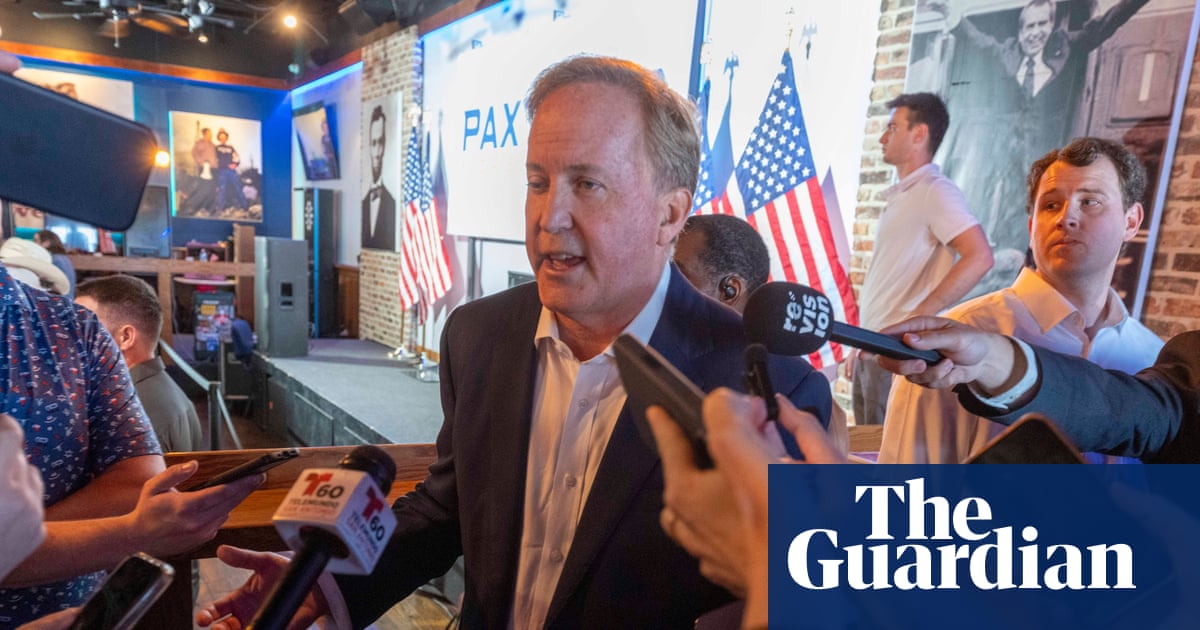
That tension moved further into the political mainstream on Aug. 25 when Republican Senate candidate Ken Paxton unveiled what he described as a “Texas first” data center plan. According to the supplied source material, the proposal is explicitly aimed at addressing what Paxton called the “negative impact” of data centers, a notable shift in rhetoric for a state that has also tried to position itself as an engine of AI development.
The plan lands in the middle of a competitive Senate race, but the larger significance is not just electoral. It shows how data centers, once treated largely as an economic development story, are becoming a policy flashpoint in their own right.
What Paxton says he wants to do
The Guardian-reported source text says Paxton’s four-point plan includes banning Chinese technology used to power U.S. data centers, holding companies criminally liable if AI chatbots undermine children’s safety, and cutting red tape to ensure data centers do not raise Texans’ electricity bills. He also pledged support for Gov. Greg Abbott’s state plan to ban new data centers from rural neighborhoods, repeal sales tax exemptions, and require new facilities to add to Texas electricity capacity rather than simply draw from the existing grid.
Taken together, those elements frame data centers not only as industrial projects but as a bundle of national security, consumer cost, land use, and cultural concerns. That is an important political evolution. Rather than arguing over whether Texas should host AI infrastructure at all, the debate is shifting toward the conditions under which that infrastructure can expand and who bears the costs.
The source text also notes that Paxton’s announcement was posted on X using a graphic flagged by the platform as “Made with AI,” a detail that underlines the unusual politics of the moment: candidates are campaigning on AI-era backlash while using AI-adjacent tools in the process.

A backlash broadens beyond one party
The supplied text points to a wider change in public sentiment. It cites an Annenberg Public Policy Center survey from the previous month showing that 61% of Americans oppose the construction of a new data center in their area, up from 49% in March. The opposition described in the source spans party lines, including Democrats, Republicans, and independents.
That matters because opposition to data centers has often been discussed as a local zoning dispute or an environmental complaint tied to individual projects. The survey figure suggests something broader: a national perception problem for the physical infrastructure behind AI and cloud computing.
Much of the concern appears to stem from the intensive resources these facilities consume. Large data centers can require substantial electricity and water, and communities often worry that the promised tax base or job creation does not offset the pressure on local systems. In Texas, where grid reliability and energy pricing already carry political weight, that makes the issue unusually potent.
The source text also says Abbott recently remarked that tech companies had “basically dug their own grave” and deserved the backlash they were receiving. Even allowing for campaign-season rhetoric, that kind of statement from a governor who had previously called Texas the “epicenter of AI development” signals that elected officials now see clear political risk in being perceived as too permissive toward data center growth.
Why Texas matters nationally
Texas is not just another state in this debate. It is one of the most consequential battlegrounds for AI infrastructure in the United States. If Texas starts to impose stricter terms on where data centers can be built, how they connect to the grid, what tax treatment they receive, or what technologies they can use, the effect could ripple through corporate site selection and national infrastructure planning.
Several parts of Paxton’s stated agenda point in that direction. A push to ensure that facilities add generating capacity rather than intensify demand on the existing system could reshape project economics. Repealing sales tax exemptions would change incentive calculations. Rural siting restrictions would narrow location options in a state where land availability has been a major competitive advantage.
There is also a strategic overlay. The source text says Paxton wants to ban Chinese technology powering U.S. data centers. That links a local land-and-grid issue to the larger geopolitical contest over technology supply chains, a framing that could travel well beyond Texas if similar proposals emerge elsewhere.

What this signals for the AI buildout
For technology companies, the immediate takeaway is that the politics of compute are getting harder. Building the physical backbone of AI is no longer just a matter of capital expenditure, utility agreements, and local approvals. It increasingly requires political legitimacy. Communities want to know whether new projects will raise rates, strain resources, alter neighborhoods, or operate under special tax rules unavailable to others.
For policymakers, the Texas debate offers an early test of how governments may try to rebalance those tradeoffs. The rhetoric coming from state-level figures suggests future fights will likely center on a few recurring questions:
- Whether data center operators should finance or procure new power capacity tied to their demand.
- Whether tax incentives still make sense when public opposition is rising.
- Whether rural land should remain open to large-scale server campus development.
- Whether AI-era harms, including risks to children, should create new liabilities for the companies behind the systems.
Those are not narrow campaign talking points. They are the outlines of a regulatory agenda that could shape the next phase of AI infrastructure deployment.
From growth story to governance story
The bigger shift may be conceptual. Data centers were once discussed mainly as engines of growth. The Texas fight shows they are now also governance objects: visible, power-hungry, politically charged assets whose expansion must be justified in public terms.
That does not mean Texas is turning against AI investment. It does mean the old assumption that more data centers automatically equal more progress is breaking down. In its place is a more contentious argument about who benefits, who pays, and who gets to set the rules.
As campaigns, utilities, local communities, and technology companies all press their case, Texas is emerging as one of the clearest places to watch how that argument develops. What happens there may help determine not only where the next generation of AI infrastructure gets built, but also what political conditions attach to it.
This article is based on reporting by The Guardian. Read the original article.

Originally published on theguardian.com


