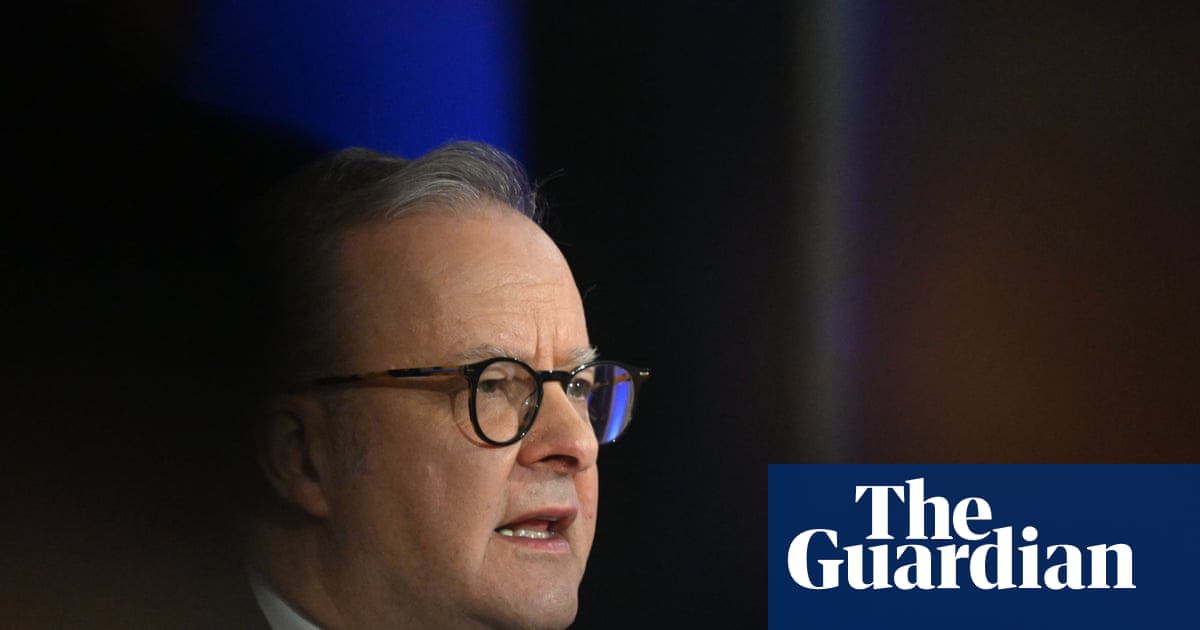
Australia signs on to an AI supply-chain declaration
Australia has joined a US-led agreement intended to secure the technologies and critical infrastructure behind artificial intelligence supply chains. The move came ahead of a Quad leaders’ summit in Manila, where Australian Prime Minister Anthony Albanese was due to meet US President Donald Trump alongside regional leaders.
The agreement, known as the San Francisco Declaration, is part of the Pax Silica international accord. It is designed to promote cooperation among participating countries on AI-related supply chains as governments focus more closely on chips, critical minerals, infrastructure and the systems that connect them.
What the declaration seeks to protect
The declaration covers sensitive technologies used in AI supply chains, including goods, software, materials, knowledge, components, inputs and the means used to produce them. Its scope extends beyond computer chips alone, reflecting how AI capacity depends on a web of manufacturing, transport, energy and digital systems.
It also identifies critical infrastructure as a core concern. That includes ports, terminals, transportation, communications and logistics networks, as well as the information and communications technology and energy infrastructure on which they depend. Digital platforms used to coordinate and manage those systems are included in the agreement’s framing.

A broad group of signatories
Australia joined a group that includes the United States, Japan, the United Kingdom, India, Israel, South Korea and Singapore. The agreement aims to establish cooperation around standards and supply-chain protection among countries that view AI infrastructure as strategically important.
For Australia, the declaration combines several areas that have become increasingly intertwined: access to advanced technology, the role of critical minerals in technology manufacturing, secure logistics, and reliable energy and communications systems. The agreement’s language underscores that AI policy is no longer limited to software rules or model development. It is also becoming a question of industrial capacity and infrastructure resilience.
Diplomatic context in the Indo-Pacific
The signing took place during a period of high-level diplomacy in Southeast Asia. The Quad summit in the Philippines was set to be Trump’s first Quad leaders’ meeting in either presidency. The gathering also follows the first Quad leaders’ summit since 2024.
The Guardian reported that the agreement was crafted in the context of concerns over China’s influence in areas of AI development. Australian officials said the pact would help ensure the United States worked with partners on setting AI standards rather than depending on others for leadership.
That context puts Australia in a delicate position. It is participating in a framework built around stronger protections for key AI technologies while also seeking to manage its relationship with China. The declaration therefore has both a practical supply-chain purpose and a wider diplomatic significance.

From AI policy to physical systems
The most notable feature of the declaration is its emphasis on the physical foundations of AI. Advanced AI systems require more than data centers and software developers. They rely on semiconductors, materials, manufacturing equipment, electricity, telecommunications links, shipping routes and the systems that coordinate all of them.
By naming ports, terminals and logistics networks, the agreement treats disruption to transport and infrastructure as a potential AI supply-chain risk. By naming energy and ICT infrastructure, it recognizes that computing capacity depends on dependable power and communications. This is a much broader conception of AI security than a narrow focus on a single component or technology.
What to watch next
The declaration sets out a shared direction, but its practical importance will depend on the follow-through by signatories. The consequential measures will be the standards, investment choices, procurement policies and coordination arrangements that emerge after the summit diplomacy.
For now, Australia’s decision places it among countries seeking closer cooperation over the systems needed to build and operate AI. The pact’s reach across technology, materials, infrastructure and logistics signals where AI competition is increasingly being fought: not only in the development of models, but across the industrial networks that make those models possible.
This article is based on reporting by The Guardian. Read the original article.
Originally published on theguardian.com