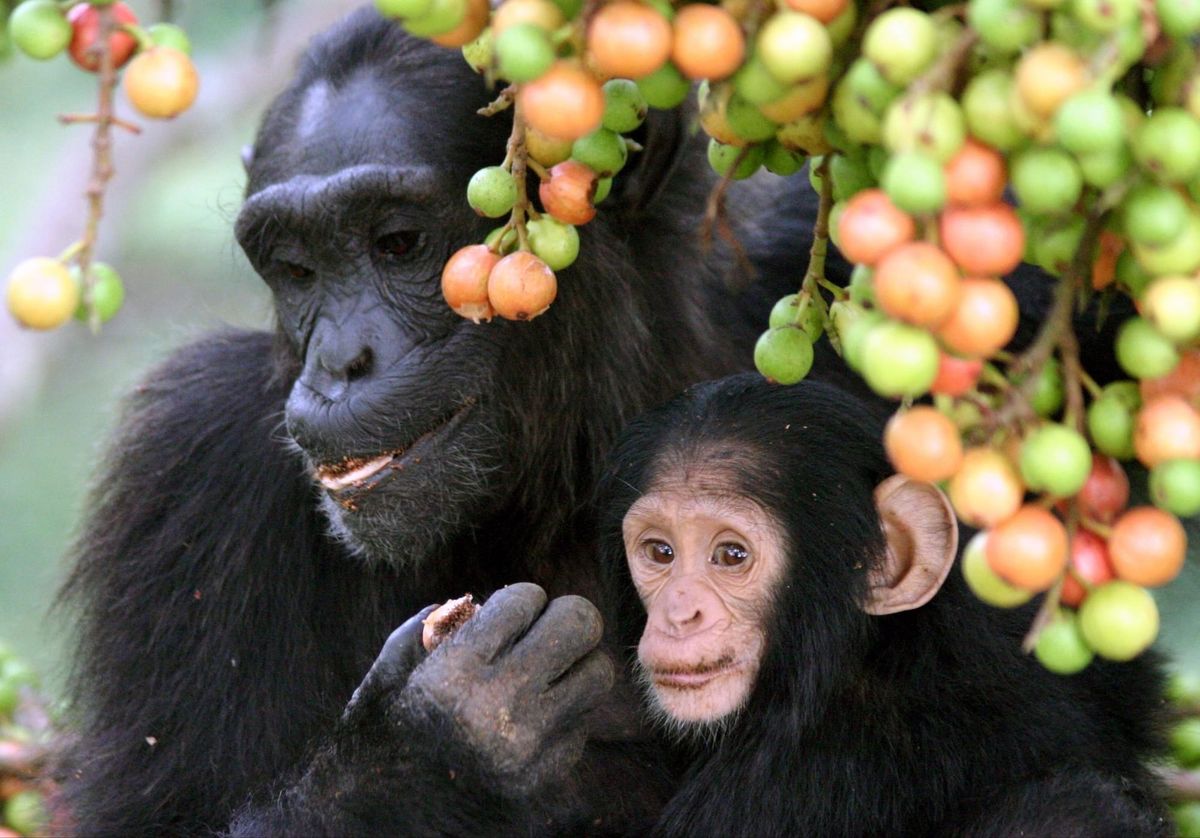
An ancient retrovirus that entered the genomes of several African ape lineages—but appears to be absent from humans—may have helped shape differences in early brain development between humans and chimpanzees. The finding, reported in a study highlighted by 404 Media and published in Science Advances, adds a new mechanism to the long-running effort to explain how closely related primates developed markedly different brains.
Researchers examined a family of endogenous retroviruses known as PTERV1. Retroviruses can insert copies of their genetic material into the DNA of infected hosts. When those insertions occur in reproductive cells and persist through generations, they become part of a species’ inherited genome. Such ancient viral sequences are not necessarily active infections; instead, they can become evolutionary remnants with the potential to influence nearby genes.
The study focused on a striking pattern: PTERV1 insertions are found in chimpanzees, bonobos and gorillas, but not in humans. The researchers reported that these insertions likely originated from infections in the ancestors of African apes roughly 5 million to 7 million years ago. Their absence from the human genome makes them a potentially useful lens for studying genetic regulatory differences that emerged around the same broad evolutionary period.
From viral sequence to brain development
The central result concerns a gene called LINC00662. Using human and chimpanzee brain organoids—small clusters of neurons grown from stem cells that model selected aspects of brain development—the researchers identified chimpanzee-specific PTERV1 insertions on chromosome 19. According to the account of the study, those insertions silence LINC00662.
In human brain development, by contrast, LINC00662 is active. The gene is associated with neuronal maturation, development and outgrowth. That creates a plausible route by which an inherited viral insertion could affect the timing or character of developing neural cells: not by encoding a new brain-building instruction, but by changing whether an existing gene is switched on.
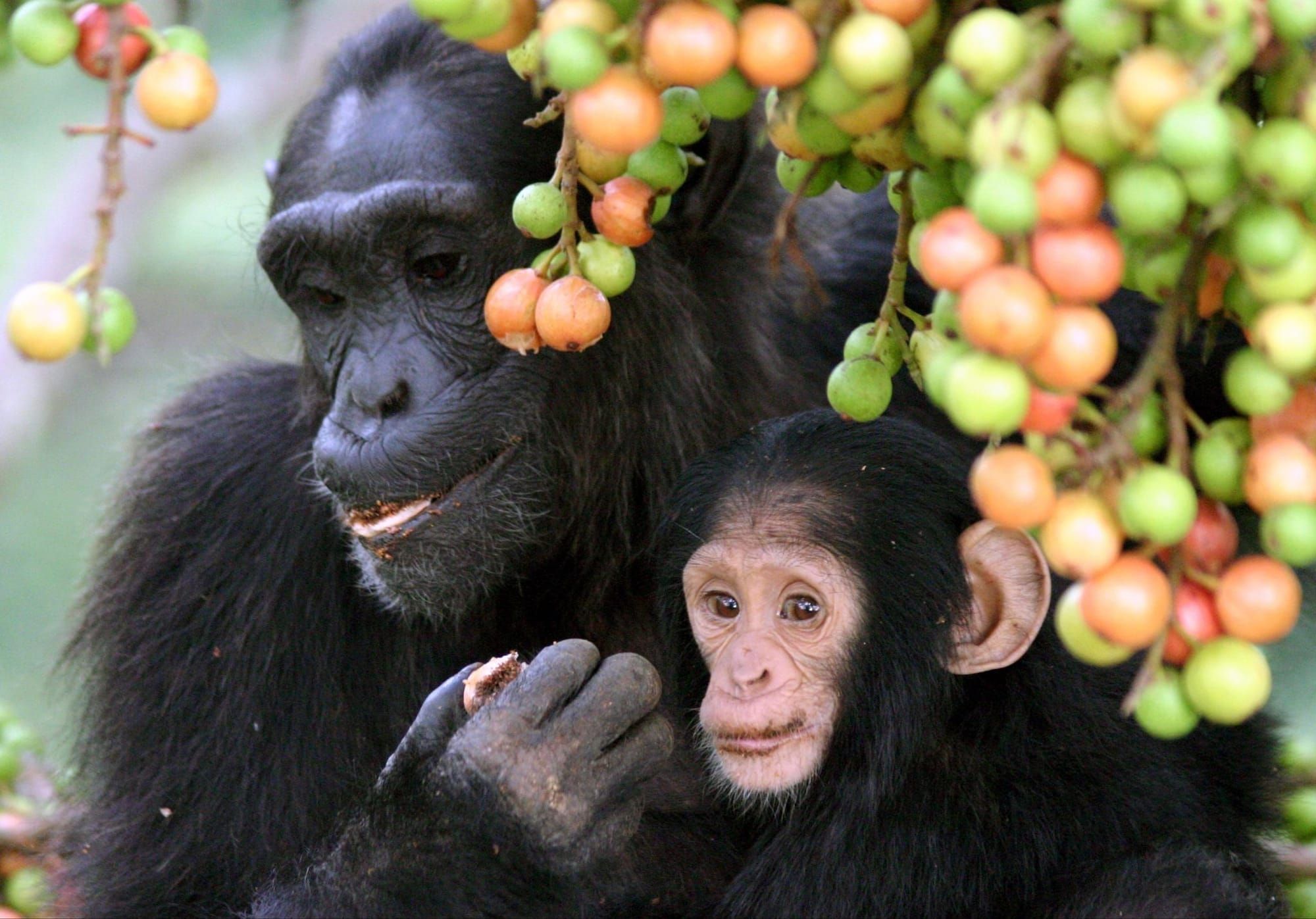
This kind of result matters because differences between species do not have to come from large changes in protein-coding genes. Gene regulation—where a gene is active, when it is active and how strongly it is expressed—can have major biological consequences. A viral sequence inserted near a regulatory region can, in principle, alter that control system long after the original virus has disappeared.

Why organoids were important
Studying early development in humans and chimpanzees is inherently difficult. Brain organoids provide a controlled experimental system in which researchers can compare cells derived from different species and observe some developmental processes without attempting to study those processes directly in embryos or living brains.
They are not miniature complete brains, and they cannot reproduce every aspect of development, behavior or cognition. Their value is narrower but substantial: they can reveal cellular and genetic differences that would otherwise be difficult to observe. In this case, the organoids allowed the team to investigate how a lineage-specific viral insertion relates to the activity of LINC00662 during neural development.
The result should not be read as an explanation for human intelligence in a single gene or viral event. Human brain evolution involved many changes across anatomy, development, environment and genetics. The study instead identifies one possible mechanism contributing to human-chimpanzee divergence: endogenous retroviral insertions can alter the regulation of genes involved in brain development.
A reminder that genomes retain evolutionary history
Retroviruses are commonly associated with disease, but their long-term evolutionary role is more complicated. Once viral DNA becomes embedded in a genome, it can be silenced, degraded, repurposed or retained with effects that vary by lineage. The PTERV1 finding illustrates that absence can be informative as well as presence. Humans did not inherit the same insertions described in chimpanzees, bonobos and gorillas, and that difference may have preserved the activity of LINC00662 in human neural development.
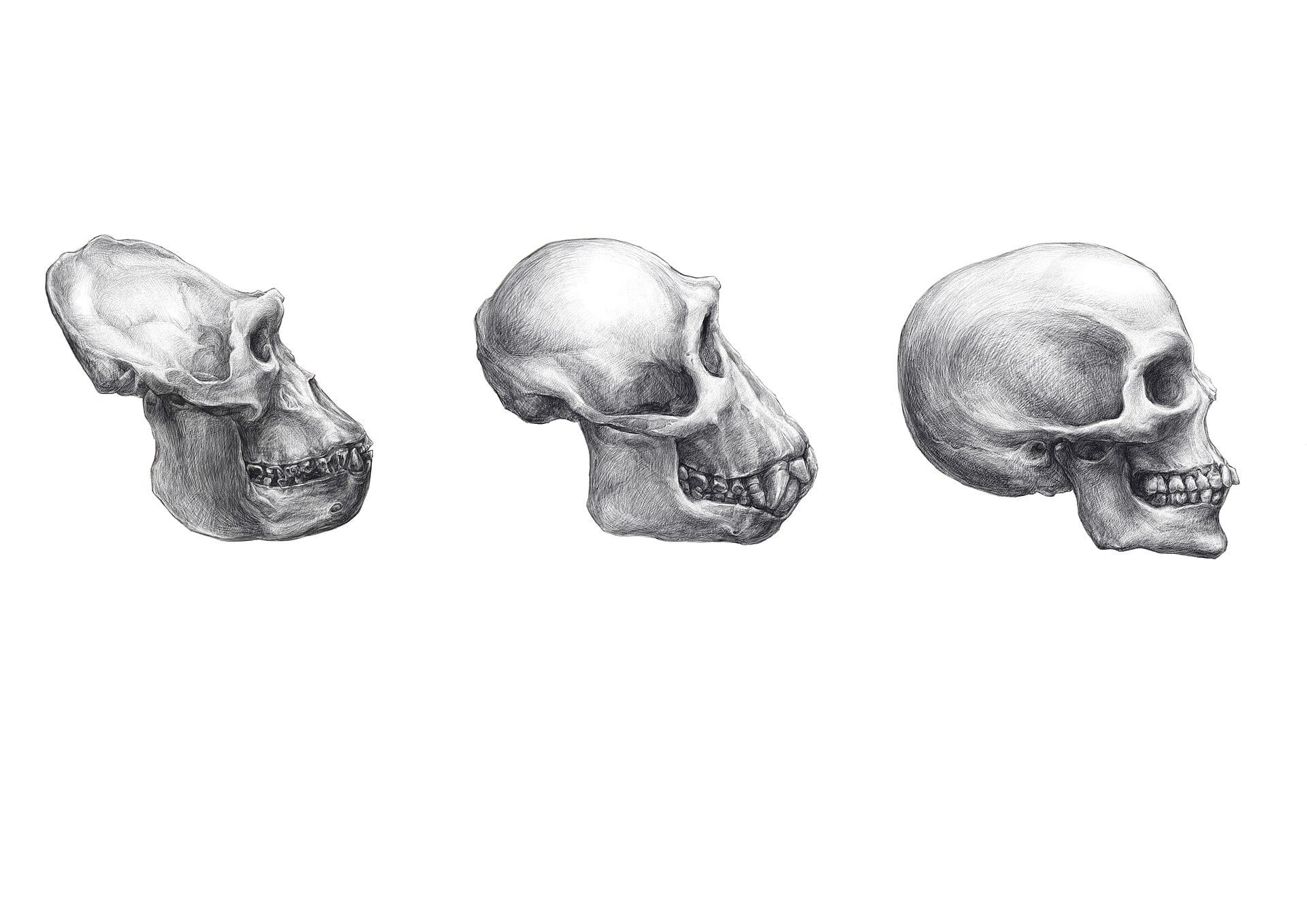
The research also reframes the usual picture of evolutionary change. It is tempting to look for a distinctly human genetic innovation that directly produced a distinctive trait. Here, the relevant contrast may be that other ape lineages acquired insertions that changed gene regulation while the human lineage did not carry them. Evolutionary outcomes can arise from either route.
The reported relationship is particularly interesting because humans and chimpanzees remain each other’s closest living evolutionary relatives, yet their brains differ substantially in size and complexity. The research team noted that the human brain is roughly three times the size of the chimpanzee brain and has distinctive cognitive capabilities. Connecting those broad differences to specific molecular mechanisms is difficult, but regulatory changes in developing neurons are a credible place to look.

What the finding does—and does not—show
The study supports a link between chimpanzee-specific PTERV1 insertions, silencing of LINC00662 and developmental differences observed in the organoid system. It does not establish that PTERV1 alone caused the modern human brain, nor does it reduce complex cognition to a single historical viral exposure.
Further work will be needed to test how widely this regulatory effect operates, whether related insertions influence other developmental genes and how organoid observations connect to brain structure and function in living primates. Those questions are important because gene activity can be shaped by many interacting regulatory elements, not just one insertion.
Even with those limits, the finding expands the set of biological forces considered in human evolution. Ancient viral infections did not simply leave inert traces in primate DNA. In at least this case, their genomic legacy appears capable of changing the developmental program of the brain—and the fact that humans lacked those particular insertions may be part of what set our lineage apart.
This article is based on reporting by 404 Media. Read the original article.
Originally published on 404media.co