
A household test puts AI heating claims under scrutiny
Smart-heating companies often promote lower energy bills as a central benefit of automated controls, with savings claims that can be difficult for households to test in their own circumstances. A two-year experiment described by the Guardian’s consumer technology editor offers a more grounded view: the potential value of automation depends heavily on what it replaces, how a home is built and what kind of comfort a household expects.
The test took place in a 1930s solid-brick house with a recently insulated loft conversion. The home used a 10-year-old Worcester Bosch combination gas boiler and had 13 radiators. The comparison was not between heating and no heating. It contrasted an already frugal, hands-on routine with a system governed by AI-led controls.
That distinction is important. A person who already turns down unused rooms, uses a tight schedule and switches the heating off when leaving may have less easily available waste to eliminate than someone using a simple, broad schedule. The article’s experiment began from a deliberately conservative baseline, making it a useful counterweight to generic savings figures.
The manual baseline was cheap, but demanding
During the winter of 2024, the home used a Hive thermostat in a central hallway, but its smart features were disabled. Heating was scheduled for a couple of hours in the morning and evening. Standard thermostatic radiator valves were turned off in rooms that were not in use and adjusted manually elsewhere. The heating was also switched off when the household left the house.
The approach required persistent attention. The author described it as laborious and sometimes uncomfortable, especially for other members of the household. Saving energy was therefore not the only measure that mattered. A heating system has to fit daily life, differing room needs and people’s tolerance for manually managing temperatures.
To separate heating demand from hot-water use, the test used summer 2025 recordings from periods when the heating was off to calculate a daily average for hot water. On that basis, the manual-control approach consumed 14,316.7 kilowatt-hours of gas across 213 days between November and May. The author reported this as roughly 10% to 15% lower than in previous years when the household had used a less strict approach.

Why smart controls may change the equation
The article frames AI-led heating as a way to reduce the work of efficient heating rather than as a guaranteed shortcut to lower bills. Smart systems can automate decisions that were previously made by hand: scheduling heat, responding to occupancy and coordinating individual radiators. In the test, the author moved from basic central control toward a system designed to manage heating more actively.
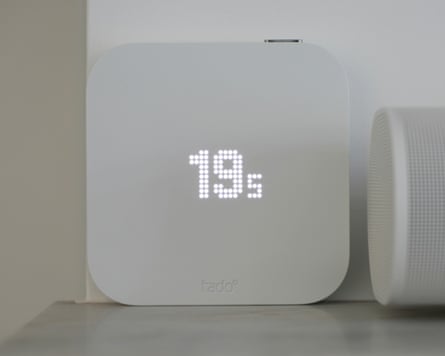
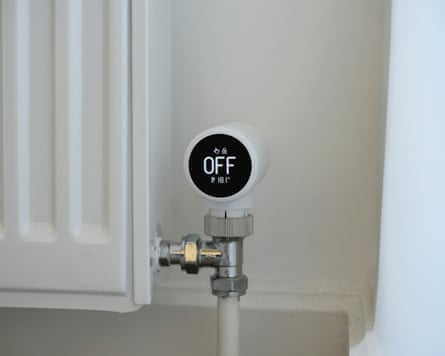
Per-radiator control is central to that idea. The report identifies Tado as Europe’s largest manufacturer of smart-heating controls, while noting that alternatives offer comparable control of individual radiators. Such systems can potentially avoid heating every room in the same way, although their real-world performance will vary with insulation, heating equipment, household size, occupancy patterns and the temperature settings people choose.
The source also notes that manufacturers commonly cite average savings of around 25%, or £180 a year, but stresses that those promises carry substantial caveats. Energy prices change, winter weather differs and comparisons can be distorted if one period has more people at home or a colder season. A single household’s outcome is informative, but it is not a universal savings rate.
Comfort is part of the efficiency calculation
The strongest lesson from the test is that heating efficiency cannot be judged purely by total energy use. The manual baseline kept consumption low, but required repeated adjustments and came with comfort compromises. Automation may be valuable when it can preserve some of the discipline of a careful human operator while removing the constant intervention.
That is especially relevant for older homes. A 1930s solid-brick property does not behave like a newly built, highly insulated house, and a thermostat placed in a hallway may not represent conditions in every room. Even within one building, bedrooms, living rooms and rarely used spaces can require different treatment. Controls that operate at the room level are intended to address that mismatch.
None of this means an AI heating system automatically pays for itself. Upfront equipment costs, installation, compatible boilers and the value placed on convenience all affect the decision. The published test does not establish a general rule for all households, but it does show why marketing averages should be treated as starting points for questions rather than final answers.

A practical reading of the results
For households considering smart heating, the useful comparison is not an advertised average versus current bills. It is the likely performance against their existing routine. Someone with a basic whole-home schedule may have more room for improvement than someone already using radiator valves carefully and switching heating off when away.
The Guardian experiment suggests that automation’s meaningful contribution can be both technical and behavioral. It can help direct heat where it is wanted, but it may also make a lower-waste routine easier to sustain. That combination—less manual effort with an acceptable level of comfort—is more revealing than a headline savings percentage.
- The test compared strict manual heating management with AI-led controls in one home.
- The manual baseline used 14,316.7 kWh of gas across 213 heating days, after a hot-water adjustment.
- Manufacturer savings claims are heavily caveated and will not translate uniformly between homes.
- Comfort, installation costs and existing habits are essential to assessing smart-heating value.
This article is based on reporting by The Guardian. Read the original article.
Originally published on theguardian.com