SPHEREx: A New Frontier in Space Astronomy
NASA's SPHEREx mission, launched to map the entire sky in near-infrared light, was designed to answer fundamental questions about the universe's history and evolution. However, a new preprint paper from researchers at NASA's Ames Research Center reveals an unexpected challenge: satellite trails are overwhelming the telescope's observations.
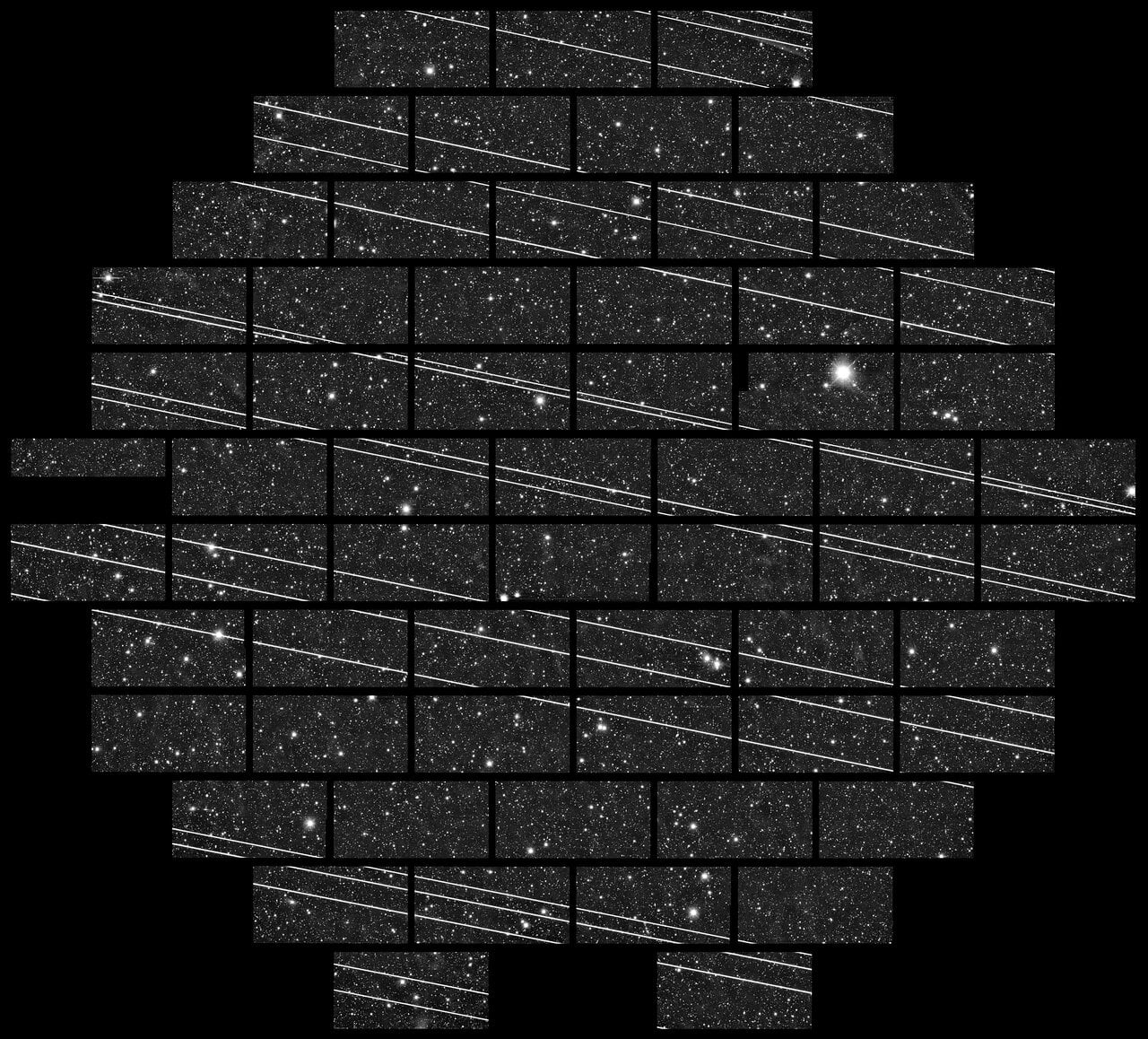
The Spectro-Photometer for the History of the Universe, Epoch of Reionization, and Ices Explorer (SPHEREx) orbits at an altitude of 700 kilometers above Earth. Despite being in space, it is not immune to the growing problem of light pollution from artificial satellites. Between May and September of last year, a staggering 73.3% of SPHEREx images contained at least one satellite trail. On average, each exposure showed 2.18 trails, many concentrated in an X-shaped pattern that mirrors the orbital paths of satellite megaconstellations.
The Impact of Satellite Megaconstellations
The rise of satellite megaconstellations, such as Starlink, has been a growing concern for astronomers. These networks of thousands of satellites reflect sunlight, creating bright trails that streak across astronomical images. While ground-based telescopes have long struggled with this issue, SPHEREx's experience shows that space-based observatories are also vulnerable.
SPHEREx's long exposure times and wide field of view make it particularly susceptible. The telescope uses an automated 'sample up-the-ramp' algorithm to protect against cosmic rays. When a sudden energy blast hits a pixel, the system halts data collection to prevent saturation. However, commercial satellites are now so bright that they trigger this system without cosmic ray involvement. The result is 'railroad' tracks in the images: the bright center of the trail is scrubbed out, but parallel lines remain etched into the science data, destroying photometric information for any celestial objects hidden beneath.

Broader Implications for Space Telescopes
SPHEREx is not alone in facing this problem. A previous study led by Sandor Kruk found that the fraction of Hubble Space Telescope images crossed by satellite trails rose from 2.8% in the early 2000s to 5.9% in 2021. Although Hubble's narrower field of view reduces the impact, the trend is alarming. As satellite megaconstellations continue to expand, the contamination rate is expected to worsen.
The researchers emphasize that there is no easy solution. Mitigation strategies, such as scheduling observations to avoid satellite paths or using advanced image processing, are limited. The brightness of satellites continues to increase, and without regulatory action, the problem may become unmanageable.
What This Means for Astronomy
The contamination of space telescope images threatens scientific productivity. For SPHEREx, which aims to map the entire sky, the loss of data could compromise its primary mission objectives. The study highlights the urgent need for collaboration between astronomers, satellite operators, and policymakers to preserve the dark skies necessary for astronomical research.
As the number of satellites in low Earth orbit grows, the impact on both ground- and space-based telescopes will intensify. The findings from SPHEREx serve as a wake-up call: without intervention, the very tools we use to explore the cosmos may be blinded by our own technology.
This article is based on reporting by Universe Today. Read the original article.

Originally published on universetoday.com