A stealth fighter missing its most critical sensor
The F-35 Joint Strike Fighter program -- already the most expensive weapons system in history -- appears to have crossed a new threshold of dysfunction. A growing body of evidence indicates that F-35A variants delivered to the U.S. Air Force since June 2025 have arrived without radars installed, a remarkable concession driven by cascading delays in the jet's long-troubled Block 4 upgrade package. While the Joint Program Office has neither confirmed nor denied the specific claim, its public statements and corroborating details from congressional sources paint a picture that is difficult to interpret any other way.
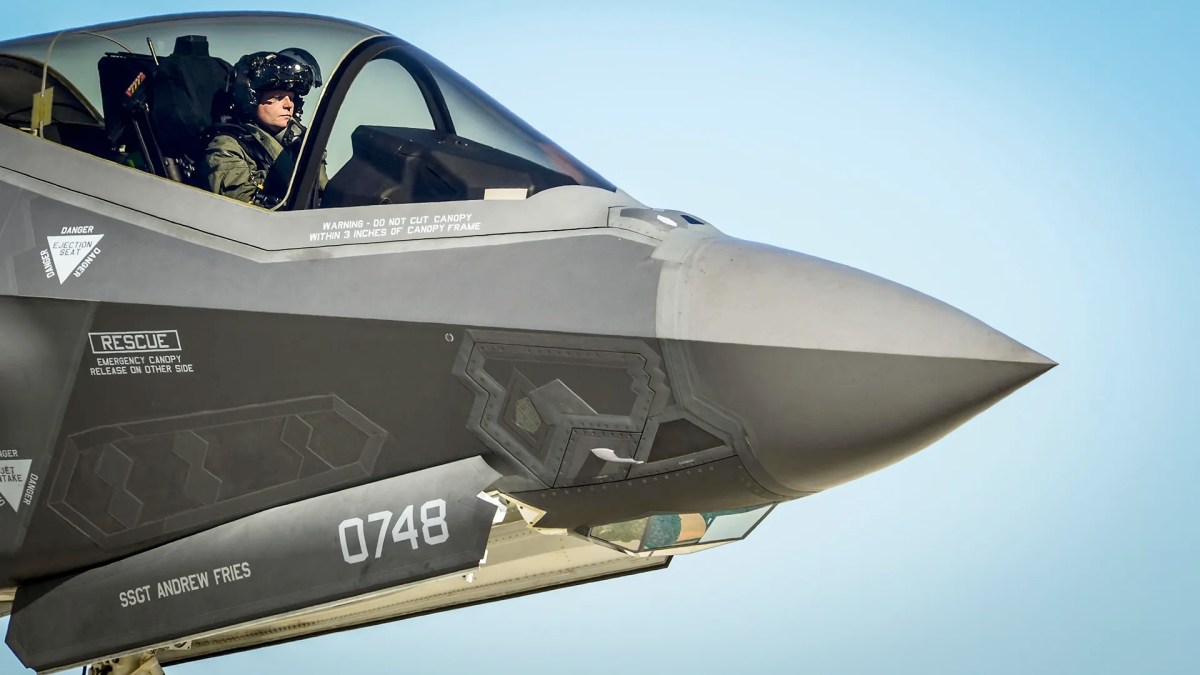
The issue centers on the AN/APG-85, a next-generation active electronically scanned array (AESA) radar being developed by Northrop Grumman as a cornerstone of the Block 4 upgrade. The APG-85 was designed to replace the existing AN/APG-81, which has served as the F-35's primary radar since the jet entered service. Lot 17 aircraft, which began deliveries in 2025, were built with a modified forward fuselage specifically configured to accept the new radar. The problem: the APG-85 is not yet ready, and the physical modifications that accommodate it are incompatible with the older APG-81.
A mounting wall of circumstantial evidence
Defense Daily first reported the radar-less deliveries last week, citing an anonymous source who said all F-35A models delivered to the Air Force since June 2025 have been affected. Foreign customers, who are still receiving jets fitted with the older APG-81, have reportedly not been impacted. The F-35 Joint Program Office responded to queries with a carefully worded statement confirming that jets "are being built to accommodate" the APG-85 and that Lot 17 deliveries have been ongoing since 2025 -- but pointedly declined to address whether those jets actually have radars installed.
Representative Rob Wittman, the Virginia Republican who chairs the House Armed Services Committee's Tactical Air and Land Forces Subcommittee, added further weight to the reports. In an interview with Defense Daily, Wittman confirmed that the APG-85 requires a fundamentally different bulkhead configuration than the APG-81, making the two radars physically non-interchangeable in current airframes. When pressed on whether jets were being delivered without radars, Wittman said the delivery configuration was classified but encouraged reporters to ask the Air Force directly. A separate Breaking Defense report from June 2025 revealed that Lockheed Martin had proposed redesigning the forward fuselage to accept either radar -- an effort that sources say would take approximately two years to complete.
What a radar-less F-35 can and cannot do
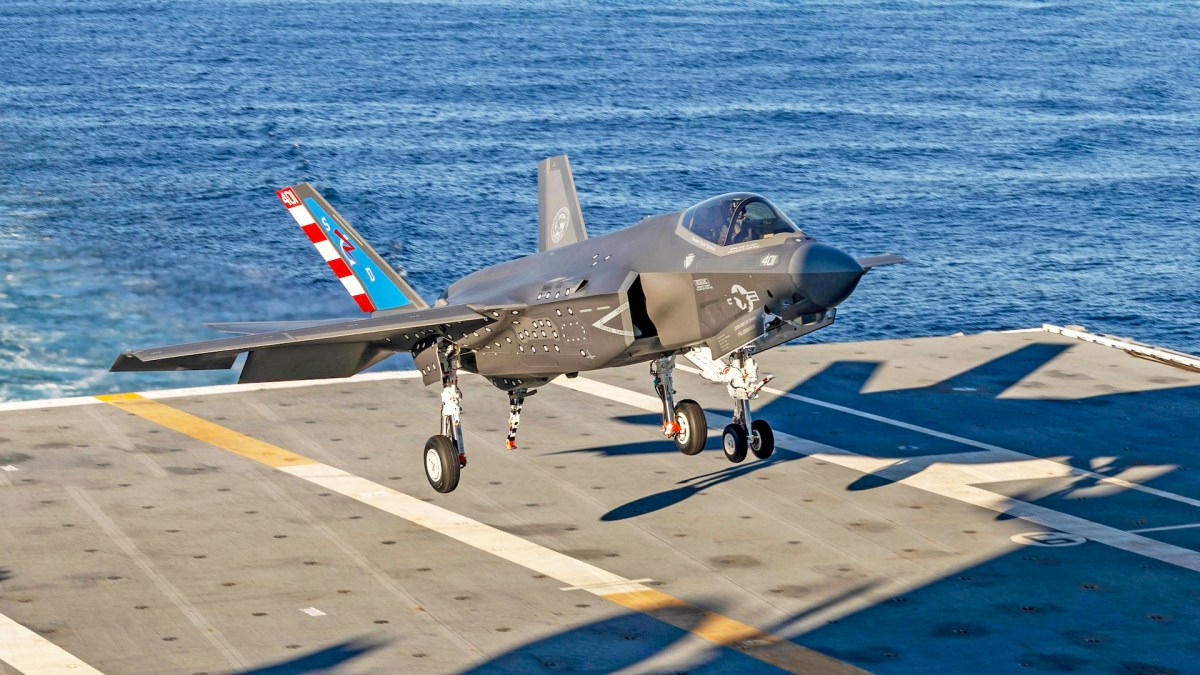
An F-35 without its radar is not entirely defenseless, but its capabilities are significantly degraded. The jet still carries the AN/AAQ-37 Distributed Aperture System, a suite of six infrared cameras that provides 360-degree situational awareness, missile warning, and basic navigation. It also has the Electro-Optical Targeting System for precision strikes. However, the radar is the primary sensor for beyond-visual-range air-to-air engagements, synthetic aperture ground mapping, and deep integration with the jet's electronic warfare suite. Without it, the F-35 is essentially limited to training roles and close-range operations -- a far cry from the full-spectrum dominance the platform was designed to deliver.
The low probability of intercept and low probability of detection features expected in the APG-85 are particularly critical for a stealth platform. Radar emissions can betray a stealth aircraft's position, and the new radar was designed to minimize that signature. Jets operating without any radar at all would avoid that particular vulnerability, but at the cost of their most powerful sensor capability.
Why it matters: a program that keeps finding new ways to stumble
The Block 4 upgrade was supposed to be the F-35's maturation milestone -- the package of hardware and software improvements that would finally deliver the full combat capability the jet was originally promised to provide. Instead, it has become a case study in defense acquisition dysfunction, with costs ballooning and timelines slipping repeatedly. The decision to accept airframes without their primary sensor suggests the Pentagon has concluded that keeping the production line moving is preferable to halting deliveries, even if the resulting jets are of limited operational utility in their delivered configuration.
For the Air Force, the calculus may be that these airframes can be used for pilot training and non-combat familiarization while awaiting retrofit with the APG-85 once it becomes available. But every radar-less jet represents a multimillion-dollar platform sitting below its intended capability, adding to the program's already staggering lifecycle costs. The F-35 remains essential to U.S. and allied air power strategy for decades to come -- which makes every delay in reaching full capability not just an acquisition headache, but a strategic liability.
This article is based on reporting by The War Zone. Read the original article.
Originally published on twz.com