First-of-Its-Kind Rescue Mission
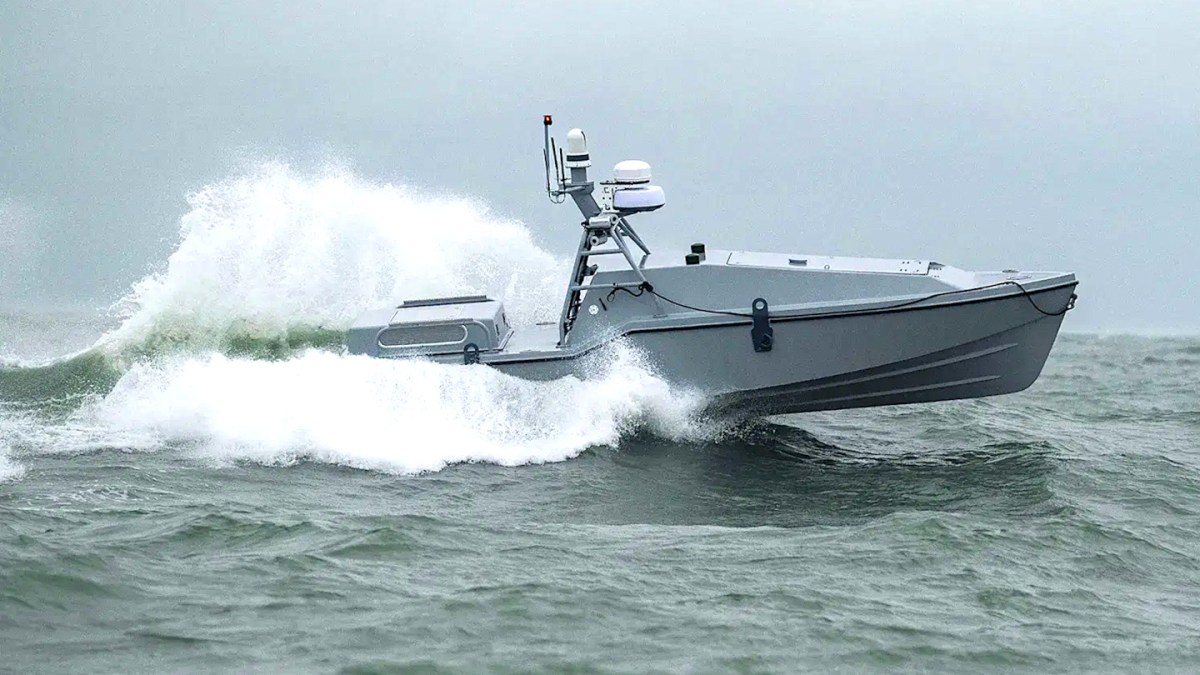
In a historic maritime rescue, a U.S. Navy Corsair unmanned surface vessel (USV) plucked the crew of a downed U.S. Army AH-64 Apache attack helicopter from the Gulf of Oman. The operation, confirmed by U.S. Central Command (CENTCOM), marks the first known instance of a drone boat being used to recover personnel during a search and rescue mission. The incident occurred overnight, and President Donald Trump has stated that Iranian forces were responsible for downing the helicopter, promising a response.
The Corsair USV: A New Asset in the Fleet
The Corsair, built by Saronic, is a 24-foot-long autonomous surface vessel with a speedboat-like design. It was first unveiled in 2024 and entered service with the U.S. Navy's Task Force 59 in the Middle East in late March 2026. The Navy awarded Saronic a $392 million Other Transaction Authority (OTA) deal in December 2025 for production of these vessels.
Capabilities and Specifications
- Length: 24 feet
- Top speed: 35 knots
- Maximum range: 1,000 nautical miles
- Payload capacity: 1,000 pounds
According to the manufacturer, the Corsair is designed for autonomous operations and can be equipped with various payloads for surveillance, reconnaissance, and now, personnel recovery.
Details of the Rescue
U.S. Navy Capt. Tim Hawkins, a CENTCOM spokesman, confirmed to The War Zone that the Corsair operated by Task Force 59 was the vessel that rescued the Apache crew. “The surface drone that assisted in last night’s rescue of the Apache crew off the coast of Oman was a U.S. Navy Corsair unmanned surface vessel operated by U.S. 5th Fleet’s Task Force 59,” Hawkins said. “The task force began fielding these drones in theater in late March.”
The Corsair picked up the two aircrew members from the water and transported them to another location, where they were hoisted into a helicopter for further evacuation. The specific location of the rescue was the Gulf of Oman, a strategic waterway near the Strait of Hormuz.
Implications for Future Operations
This successful rescue demonstrates the potential of unmanned systems in combat search and rescue (CSAR) missions. Traditionally, such operations involve manned helicopters and surface vessels, but the use of a drone boat reduces risk to personnel and can provide rapid response capabilities. The Corsair’s ability to operate autonomously for extended periods and its relatively small size make it well-suited for covert or low-signature operations.
The incident also highlights the growing role of Task Force 59, the U.S. Navy’s premier drone task force in the Middle East, which has been experimenting with a variety of unmanned systems to enhance maritime domain awareness and force protection.
Political Context
President Trump’s statement blaming Iranian forces for downing the Apache adds a layer of geopolitical tension to the event. While the rescue was a success, the broader implications of the attack and the promised response remain to be seen. The Gulf of Oman has been a flashpoint for incidents involving Iranian forces and U.S. military assets in recent years.
The Corsair’s role in this rescue may also accelerate interest in unmanned systems for humanitarian and disaster relief missions. The Navy’s investment in Saronic’s technology appears to be paying dividends, with the Corsair proving its worth in a real-world, high-stakes scenario.
Technical and Operational Details
The Corsair is designed for rapid prototyping and production. Saronic has emphasized that the vessel went from prototype to production in under 12 months. The OTA contract was structured to accelerate delivery, and the Navy has been integrating the Corsair into Task Force 59’s operations since March.
In addition to personnel recovery, the Corsair can be used for intelligence, surveillance, and reconnaissance (ISR), mine countermeasures, and potentially even strike missions with appropriate payloads. Its 1,000-pound payload capacity allows for a variety of sensors and equipment.
The successful rescue underscores the importance of unmanned systems in modern naval operations. As the Navy continues to expand its unmanned fleet, the Corsair and similar vessels are likely to play an increasingly vital role in both combat and non-combat missions.
This article is based on reporting by twz.com. Read the original article.
Originally published on twz.com