A Landmark Funding Round for Autonomous Driving
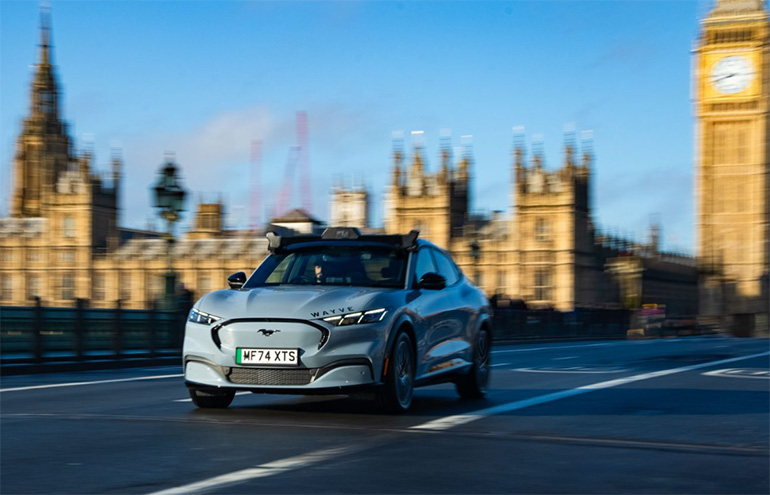
Wayve Technologies, the London-based autonomous driving company, has secured $1.2 billion in Series D funding, pushing its post-money valuation to $8.6 billion and its total capital raised to $1.5 billion. The round was led by Eclipse, Balderton Capital, and SoftBank Vision Fund 2, with new institutional investors including Ontario Teachers' Pension Plan, Baillie Gifford, British Business Bank, Icehouse Ventures, and Schroders Capital joining the cap table.
The funding represents one of the largest single raises in the autonomous vehicle sector in recent years and signals growing investor confidence in Wayve's fundamentally different approach to self-driving technology. Unlike competitors that rely on hand-coded rules and high-definition maps, Wayve's system learns to drive using a single neural network trained on real-world data from more than 70 countries.
"With $1.5 billion secured, we are building for a total addressable market that spans every vehicle that moves," said Alex Kendall, co-founder and CEO of Wayve. "Autonomy will not scale through city-by-city robotaxi deployments alone. It will scale through a trusted platform that automakers and fleets can deploy globally and improve continuously."
End-to-End AI That Ditches the Map
At the heart of Wayve's technology is what the company calls its AV2.0 foundation model, which replaces the traditional "sense-plan-act" architecture used by most autonomous vehicle developers with a unified neural network. The AI Driver platform runs entirely on onboard vehicle compute, meaning it does not depend on cloud connectivity or pre-mapped routes to navigate.
Wayve claims its system has achieved zero-shot deployment in more than 500 cities across Europe, North America, and Japan, meaning it can drive in a new city without any location-specific fine-tuning or training beforehand. This stands in stark contrast to competitors like Waymo, which must meticulously map each new operating area before launching service.
The platform spans SAE Level 2 "hands-off" driver assistance through Level 4 fully autonomous "eyes-off" driving, giving automakers a single software stack that can be deployed across different vehicles, brands, and markets. Rather than building its own fleet, Wayve licenses its software directly to manufacturers, providing tools to customize driving models for specific vehicles.
Uber Partnership Brings Robotaxis to London
Perhaps the most headline-grabbing element of the announcement is Wayve's plan to conduct commercial robotaxi trials with Uber in London later this year. The partnership will see Wayve's AI Driver technology deployed in supervised autonomous vehicles operating on the Uber platform, marking one of the first robotaxi services in the United Kingdom.
Looking further ahead, Wayve plans to deliver consumer vehicles equipped with Level 2+ capability by 2027. These vehicles would handle steering, navigation, and traffic response under human supervision, similar to the advanced driver assistance systems already offered by Tesla and others but powered by Wayve's foundation model approach.
Microsoft and NVIDIA also participated in the round with milestone-based capital commitments. "Wayve is pushing the frontier of embodied AI for autonomous driving, and Azure supports the scale, reliability, and safety needed to bring that innovation into the real world," said Microsoft CEO Satya Nadella. The company's cloud infrastructure will play a central role in training and deploying Wayve's models at scale.
Automakers Are Betting on Wayve's Platform Play
Three major automakers, Mercedes-Benz, Nissan, and Stellantis, invested in the round, underscoring the industry's appetite for a scalable autonomy platform that can be integrated across existing vehicle lineups. This licensing model offers significantly lower capital intensity than the vertically integrated approach pursued by companies like Waymo and Cruise, which build and operate their own fleets.
Suranga Chandratillake, general partner at Balderton, praised the company's transition from research to commercial deployment. "The technical achievements are extraordinary, but what's more impressive is how this team has taken cutting-edge research out of the lab and deployed it in complex, real-world driving environments," he said.
A Crowded London Market Ahead
Wayve won't have the London robotaxi market to itself for long. Waymo, Tesla, and Baidu are all exploring plans to bring autonomous vehicles to the British capital, with Baidu partnering with both Lyft and Uber for potential European operations. UK Transport Secretary Heidi Alexander welcomed the investment, saying it would "cement the U.K. as a powerhouse for the next generation of transport" and noting that smarter regulation would give firms like Wayve the opportunity to trial driverless technology on British roads.
Wayve's previous Series C round in 2024 raised $1.05 billion, meaning the company has more than doubled its total funding in just over a year. With global automaker backing, a clear path to commercial deployment, and a technology approach that prioritizes scalability over geographic specificity, Wayve is positioning itself as the autonomy layer that could power vehicles worldwide rather than just in a handful of geofenced cities.
This article is based on reporting by The Robot Report. Read the original article.
Originally published on therobotreport.com