DARPA’s latest robotics competition put disaster triage at the center of the test. On 5 November, 10 teams gathered at Disaster City, a 52-acre mock town in College Station, Texas, for the finals of the DARPA Triage Challenge.
The event ran for nine days and examined how teams of robots and humans could work in an emergency setting. Its stated aim was to explore whether robots could help save lives during disasters.
A disaster-response test bed
Disaster City provided the setting for the competition. The 52-acre mock town allowed teams to operate in an environment designed around a disaster scenario rather than in a conventional laboratory or exhibition space.
That setting matters to the challenge’s focus. Disaster triage is about finding and assessing people who may need help under difficult conditions. The competition asked participating teams to bring together robotic systems and human operators for that kind of task.
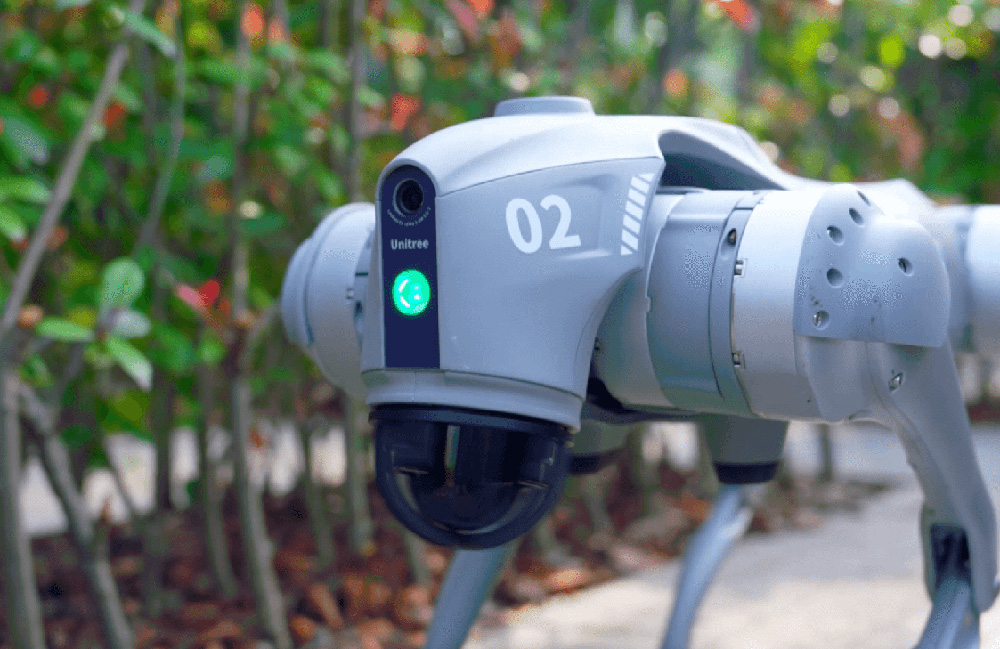
IEEE Spectrum’s account of the finals describes a woman roleplaying a disaster victim calling for help while a Spot robot used by the University of Maryland’s RoboScout team surveyed its surroundings. The image captures the central proposition being tested: a robot operating near a person in need while people remain part of the response effort.

Robots and people, not robots alone
The DARPA Triage Challenge was not framed as a contest to remove humans from emergency response. It focused on the performance of teams of robots and humans. That distinction is important because the challenge centered on coordination: robotic systems operating in a disaster environment alongside human participants and operators.
The finals brought 10 teams to College Station. Across the nine-day event, those teams faced a shared setting and a common emergency-response theme. The competition therefore served as a concentrated test of how different groups approached the same broad problem.
Robotics challenges can make technical work visible in a way that isolated demonstrations often do not. Here, the visible task was disaster triage. Teams were asked to show how robots could be used in emergencies, in a purpose-built mock town and in situations involving people acting as disaster victims.
Why triage was the focus
The challenge’s premise was direct: robots could save lives in emergencies. The finals did not settle that question on their own, but they put it into a practical competitive setting. Rather than treating emergency robotics as an abstract future application, the event focused attention on a concrete use case: disaster response and triage.
The scenario involving RoboScout’s Spot robot illustrates the kind of interaction at issue. A person roleplaying a victim calls for help, and a robot surveys the surrounding area. The scene is not simply a demonstration of a robot moving through a space; it is a test of how robotic sensing and human response can be brought together around an urgent situation.
DARPA has used grand challenges to push work on difficult technical problems. In this case, the problem was not merely whether a robot could operate at Disaster City. It was whether robot-and-human teams could do useful work in a disaster-triage context.

What the finals established
The competition established a public venue for comparing approaches to emergency-response robotics. Ten teams took part, the event lasted nine days, and it was held in a mock town built for disaster scenarios. Those facts make the finals a notable milestone for a field that is often discussed through individual machines or laboratory results.
It also underscored the role of human operators and participants in the challenge. The account from the finals explicitly presents robots and humans as a team. In the RoboScout scene, a human roleplayer and a robot occupy the same emergency-response narrative: one calls for help, while the other surveys the scene.
The DARPA Triage Challenge does not offer a simple measure of whether robots are ready to replace established emergency responders. That was not the framing supplied by the competition. Its more immediate contribution was to test, in a disaster-oriented environment, how robotic systems and people could be organized for triage work.
A focused test for emergency robotics
For the participating teams, the finals condensed a broad ambition into a defined event: bring robots into disaster triage and demonstrate their use alongside people. For observers, the challenge offered a close look at a robotics application where the stakes are explicitly human.
As the finals at Disaster City showed, disaster-response robotics is not only about the machine. It is about the relationship between a robot, a human operator, a person needing assistance and the environment around them. DARPA’s challenge put all of those elements in one place—and asked 10 teams to show what their systems could do.
This article is based on reporting by IEEE Spectrum. Read the original article.
Originally published on spectrum.ieee.org