GXO sets out a 2027 automation push
GXO Logistics plans to accelerate deployments of adaptive technologies across the United States in 2027, broadening the use of robotics, AI-enabled vision and automated sortation in its operations. The company says the rollout will begin at priority sites and continue during the following 12 months.
The initiative is framed around warehouse and production workflows where operations must balance efficiency with the ability to handle changing demand and tasks. GXO has not identified the providers that will supply equipment for the newly announced deployments. It has, however, outlined the categories of technology it expects to introduce more widely.
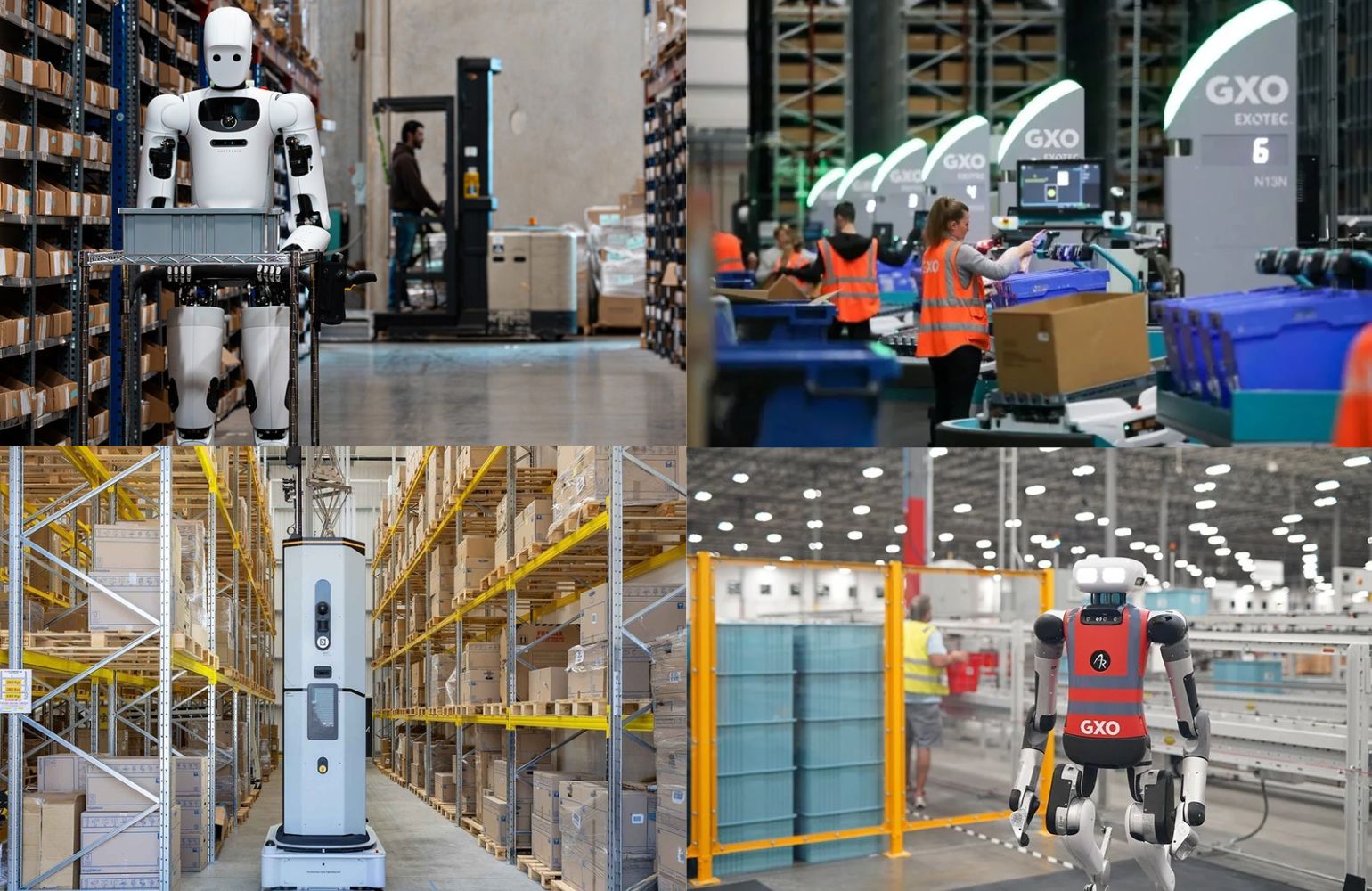
The planned mix includes autonomous mobile robots for pallet transport, robotic arms for work such as inbound unloading and packing, vision systems for hands-free data capture, and flexible automated sortation. Together, those systems point to an effort to automate movement, handling, inspection and routing across logistics facilities rather than focus on one isolated task.
Four technology areas in the plan
Pallet autonomous mobile robots, or AMRs, are intended to automate repetitive material transport and improve the flow of warehouse and production operations. Moving pallets is a foundational logistics activity, so automating it could affect how goods travel between work areas without requiring a fixed conveyor path for every movement.
GXO also plans to use robotic arms that can be deployed across multiple applications. The company specifically identified inbound unloading and packing solutions. Those are different kinds of work: unloading handles incoming goods while packing prepares orders for onward shipment. The emphasis on arms usable in multiple applications suggests GXO is seeking equipment that can be adapted across workflows.
AI-enabled vision is another major component. GXO says these systems can support hands-free data capture, productivity improvements and inventory checks. In logistics operations, inventory information has to be continuously recorded and reconciled. A vision-based approach could reduce the need for manual scanning or other direct data-entry steps where it is deployed.
The fourth category is flexible, scalable automated sortation. Sortation directs items to the correct destination within a facility, often for shipment, storage or the next production step. GXO’s description emphasizes systems that can scale with operational requirements rather than a single fixed configuration.

Company rationale: adaptable supply chains
“Today’s supply chains require solutions that are efficient and adaptable,” Michael Jacobs, GXO’s CEO of the Americas and Asia Pacific, said in the company’s announcement. He said the deployment is intended to help customers modernize operations with technologies that can offer immediate value while supporting longer-term growth.
GXO expects the deployments to increase efficiency, optimize labor resources and improve service levels at participating sites. Those outcomes are expectations rather than reported results: the rollout is scheduled to start in 2027, and the company has not released a provider list or site-by-site performance data for the announced program.
The distinction matters because warehouse automation is not a single technology purchase. Operational impact depends on the tasks selected, the way equipment is integrated into an existing facility and the reliability with which systems perform in live conditions. GXO’s phased approach—starting with priority sites and extending over 12 months—will give the company a structure for expanding the program over time.
Humanoids remain part of GXO’s automation portfolio
Separate from the broader 2027 deployment announcement, GXO has been expanding work with Apptronik on Apollo humanoid robots. Earlier in November, the companies said they were working toward a global rollout of up to 1,000 Apollo units over four years.
GXO and Apptronik began working together in 2024, testing a range of potential tasks before focusing on logistics work such as kitting, according to Apptronik co-founder and CEO Jeff Cardenas. The companies said their joint trials of Apollo in live operations would span goods-to-person and person-to-goods picking, case and tote movement, packing and sortation.
Cardenas said the company measured an Apollo model against a human benchmark for kitting-related tasks and found 96% efficiency for those tasks. That figure pertains to the work described by Apptronik and should not be read as a blanket measure of performance across GXO’s planned automation program.

From pilots to operational deployment
GXO’s announced program illustrates the varied route automation is taking in logistics. Pallet AMRs, robotic arms, vision systems and sortation equipment are specialized technologies aimed at particular workflows. Humanoids such as Apollo are being tested across a broader set of warehouse activities, including picking, movement, packing and sortation.
The 2027 plan does not state that every deployment will use humanoid robots. Nor does it specify suppliers. Instead, it establishes the operational areas GXO intends to address across its U.S. footprint: transport of materials, inbound handling, packing, data capture, inventory checks and sorting.
For GXO, the next question will be execution at the priority facilities. If the systems are integrated as planned, the rollout could expand the company’s use of automation across multiple parts of warehouse work while maintaining the flexibility it says customers require.
This article is based on reporting by The Robot Report. Read the original article.
Originally published on therobotreport.com