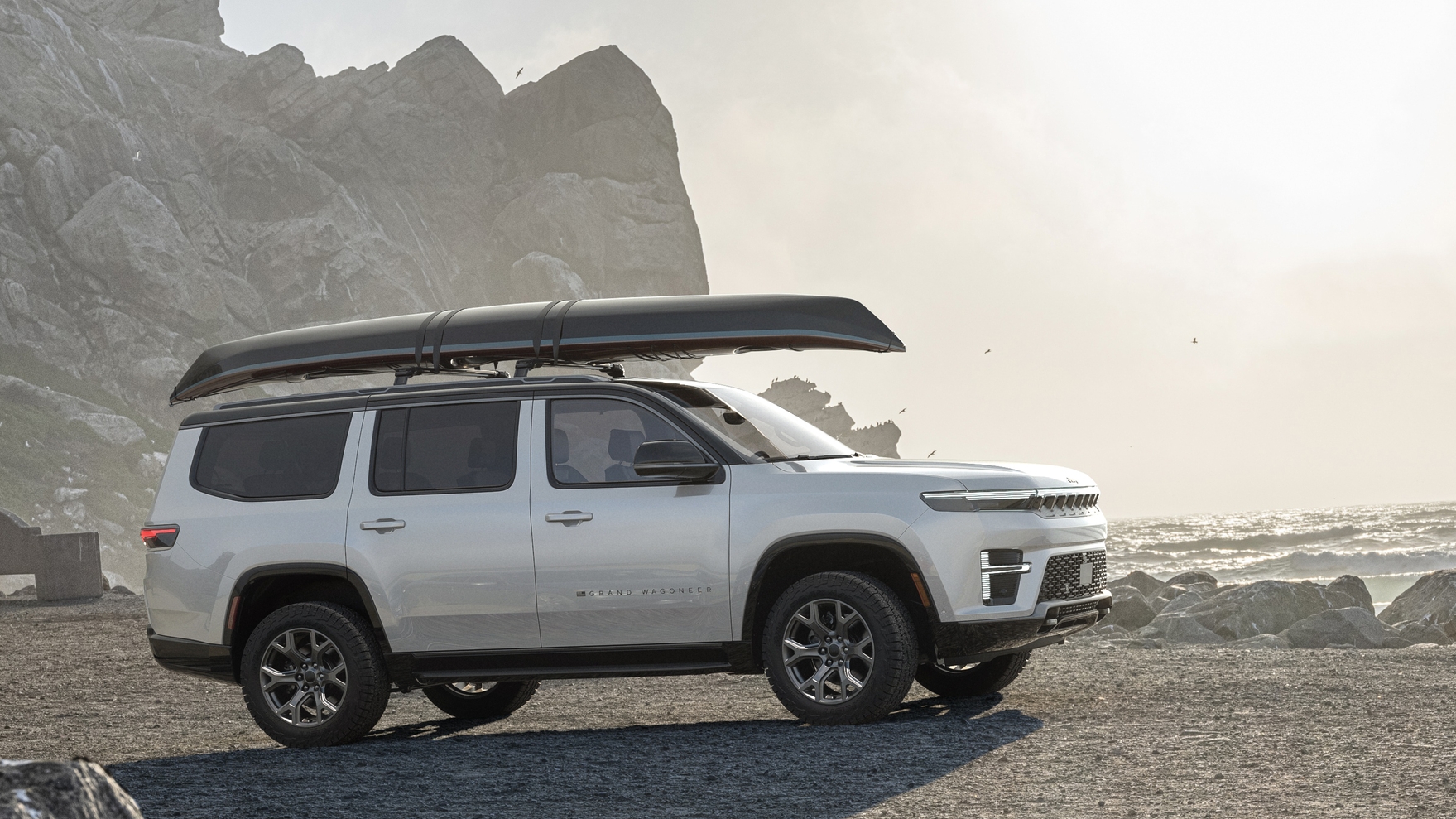
Jeep is trying to remove confusion from one of its most expensive nameplates
Jeep is resetting its Grand Wagoneer strategy with a simpler lineup, fewer naming complications, and a clearer pitch to buyers. The move follows a difficult 2025 in which the vehicle finished last in its segment, underscoring how little room there is for ambiguity when a brand is competing in the upper end of the full-size SUV market.
The most visible change is branding. The 2026 Jeep Grand Wagoneer now stands alone after Jeep dropped the separate Wagoneer nameplate. That sounds cosmetic, but the logic is straightforward: when a model family becomes confusing, the sales process gets harder before a customer even reaches pricing, features, or financing. Jeep is betting that reducing complexity will help buyers understand what the flagship SUV is and which version they should consider.
That is an important admission in itself. Automakers often talk about product freshness, design, and technology when a vehicle underperforms. Jeep’s emphasis here is on clarity. The company appears to believe that too many options and overlapping identities created friction in a segment where consumers expect confidence, not explanation.
Why simplification can matter in premium vehicles
Luxury and near-luxury buyers do not necessarily want fewer choices, but they do want a lineup that makes sense. Trim structures that require extensive decoding can work against a vehicle, especially when competitors offer stronger brand recognition or more established product hierarchies. In that environment, simplifying the menu can be a commercial strategy rather than a retreat.
Jeep’s challenge is sharper because the Grand Wagoneer is not just another utility vehicle. It has to carry premium expectations while also fitting within the broader Jeep identity. That means the product has to communicate both exclusivity and familiarity. If the naming strategy gets muddy, the vehicle risks losing the clarity needed to justify its place and price.
The revised approach suggests Jeep wants to reduce the decision burden for consumers. Instead of asking buyers to navigate a more confusing family of Wagoneer-related choices, the company is presenting a more direct flagship proposition. That can streamline dealership conversations, marketing, and consumer understanding all at once.
A sales fix, but also a brand test
The strategy is ultimately about more than a cleaner brochure. Jeep needs the Grand Wagoneer to prove that the brand can compete more effectively in a segment where buyers are paying close attention to fit, features, and confidence in the purchase path. A weak finish in 2025 is not just a sales statistic. It is evidence that the current formula was not working well enough.
Simplification alone will not guarantee a turnaround. Consumers still weigh design, performance, price, and ownership costs. But removing avoidable confusion is one of the few levers an automaker can pull quickly without waiting for a full redesign. It is a pragmatic move: clarify the offering, make the lineup easier to understand, and reduce the chances that indecision sends buyers elsewhere.
There is also a broader industry angle here. As vehicle lineups have grown more complex across trims, powertrains, and optional packages, some automakers are discovering that abundance can become its own problem. Too many choices can dilute the story of a vehicle. Jeep’s reset points in the opposite direction, toward sharper positioning.
For the Grand Wagoneer, 2026 becomes a test of whether simplification can translate into demand. If it works, Jeep will have shown that better product communication can support premium ambitions. If it does not, the company may need to look beyond naming and options to deeper questions about how the vehicle competes. Either way, the message from Jeep is clear: confusion is no longer a luxury it can afford.
- Jeep has dropped the separate Wagoneer nameplate and is focusing the 2026 Grand Wagoneer proposition.
- The company is aiming for less buyer confusion after finishing last in its segment in 2025.
- Simplifying the lineup is meant to make the flagship SUV easier to shop and market.
This article is based on reporting by Automotive News. Read the original article.


