A new interstellar visitor draws scientific scrutiny
The third known interstellar object ever observed passing through the Solar System has now undergone a technosignature search, and the result was negative. Researchers led by the SETI Institute reported that their observations of 3I/ATLAS did not find any signals worthy of additional follow-up, adding another data point to one of astronomy’s most unusual recurring opportunities.
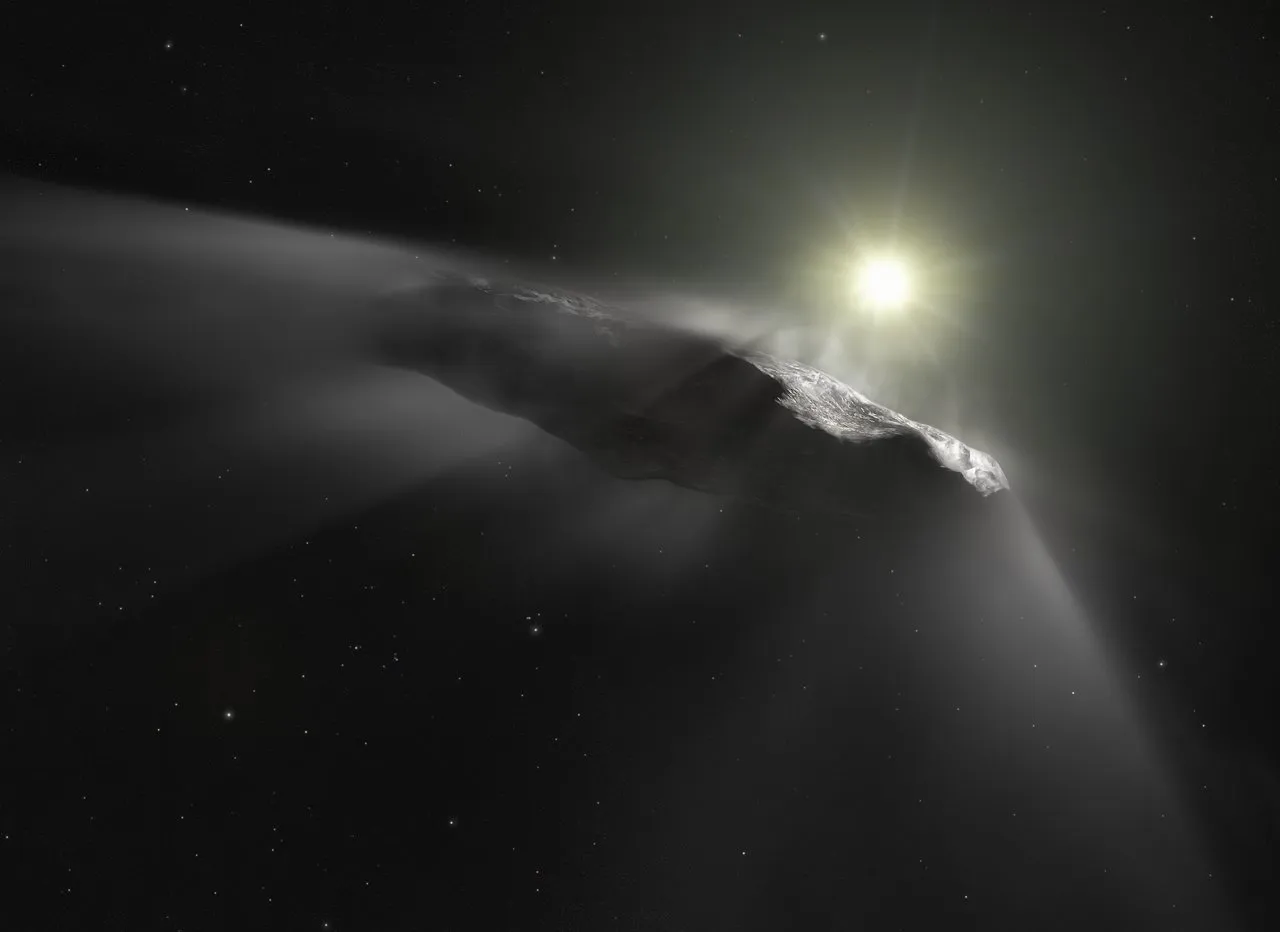
3I/ATLAS was announced on July 1, 2025 by the Asteroid Terrestrial-impact Last Alert System, or ATLAS. It followed 1I/'Oumuamua in 2017 and 2I/Borisov in 2019, making it the third interstellar object, or ISO, seen by astronomers within eight years. Like 2I/Borisov, the new arrival began venting gas and dust as it approached the Sun, showing that it was clearly cometary in nature.
Why SETI looked anyway
Even with those natural characteristics, scientists still chose to run a technosignature search. That decision reflects a long-running idea in SETI research: if humanity has sent probes into interstellar space, then another civilization might have done something similar. In that framing, an object arriving from another star system is worth checking, even if the odds of an artificial origin are low.
This is not a claim that 3I/ATLAS was likely engineered. It is a recognition that rare interstellar visitors offer a practical test case. Scientists do not get many chances to observe material from another planetary system up close. When they do, they can use the moment both to study its natural properties and to search for unusual emissions that would not fit known astrophysical behavior.
How the search was carried out
The observing team used the Allen Telescope Array at Hat Creek Radio Observatory in Northern California. According to the report, they spent more than seven hours scanning 3I/ATLAS across radio frequencies from 1 to 9 gigahertz. That wide range was chosen to search for narrowband radio signals that are not expected from natural processes and therefore could qualify as potential technosignatures.
The study was led by Sofia Sheikh of the SETI Institute and included researchers from the SETI Institute, Breakthrough Listen, the Berkeley SETI Research Center, the Jodrell Bank Centre for Astrophysics, and several universities. Their paper appeared in The Astronomical Journal.
The outcome was straightforward: no signals rose to the level that justified further investigation. That negative result is scientifically useful even if it is less dramatic than a detection. The team said the work established upper limits on radio emission, which can help define the sensitivity and expectations for future ISO searches.
Why interstellar objects matter beyond SETI
Interstellar objects are scientifically valuable regardless of whether they produce any sign of technology. They are effectively samples from other planetary systems that arrive without the need for an outbound mission. Because asteroids and comets are leftover building blocks from planet formation, their composition and behavior can offer clues about how other star systems formed and evolved.
That gives ISOs a dual appeal. Planetary scientists can use them to probe the chemistry and dynamics of distant systems, while SETI researchers can use them as rare targets for technosignature surveys. Those goals are compatible, and 3I/ATLAS sits squarely at that intersection.
The case also highlights how SETI has broadened. Traditional searches often focus on stars, exoplanets, or wide-field radio surveys. Looking at an interstellar comet is a narrower, more opportunistic strategy, but it fits the same logic: when an unusual target becomes available, test it carefully with the best instruments on hand.
A disciplined negative result
There is a tendency to treat negative SETI results as anticlimactic, but that misses their role in building a more rigorous search framework. Each observation refines methods, constrains possibilities, and shows what can be ruled out under specific conditions. For 3I/ATLAS, the team did not simply look and shrug. They performed a structured scan and reported a clear boundary on what was and was not seen.
That discipline matters because the field depends on repeatable methods. If another interstellar object arrives, researchers now have one more tested example of how to organize and interpret a rapid technosignature campaign. The value is cumulative.
The next visitor will come
Only three interstellar objects have been observed so far, but the pace has picked up enough to suggest that more will eventually be found. Each new detection offers a limited observation window and a fresh reason to combine planetary science with radio astronomy.
For now, 3I/ATLAS appears to be exactly what it looks like: a comet from another star system, with no detected evidence of technological activity. That may not satisfy speculation about extraterrestrial probes, but it does sharpen the scientific playbook for the next interstellar visitor that crosses the Solar System.
This article is based on reporting by Universe Today. Read the original article.
Originally published on universetoday.com