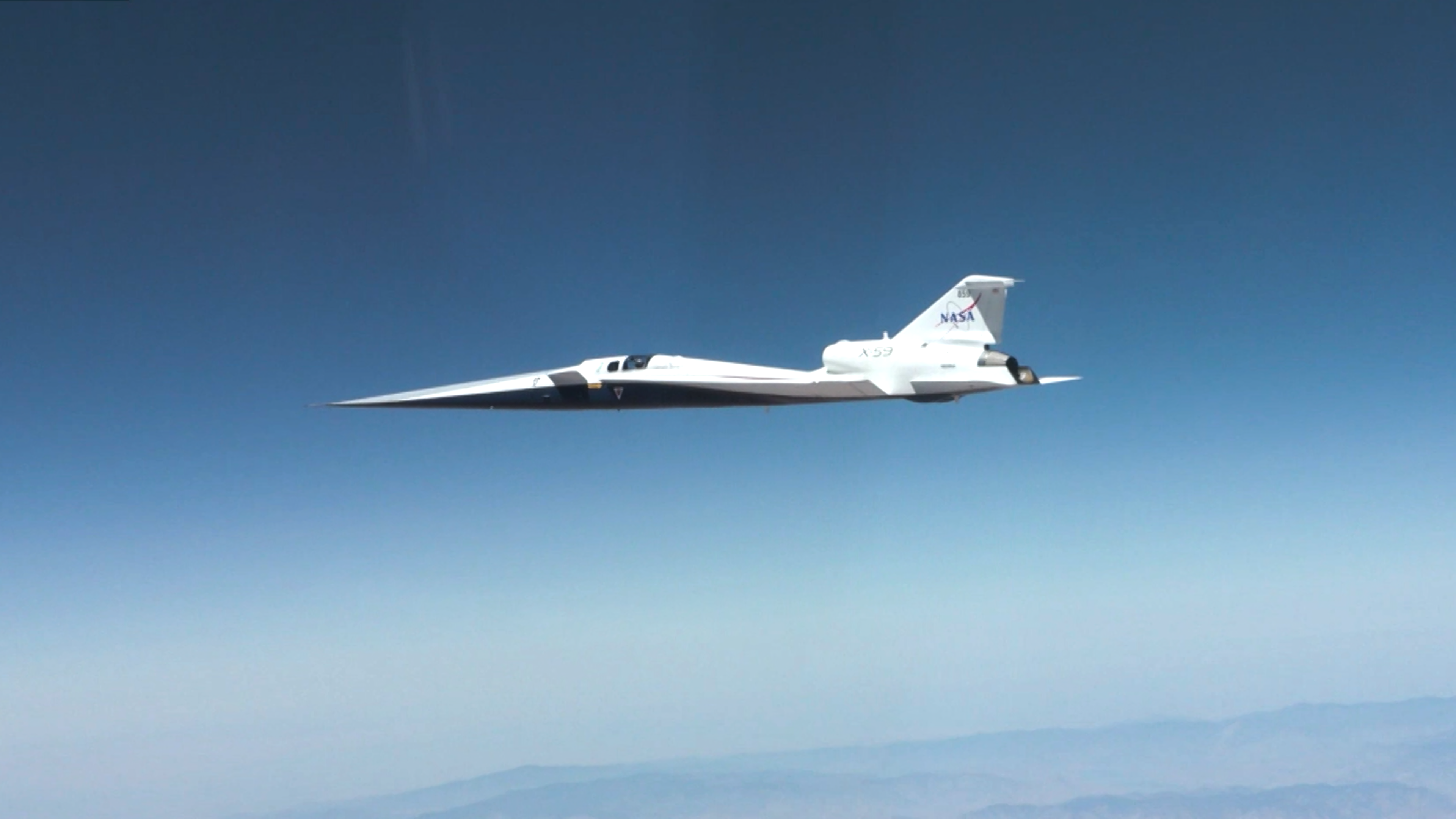
Historic Supersonic Milestone
On June 5, 2026, NASA's experimental X-59 aircraft achieved a historic milestone by flying faster than the speed of sound for the first time. The flight, which took off and landed at Edwards Air Force Base in California, reached a top speed of approximately Mach 1.1 (713 mph). NASA test pilot Jim “Clue” Less piloted the aircraft during the 81-minute mission, focusing on evaluating flying qualities at both subsonic and supersonic speeds.
The X-59 and the Quesst Mission
The X-59 is the centerpiece of NASA's Quesst mission, which aims to demonstrate quiet supersonic flight and help enable commercial supersonic flight over land worldwide. By reducing the loud sonic boom to a quiet thump, the X-59 could revolutionize air travel, allowing passengers to reach destinations faster with less time spent in the air. This first supersonic flight sets the stage for demonstrating these quiet supersonic capabilities later this year.
Flight Details and Performance
The 81-minute flight provided valuable data on the aircraft's handling characteristics. The team focused on assessing the X-59's performance at both subsonic and supersonic speeds, ensuring stability and control. The successful supersonic run marks a critical step toward validating the aircraft's design and mission objectives.
Implications for Commercial Aviation
If successful, the Quesst mission could lead to regulatory changes that permit commercial supersonic flights over land, currently banned due to noise concerns. The X-59's quiet supersonic technology aims to produce a sound level comparable to a car door closing, potentially opening new routes and reducing travel times significantly.

Looking Ahead
NASA plans to conduct further tests to demonstrate the X-59's quiet supersonic capabilities. These advancements will help travelers reach their preferred destinations faster, spending less time in the air. The Quesst mission represents a major step forward in aviation technology, promising a future where supersonic flight is both quiet and accessible.
This article is based on reporting by NASA. Read the original article.
Originally published on nasa.gov