Blue Origin is planning a broad expansion of its Florida launch and recovery infrastructure as it seeks to increase the flight rate of its New Glenn rocket. The company says the investments are aimed at supporting more missions with greater reliability and efficiency, with an eventual goal of multiple flights each week by the end of the decade.
The announcement comes as Blue Origin rebuilds its launch capabilities after a catastrophic static-test-fire explosion in May. It also arrives while the Federal Aviation Administration considers the company’s request to substantially increase the number of launches permitted from its existing Cape Canaveral site.
More pads for a larger launch cadence
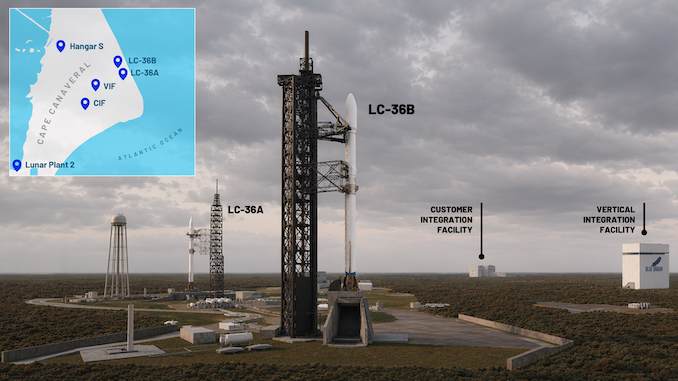
Blue Origin said it will add new launch pads on Florida’s Space Coast. The company did not disclose their exact locations, but said they would be modeled on its facilities at Launch Complex 36 at Cape Canaveral Space Force Station.
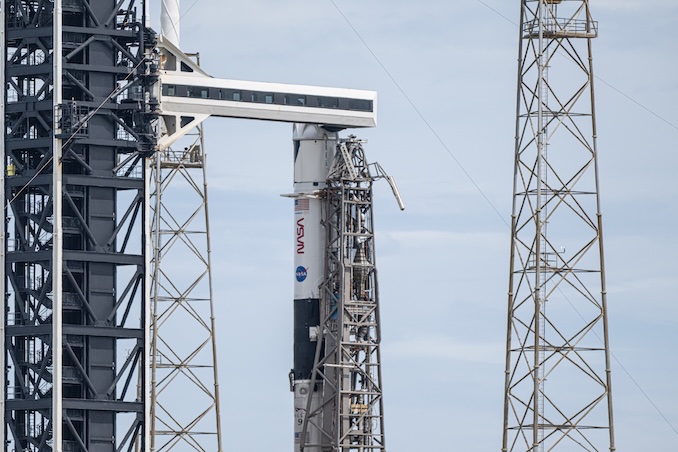
LC-36A is being rebuilt following the May explosion and is intended to support the New Glenn 7×2 configuration. A second pad, LC-36B, is under construction for the larger 9×4 version of the rocket. That configuration is described as using nine BE-4 engines on its first stage and four BE-3U engines on its upper stage.
The pad program is significant because launch infrastructure can become a bottleneck even when a rocket itself is ready to fly. A vehicle that requires lengthy pad refurbishment, recovery operations or payload processing between missions cannot easily move toward airline-like launch cadence. Blue Origin’s plan addresses those constraints across the launch site, landing operations and factory system rather than treating the pad as an isolated project.
FAA review could raise launches from 12 to 50
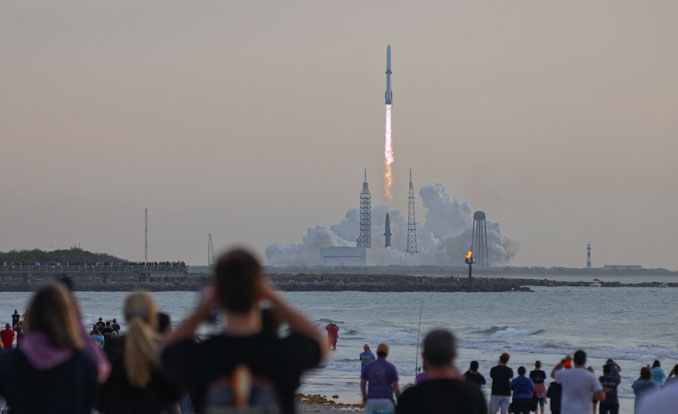
The FAA is conducting a 30-day public-comment period on Blue Origin’s request to increase its permitted annual launch cadence at LC-36A from 12 flights to 50. A virtual public hearing is scheduled for October 22, and the comment period closes October 30.
That request concerns the existing site, while the newly announced pads would add further capacity over time. An approval to increase the permitted cadence would not by itself guarantee that Blue Origin can fly at that pace. The company would also need vehicles, engines, payloads, range access, recovery capacity and ground teams capable of keeping up. Still, the request shows the scale of the operational tempo Blue Origin is pursuing.
In a statement accompanying the infrastructure announcement, Senior Vice President of Operations Ian Richardson said the company’s investments were focused on building capacity for more frequent and dependable missions. Blue Origin framed the program around supporting more launches and landings rather than a single vehicle upgrade.
Recovery and processing infrastructure
Blue Origin also plans to introduce two new landing vessels to its marine fleet. Those vessels would support recovery of returned boosters, a central part of the company’s approach to reusable heavy-lift operations.
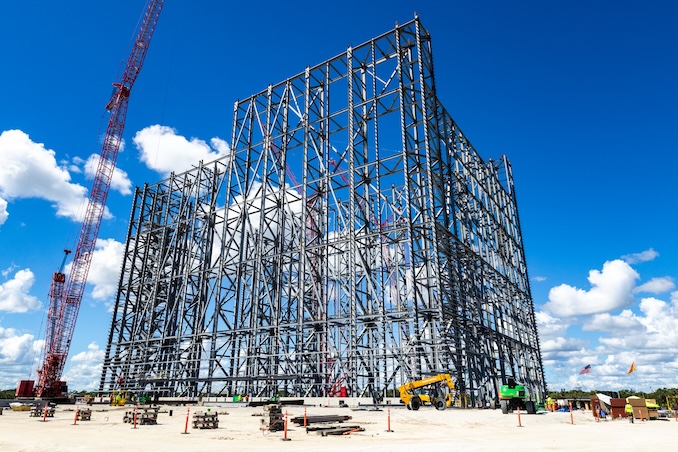
Recovered boosters are expected to be serviced at a new vertical integration facility being built near LC-36. A nearby payload-processing facility is also under construction in partnership with the U.S. Space Force. Blue Origin said that building will be available for use by both the company and other organizations.
The pairing of recovery and processing facilities matters for a reusable launch system. A rapid launch rate depends not only on getting a booster back, but on inspecting, servicing and returning it to the launch flow while payloads are prepared in parallel. The additional landing vessels could also reduce scheduling pressure if multiple missions require offshore recovery operations close together.

Manufacturing becomes part of the launch system
Alongside the pad and marine investments, Blue Origin is expanding manufacturing at Rocket Park. The company’s plans therefore span the production of hardware, launch operations, booster recovery and payload integration.
For New Glenn, this integrated approach reflects the difference between occasional launches and a sustained service. More pads can help reduce turnaround time at the launch site, but they require a steady supply of rockets and engines. More recovered boosters can only increase reuse if there are facilities and teams able to process them. And a higher number of available vehicles has limited value if payload customers cannot prepare spacecraft efficiently enough to match the schedule.
Blue Origin’s announcement does not specify the exact number of pads, their locations or a near-term flight schedule. Its stated long-term target, however, is clear: infrastructure capable of supporting multiple New Glenn missions each week by the end of the decade.
A high-stakes ramp-up
The expansion effort is taking place while Blue Origin rebuilds LC-36A after the May test-fire accident. The company is simultaneously constructing LC-36B, adding marine assets, developing processing buildings and expanding production capacity. That makes the plan more than a routine site upgrade; it is an attempt to create the industrial and operational base for a much higher-volume launch business.
Whether that goal is reached will depend on regulatory outcomes, construction progress and the performance of New Glenn in service. But the proposed increase from 12 permitted annual launches to 50 at LC-36A, coupled with plans for additional pads, signals that Blue Origin is designing its Florida operations around a far more frequent mission cadence than its current infrastructure was built to support.
This article is based on reporting by Spaceflight Now. Read the original article.
Originally published on spaceflightnow.com