From IPO darling to distressed sale
Allbirds, once one of the most visible consumer brands of the venture-backed era, has agreed to sell all of its assets and intellectual property to American Exchange Group for $39 million. The number is striking on its own, but the contrast is what makes the deal a real market signal: the company raised about $348 million in its 2021 IPO and briefly reached a valuation above $4 billion on its first day of trading.
The new sale price, as reported by TechCrunch, reduces that story to its harshest possible summary. A brand that once symbolized premium sustainability, direct-to-consumer momentum, and Silicon Valley taste is being sold for a figure that is only a fraction of what public investors once assigned to it.
The transaction still needs approval
The agreement with American Exchange Group still requires shareholder approval and is expected to close in the second quarter, with proceeds slated for stockholders in the third. Shares rose sharply in after-hours trading after the news, jumping 36% from a closing level that had already pushed the company’s market capitalization down to roughly $24.5 million.
That market reaction may seem counterintuitive until the math is considered. A $39 million deal price represented a premium to where the public market was already valuing the company. For remaining investors, the sale was not a story about preserving the old vision of Allbirds. It was about extracting more value than the market had recently implied was left.

What went wrong
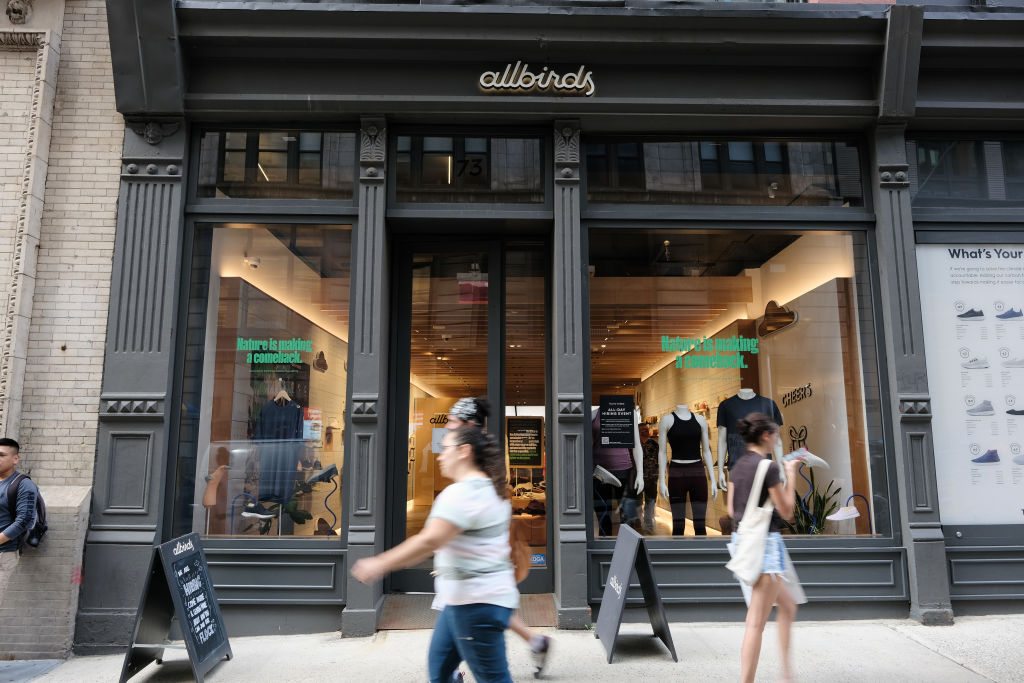
The supplied report points to a familiar growth-company mistake. After going public, Allbirds expanded aggressively into physical retail and adjacent product categories including leggings, jackets, and performance running shoes. Those moves did not connect with its core customers, and losses mounted.
Co-founder Tim Brown later said the rapid growth had cost the company “some of our DNA,” according to the source text. That admission is unusually direct. It suggests the problem was not only operational overreach, but also dilution of the brand’s original identity.
Allbirds built its early reputation on a narrow but resonant promise: simple wool sneakers, sustainability-forward branding, and a consumer experience tailored to a specific kind of urban professional buyer. That formula created loyalty and cultural visibility. It did not automatically translate into a broad lifestyle empire.
A cautionary consumer-brand lesson
What makes Allbirds important beyond its own shareholders is how cleanly it captures a broader market cycle. In the years when capital was abundant and growth stories were rewarded, companies could be valued on the assumption that brand affinity would scale smoothly into category expansion. Public markets later proved much less forgiving.
Allbirds’ fall shows how quickly a consumer brand can lose strategic clarity when it mistakes early product-market fit for universal elasticity. Expanding into more stores and more categories can look like prudent growth. If those products fail to deepen the relationship with core buyers, the same expansion becomes expensive drift.
The sale also highlights a brutal reset in public-market expectations. A company that once symbolized modern brand building is now being assessed less as a growth vehicle than as a package of assets and intellectual property that another group believes it can manage more effectively.

Why the buyer matters
American Exchange Group is described in the source text as a privately held brand management firm that also owns Aerosoles and Jonathan Adler. That profile is revealing. The likely thesis is not that Allbirds will regain its old venture-era narrative, but that its remaining brand recognition, product identity, and IP still have value inside a portfolio management model.
In other words, Allbirds may now be more useful as an operating brand within a diversified owner than as an independent public company trying to justify the expectations once built into its stock.
The end of a certain startup-era story
Allbirds’ sale does not mean the original business had no merit. It means the market’s earlier assumptions about its scale, resilience, and expansion potential were dramatically too high. That distinction matters because modern consumer markets still reward compelling products and disciplined brands. What they punish is overextension dressed up as inevitability.
The company’s arc is now one of the clearest case studies in post-hype repricing. A recognizable name, a heavily financed growth story, and a brief public-market halo were not enough to protect it once losses stacked up and category expansion faltered.
At $39 million, the deal is less a rescue than a reclassification. Allbirds is no longer being priced as a movement brand. It is being priced as a salvageable asset. That may be a rational outcome for the buyer and even for current shareholders. It is also a sharp reminder of how completely the market has changed since 2021.
This article is based on reporting by TechCrunch. Read the original article.

Originally published on techcrunch.com