The Pentagon is using a homeland security problem to accelerate counter-drone procurement
The US southern border has become more than a surveillance and interdiction challenge. According to US Northern Command commander Gen. Gregory Guillot, it is now serving as both a literal and figurative sandbox for counter-drone experimentation.
Speaking at SOF Week, Guillot said the military is inviting vendors to bring anti-drone technologies to the border through Joint Interagency Taskforce 401, an Army-led effort focused on protecting the homeland from drone threats. The arrangement is straightforward: if a system works in the field, it may be bought; if it does not, vendors will be told what needs to improve.
That approach effectively turns a domestic operational zone into a live validation environment for one of the fastest-moving defense technology categories.
Why the border is useful to the military
Counter-drone technology is notoriously hard to evaluate in abstract conditions. Performance depends on terrain, clutter, mobility, detection range, operator burden, and the types of aircraft being encountered. Real-world environments expose gaps that controlled demonstrations often hide.
The border offers exactly the kind of operational friction defense buyers want to see. Guillot said cartel drones are flying over Marines and soldiers there routinely. That means the problem is not hypothetical, and it is not limited to fixed-site defense.
For NORTHCOM, this creates a rare opportunity to combine mission need, user feedback, and procurement learning in one place. Rather than waiting for a traditional acquisition cycle to filter down requirements years later, commanders can watch systems perform against current threats and push industry toward more relevant designs.
The capability gap is mobility
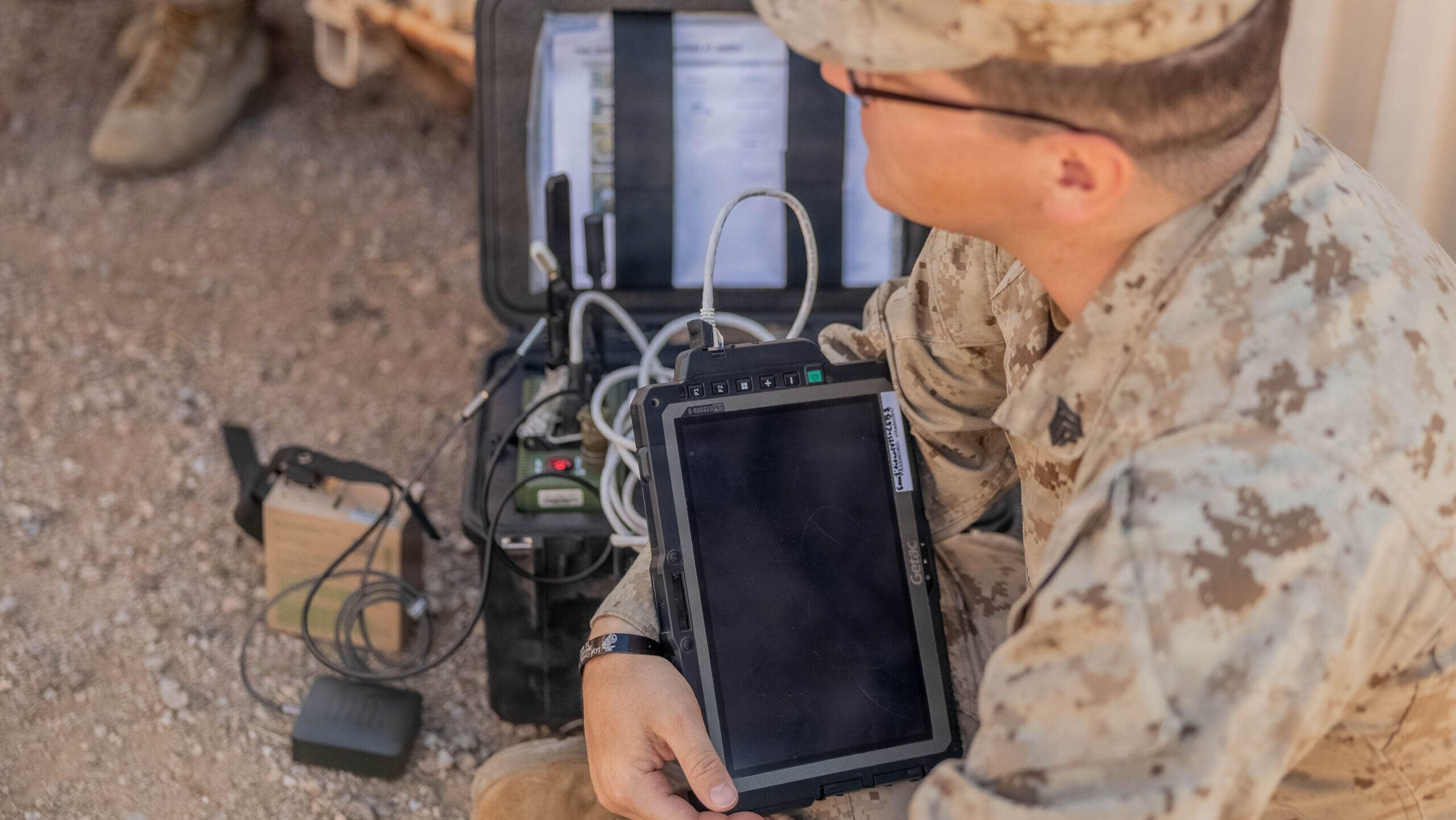
The most specific need described by Guillot was not simply more counter-drone coverage, but portable protection for troops on the move. He noted that the military has fixed and movable counter-UAS systems, but lacks something that can accompany a patrolling soldier closely enough to provide continuous defense.
That distinction matters. A system that protects a base, checkpoint, or vehicle convoy is not automatically useful for dispersed troops operating on foot. Weight, power, ease of use, and safe employment become much more restrictive in that setting.
The border therefore exposes a particular tactical requirement: mobile, soldier-following protection against small drones in environments where threat aircraft may appear frequently and unpredictably. That is a demanding use case, and it suggests why off-the-shelf solutions may still be falling short.
Lessons are coming from other theaters
Guillot said NORTHCOM is learning a great deal from US Central Command and trying to apply those lessons at the border. He did not specify the details, but the implication is clear. Counter-drone experience from overseas conflict environments is informing homeland defense experimentation.
That reflects a broader military trend. Small drones have become an enduring feature of modern conflict, forcing armed forces to rethink air defense at lower altitudes and smaller scales. What once looked like a niche tactical threat now affects base security, convoy movement, urban operations, and border control.
The border, in that sense, is not isolated from global military learning. It is becoming another front in the institutional adaptation to persistent unmanned threats.
What technologies may benefit
Guillot did not endorse a specific solution category, but his remarks come shortly after the Federal Aviation Administration and the Defense Department released an assessment saying high-energy laser counter-drone technology is acceptable for use on the border when proper safety controls are in place.
That is important because directed-energy systems have often faced skepticism around aviation safety, power demands, and operational practicality. The FAA assessment, as referenced in the source material, concluded that these systems do not pose undue risk to passenger aircraft under the relevant controls.
That does not mean lasers are the answer to every drone problem. It does mean a major policy barrier to border deployment has eased, opening more room for testing and possible fielding.
A new acquisition model in miniature
What NORTHCOM appears to be building is a feedback loop between operators and vendors that is faster and less formal than legacy procurement pathways. The message to industry is unusually direct: bring systems into a real environment, accept blunt evaluation, and iterate toward scale.
This has obvious advantages. It reduces the gap between requirements writing and practical performance, and it lets the military test technologies against a threat that is active now rather than projected years into the future.
It also carries risks. Real operational spaces are not laboratories, and rapid experimentation in domestic settings raises questions about oversight, mission creep, and how temporary trials harden into standing capability.
Why the story matters beyond the border
The southern border is becoming a model for how the Pentagon may accelerate adoption in fast-changing threat categories. Counter-drone systems are especially suited to this because the threat evolves quickly, commercial technology moves fast, and battlefield relevance can expire in short order.
If the border sandbox works, defense officials may see it as proof that real-world evaluation environments can help compress the path from demonstration to purchase. That could influence how other urgent technologies are tested and bought.
For now, the immediate takeaway is that the military is using an active homeland mission to sharpen one of its most pressing tactical priorities. Drones are no longer a peripheral nuisance. They are shaping procurement, operational design, and the relationship between defense buyers and industry.
The border just happens to be where those pressures are colliding most visibly.
This article is based on reporting by Breaking Defense. Read the original article.
Originally published on breakingdefense.com