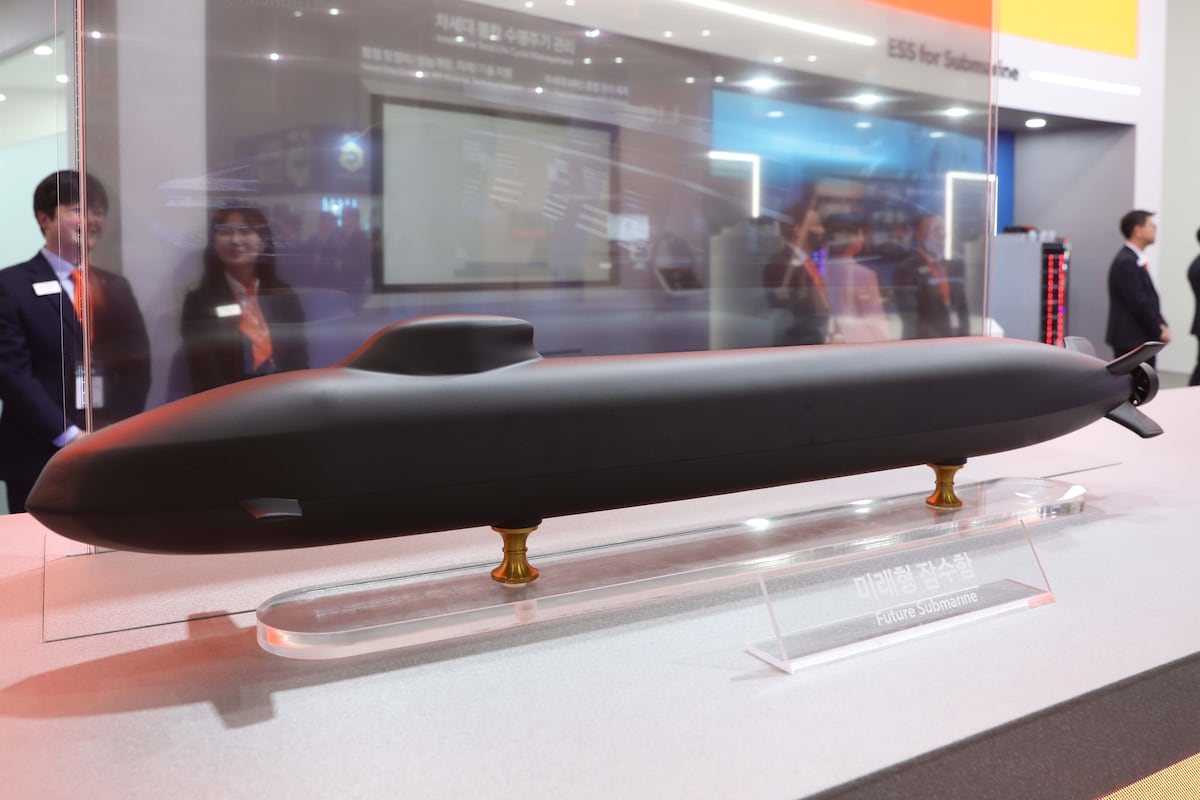
Seoul has moved its submarine debate into official policy
South Korea has for the first time publicly declared a national strategic roadmap to develop nuclear-powered attack submarines, marking a significant step in the country’s defense planning and industrial ambitions. The Ministry of National Defense announced the plan on May 26 under what it calls the Jang Bogo-N project, and the government says its first boat is targeted for launch in the mid-2030s with commissioning in the late 2030s.
The project name carries symbolic weight. Jang Bogo was South Korea’s first submarine program, and the new “N” is described as standing for next generation, nuclear, and neo technology. The roadmap turns years of intermittent discussion into an explicit state objective and places South Korea among the countries seeking to pair advanced shipbuilding capacity with nuclear naval propulsion.
According to the report, the Republic of Korea Navy has previously declared a requirement for four nuclear-powered attack submarines. The boats are expected to displace around 8,000 tons, placing them in roughly the same size range as the U.S. Navy’s Virginia class.
Why Seoul says it wants SSNs now
Several strategic drivers are pushing the move. One is North Korea’s evolving undersea deterrent. The report says Pyongyang unveiled a new nuclear-powered, missile-armed submarine in December 2025, a development that South Korean analysts see as lowering the political barrier for Seoul to pursue its own program.
Another factor is survivability and range. South Korea’s defense ministry argues that nuclear-powered submarines offer dramatically greater submerged endurance and mobility than diesel-electric boats. That matters in any scenario involving prolonged patrols, distant tracking, or operations beyond the immediate Korean Peninsula.
The roadmap also has alliance implications. A senior researcher quoted in the source article argued that nuclear submarines could broaden the geographical range of combined military activities with the United States, echoing the way Australia’s AUKUS-related submarine plans are tied to deeper strategic integration with Washington.

A military project with industrial scale
The South Korean government is framing the submarine effort as more than procurement. The ministry described it as a national industrial development project extending over 40 years, including about a decade of construction and more than three decades of operation. That framing connects naval power to domestic industry, especially shipbuilding and nuclear engineering.
The emphasis on indigenous construction is especially notable. South Korea already has one of the world’s most capable commercial shipbuilding sectors, and a domestically built SSN program would stretch that capacity into one of the most technically demanding military products in existence. The government predicts the program could create more than 40,000 jobs.
That industrial language also serves a political purpose. Large defense programs are easier to sustain when they are presented as long-run technology and employment engines rather than narrowly military purchases. In this case, South Korea is tying the case for SSNs to national capability, deterrence, and industrial prestige at once.
Regional and strategic implications
If Seoul follows through, the decision will reverberate beyond the Korean Peninsula. Nuclear-powered attack submarines are not nuclear weapons, but they do shift the military balance by extending patrol duration, stealth, and operational reach. For neighboring powers, that would mean a more capable South Korean navy with greater persistence under water.
The timing is also important. Northeast Asia is already deep into military modernization, with North Korea, China, Japan, and the United States all shaping a more contested maritime environment. South Korea’s roadmap suggests it no longer sees advanced diesel submarines as sufficient for the missions it expects in coming decades.
There are still major hurdles. Building SSNs requires mastery of propulsion, safety, maintenance, crew training, and a supporting regulatory and industrial framework. The source text does not resolve how South Korea will source or manage all of those requirements. But the policy direction is now clearer than it has ever been.
From aspiration to benchmarked timeline
Defense debates often remain vague until governments assign dates. South Korea has now done that. A mid-2030s launch goal and late-2030s commissioning target create a benchmark against which progress, delays, and political commitment can be measured.
The announcement does not guarantee success, and submarine timelines are rarely smooth. But it does establish that Seoul has moved beyond general interest into formal planning. In regional defense terms, that alone is a consequential shift.
For allies, rivals, and industry alike, the message is that South Korea wants a future navy with far more reach and staying power below the surface. The Jang Bogo-N project is still years from steel in the water, but it has already redrawn the country’s strategic horizon.
This article is based on reporting by Defense News. Read the original article.
Originally published on defensenews.com