First clinical trial of swimming for chronic low back pain reports meaningful improvement
Researchers at Macquarie University in Australia say they have produced the first clinical trial evidence that swimming can meaningfully reduce disability linked to chronic low back pain, a condition that is common, hard to treat, and often persistent over long periods.
The trial, described as the first study of its kind, tested whether a structured swimming program could do more than the long-standing clinical intuition that swimming is a low-impact exercise worth recommending. According to the researchers, that intuition had existed for years, but evidence directly showing that swimming works for chronic low back pain had been missing.
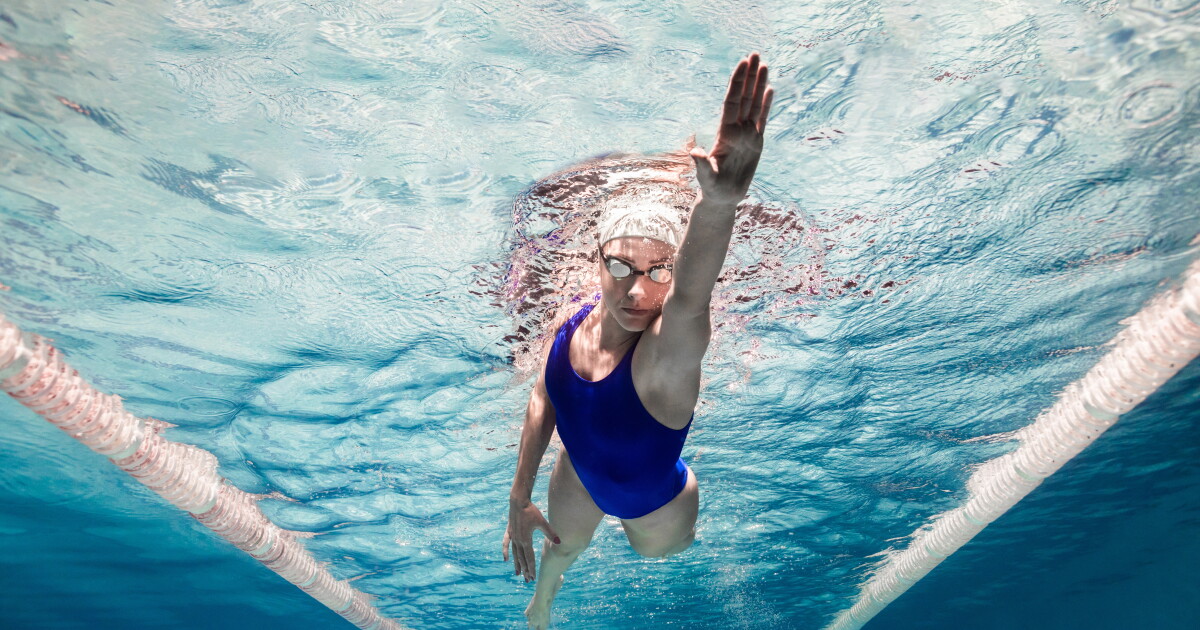
In the study, 76 adults with low back pain disability lasting at least 12 weeks were recruited, with an average age of 41. Participants were divided into two groups. One group received an eight-week personalized program combining swimming with telehealth coaching. The control group received education sessions only.
The result, according to lead researcher Deborah Wareham, was a substantial reduction in disability for the swimming group by the end of the eight-week program. She said participants improved by about 50% from where they started. Compared with the education-only group, swimmers scored on average 2.5 points lower on a commonly used disability scale, which the report described as roughly a 30% advantage.
Why the finding matters
Chronic low back pain is notoriously difficult to manage because patients do not all respond to the same intervention, and physical activity recommendations are often shaped by a person’s pain tolerance, mobility limits, and fear of movement. Swimming has obvious appeal because the water reduces joint loading and allows exercise with less impact than many land-based activities. Even so, clinicians have lacked trial data specifically showing that swimming itself produces measurable benefit.
That gap is what this study set out to address. Wareham said the team saw an urgent need to determine whether swimming was effective or not for chronic back pain rather than continuing to rely on assumption. The trial therefore matters not only because it produced a positive result, but because it begins to convert a common recommendation into one supported by clinical evidence.
The study design also reflected real-world practice. Participants in the swimming arm were not elite swimmers or even regular swimmers. They simply needed to be able to swim 25 meters and feel confident in the water. That threshold makes the findings more relevant to ordinary adults who may be physically limited but still capable of entering a beginner or moderate exercise program.
What the intervention involved
Each participant in the swimming group followed an individualized plan based on water ability and general fitness. The program called for three sessions per week, each lasting between 30 and 45 minutes, over eight weeks. The telehealth coaching component paired the exercise with education about low back pain, how people perceive it, and why continued movement can matter in recovery and symptom management.
That combined approach is important when interpreting the findings. The reported benefit came from a swimming program delivered alongside coaching and education, not from a bare instruction to go to the pool. In other words, the intervention was structured, repeated, and tailored to the participant. That makes it more clinically meaningful, but it also means the results should not be oversimplified into a claim that any casual swimming will necessarily yield the same effect.
Even so, the practical requirements were modest. The participants were not asked to train at high intensity, and the time commitment was within the range many rehabilitation or exercise programs already use. For clinicians and patients, that makes the result potentially actionable if the approach can be replicated in broader care settings.
Benefits lasted beyond the eight-week program
One of the stronger details in the report is that improvement did not vanish as soon as the intervention ended. Follow-up assessments at 26 weeks and 52 weeks showed that the swimming group still reported better pain scores than the education-only group, although the gap narrowed over time.
Durability matters in chronic pain treatment. Short-term gains are useful, but they are less compelling if symptoms return quickly. A benefit that remains visible six months and one year later suggests the program may help some patients establish habits, confidence, and movement patterns that continue to matter after the supervised phase ends.
The study also tracked secondary outcomes, including pain intensity, functional limitation, and fear of movement. The swimming group performed better on those measures as well, according to the report. That broader pattern strengthens the overall finding because it suggests the intervention was associated with improvement across several dimensions of disability, not just one headline score.
A promising result, with limits
The trial does not resolve every question about swimming and chronic low back pain. The sample size was 76 adults, which is useful for an initial clinical trial but still limited. The source material also does not provide detailed data on adherence, subgroup response, or how outcomes compared across different pain histories and fitness levels. Those are the kinds of questions future studies would need to answer.
It is also worth noting that the control group received education only rather than another active exercise treatment. That means the study shows swimming outperformed education alone, but it does not establish whether swimming is better than walking, strength training, or other common rehabilitation approaches.
Still, the findings are significant because they move swimming from the realm of plausible recommendation into the realm of tested intervention. For patients who struggle with higher-impact exercise, or who are more comfortable in water than in a gym setting, the trial suggests that a structured swimming program may offer a credible therapeutic option.
What comes next
The immediate implication is not that swimming should replace every other treatment for chronic low back pain. It is that clinicians may now have stronger grounds to include it in treatment discussions for suitable patients, especially where low-impact activity and confidence-building are priorities.
For researchers, the next step is likely replication at larger scale and comparison against other exercise-based interventions. For patients and providers, the main value is simpler: there is now evidence that a personalized, coached swimming regimen can reduce low back pain disability substantially and that the effect can persist for months.
That is a notable development in a field where durable improvements are difficult to secure. If follow-up research confirms the result, swimming may shift from frequently suggested option to evidence-backed component of chronic low back pain care.
This article is based on reporting by refractor.io. Read the original article.
Originally published on refractor.io