An Unexpected Discovery
Among the most intriguing findings in recent medical research is a connection that no one initially set out to prove: people vaccinated against shingles appear to have a significantly lower risk of developing dementia, including Alzheimer's disease. The evidence, which has been building through multiple independent studies over several years, now forms what researchers describe as a compelling and consistent pattern that demands further investigation.
The latest contribution to this evidence base, published in recent weeks, goes further still. Beyond the dementia connection, the shingles vaccine appears to slow markers of biological aging, including reducing levels of systemic inflammation — a chronic, low-grade immune activation that is increasingly recognized as a driver of age-related diseases from heart disease to neurodegeneration.
The Evidence So Far
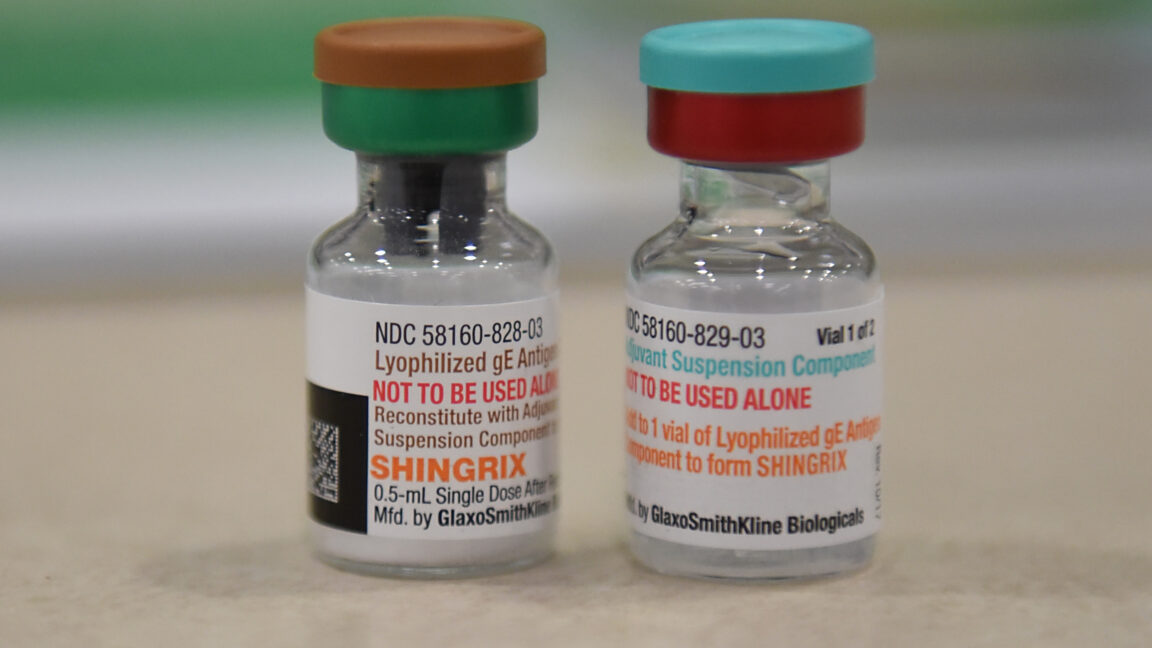
The connection between shingles vaccination and reduced dementia risk first emerged from observational studies examining large healthcare databases. Researchers noticed that older adults who received the shingles vaccine — particularly the newer recombinant vaccine Shingrix — had lower rates of dementia diagnosis in subsequent years compared to unvaccinated peers.
Several studies have since replicated this finding across different populations and healthcare systems. One particularly influential study used a natural experiment created by differences in vaccine eligibility rules between countries to control for confounding variables — a methodological approach that strengthens causal inference beyond what typical observational studies can achieve. The results consistently pointed in the same direction: vaccination was associated with meaningfully lower dementia risk.
The most recent study examined biological aging markers in vaccinated versus unvaccinated individuals, finding that shingles vaccination was associated with slower epigenetic aging — the molecular changes to DNA that accumulate over time and are thought to drive age-related decline. Markers of inflammation were also lower in the vaccinated group, suggesting a systemic anti-aging effect that extends well beyond the vaccine's intended purpose of preventing shingles.

How a Shingles Vaccine Might Protect the Brain
The biological mechanism connecting shingles vaccination to brain health is not yet definitively established, but several plausible hypotheses have emerged. The leading theory involves the varicella-zoster virus itself — the pathogen that causes both chickenpox in childhood and shingles in older adults when the dormant virus reactivates.
Varicella-zoster virus lies dormant in nerve cells after the initial chickenpox infection, and its reactivation as shingles causes severe pain along nerve pathways. Some researchers hypothesize that even subclinical reactivation of the virus — episodes too mild to cause visible shingles symptoms — may cause chronic, low-level inflammation in neural tissue that contributes to neurodegeneration over time. By preventing viral reactivation, the vaccine could eliminate this source of neuroinflammation.
A second hypothesis focuses on the immune system's response to vaccination rather than the virus itself. The adjuvanted Shingrix vaccine produces a robust immune response that may have beneficial off-target effects on immune regulation, potentially reducing the chronic inflammation that accelerates brain aging. This would be consistent with a broader concept known as trained immunity, where vaccination can reprogram the innate immune system in ways that provide protection beyond the specific pathogen targeted.
- Multiple studies show shingles vaccination correlates with lower dementia risk
- The latest research links the vaccine to slower biological aging and reduced inflammation
- Leading theories involve preventing subclinical viral reactivation in nerve tissue
- The adjuvanted Shingrix vaccine may beneficially reprogram immune regulation
- Researchers caution that randomized controlled trials are needed to confirm causality
Caution and Context
Despite the growing body of evidence, researchers are careful to note that correlation does not prove causation. People who get vaccinated may differ from those who do not in ways that independently affect dementia risk — they may be healthier overall, have better access to medical care, or engage in other protective behaviors. While the studies have attempted to control for these confounders, only a randomized controlled trial can definitively prove that the vaccine prevents dementia.
Designing such a trial presents ethical and practical challenges. Withholding a recommended vaccine from an elderly control group raises ethical concerns, and dementia develops over decades, making a prospective trial enormously expensive and time-consuming. Some researchers have proposed pragmatic trial designs that could test the hypothesis more efficiently, but no definitive trial has yet been launched.
Implications for Public Health
If the shingles vaccine's apparent dementia-protective effect is confirmed, the public health implications would be enormous. Alzheimer's disease and related dementias affect tens of millions of people worldwide, with no effective preventive treatment currently available. A vaccine that is already approved, manufactured at scale, and recommended for adults over 50 could become one of the most impactful public health interventions of the century — not by design, but by serendipitous discovery.
The irony of these findings emerging during a period of heightened vaccine skepticism has not been lost on the scientific community. As public health agencies face political pressure to scale back vaccination recommendations, the evidence that vaccines may offer benefits far beyond their intended targets underscores the breadth of what could be lost if immunization rates decline. For the millions of families touched by dementia, the possibility that a simple vaccination could reduce that risk represents a profoundly hopeful development in a field long starved of good news.
This article is based on reporting by Ars Technica. Read the original article.
Originally published on arstechnica.com