A robotaxi failure stopped being hypothetical
A reported Apollo Go outage in Wuhan has sharpened a problem that the autonomous vehicle industry has struggled to explain in public: even if robotaxis drive cautiously most of the time, what happens when many of them fail at once?
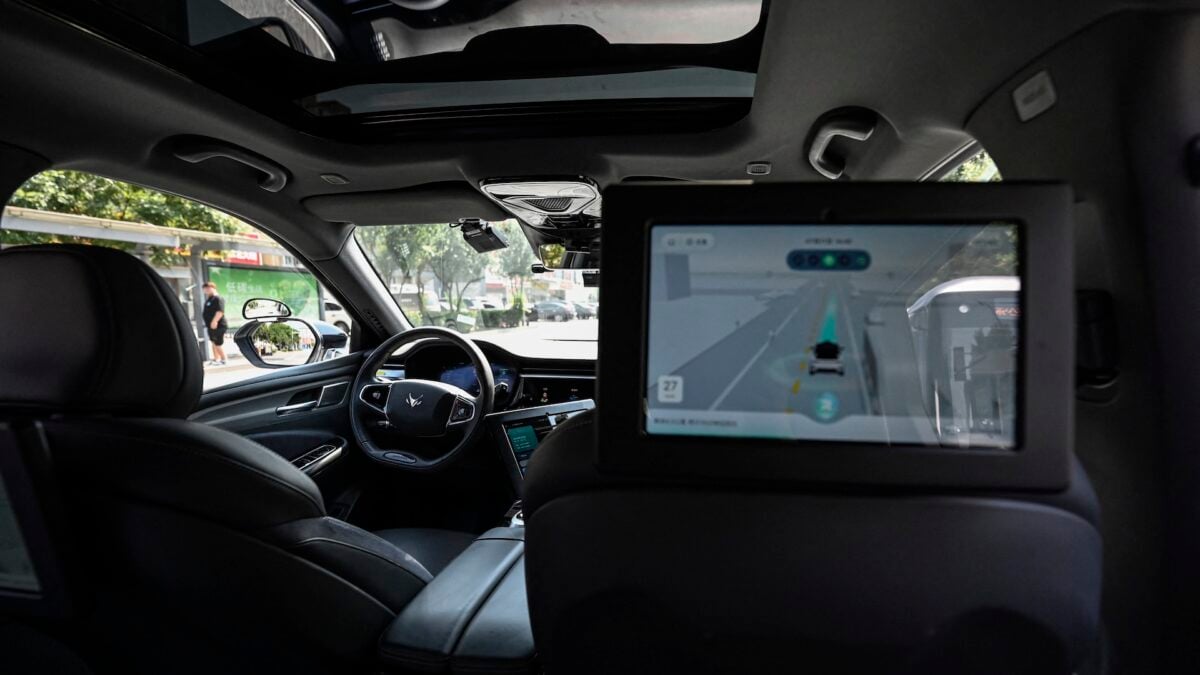
According to reporting cited in the source material, roughly 100 Baidu-owned robotaxis glitched on March 31 and came to a complete stop wherever they were, including on major roads. Baidu later attributed the incident to a “system failure.” Social media posts and follow-up accounts described stranded passengers, blocked traffic, and some collisions, while a police statement cited by the report said passengers were able to disembark safely and that no injuries were reported.
The real issue is not only safety, but failure mode
The incident matters because it highlights a distinct kind of autonomy risk. Much of the public debate around robotaxis has focused on whether self-driving vehicles are more or less likely than human drivers to cause crashes. But large autonomous fleets introduce another category of exposure: synchronized malfunction. When a human fleet fails, problems usually appear one car at a time. When a software-dependent fleet fails, a single systems issue can potentially affect many vehicles at once.
That is what made the Wuhan event so consequential. The available accounts suggest the vehicles did not merely pull over in a controlled manner or degrade gracefully. They reportedly stopped in place, including in locations that passengers described as difficult or dangerous. One rider account cited in the source material said it took 30 minutes to connect with a customer representative. If that experience is representative, then the incident was not just a mobility disruption. It was also a stress test of customer support, remote recovery, and passenger communications.
In practical terms, that means the autonomous vehicle business cannot be judged only on routine driving behavior. Companies also have to show that they can manage rare but systemic faults. A safe car is not enough if a broken fleet becomes an urban obstruction network.
Why this kind of outage hits differently
Robotaxis are unusual because they merge transport, software operations, telecommunications, customer service, and public infrastructure into one product. That makes their failures harder to compare directly with failures in conventional vehicles. A stalled human-driven car is usually an isolated mechanical problem. A stalled autonomous fleet can signal a platform problem, a control issue, or a remote operations bottleneck. Each possibility carries different regulatory and operational consequences.
The Wuhan incident also illustrates how quickly public trust can turn on the details of a malfunction. Reports that passengers were trapped for extended periods or that vehicles stopped on busy roads are likely to shape perception more strongly than aggregate safety statistics. Consumers do not experience “fleet safety” in the abstract. They experience whether the door unlocks, whether support answers, and whether the vehicle can get out of traffic.
That gap between statistical safety and human experience is becoming central to the robotaxi market. Companies often emphasize miles driven, low-speed caution, or reduced crash rates. Those metrics matter. But they do not fully answer the question that this incident raises: when the platform breaks, what is the passenger’s escape path, and how fast can the operator regain control?
Operational resilience is now the story
The Wuhan disruption points to an uncomfortable conclusion for the industry. The next competitive advantage in robotaxis may not be smoother normal driving, but stronger abnormal operations. Operators need credible answers for fleetwide software faults, traffic obstruction scenarios, remote assistance load spikes, and passenger extraction procedures.
The source material contrasts the Wuhan event with a previous Waymo-related disruption in blacked-out intersections, suggesting that even superficially similar outages can differ significantly in severity depending on where vehicles stop and how they behave. That distinction matters. “Robotaxi incident” is not a single category. Some events amount to inconvenience. Others can create cascading urban problems because many vehicles become immobile in places that disrupt surrounding traffic.
- Reports described about 100 Apollo Go robotaxis stopping during a March 31 incident in Wuhan.
- Baidu said the event was caused by a “system failure.”
- Accounts cited blocked roads, stranded passengers, and some collisions, but no reported injuries.
- The episode spotlights fleetwide failure recovery, not just everyday autonomous driving performance.
For regulators and city officials, that means oversight may need to focus more explicitly on degraded-mode behavior and mass-recovery planning. For passengers, it may redefine what “safe enough” means in autonomous transport. And for robotaxi operators, it raises the bar on resilience. A company that wants to run city-scale fleets has to prove not only that its vehicles can drive themselves, but that they can fail without paralyzing the city around them.
The Wuhan outage will not settle the broader argument over autonomous vehicles. But it does force a more precise question into view. The issue is no longer simply whether robotaxis can operate. It is whether they can break safely, recover quickly, and preserve trust when software failure stops being rare and individual and becomes simultaneous and public.
This article is based on reporting by Gizmodo. Read the original article.
Originally published on gizmodo.com