A different answer to the automatic-versus-manual debate
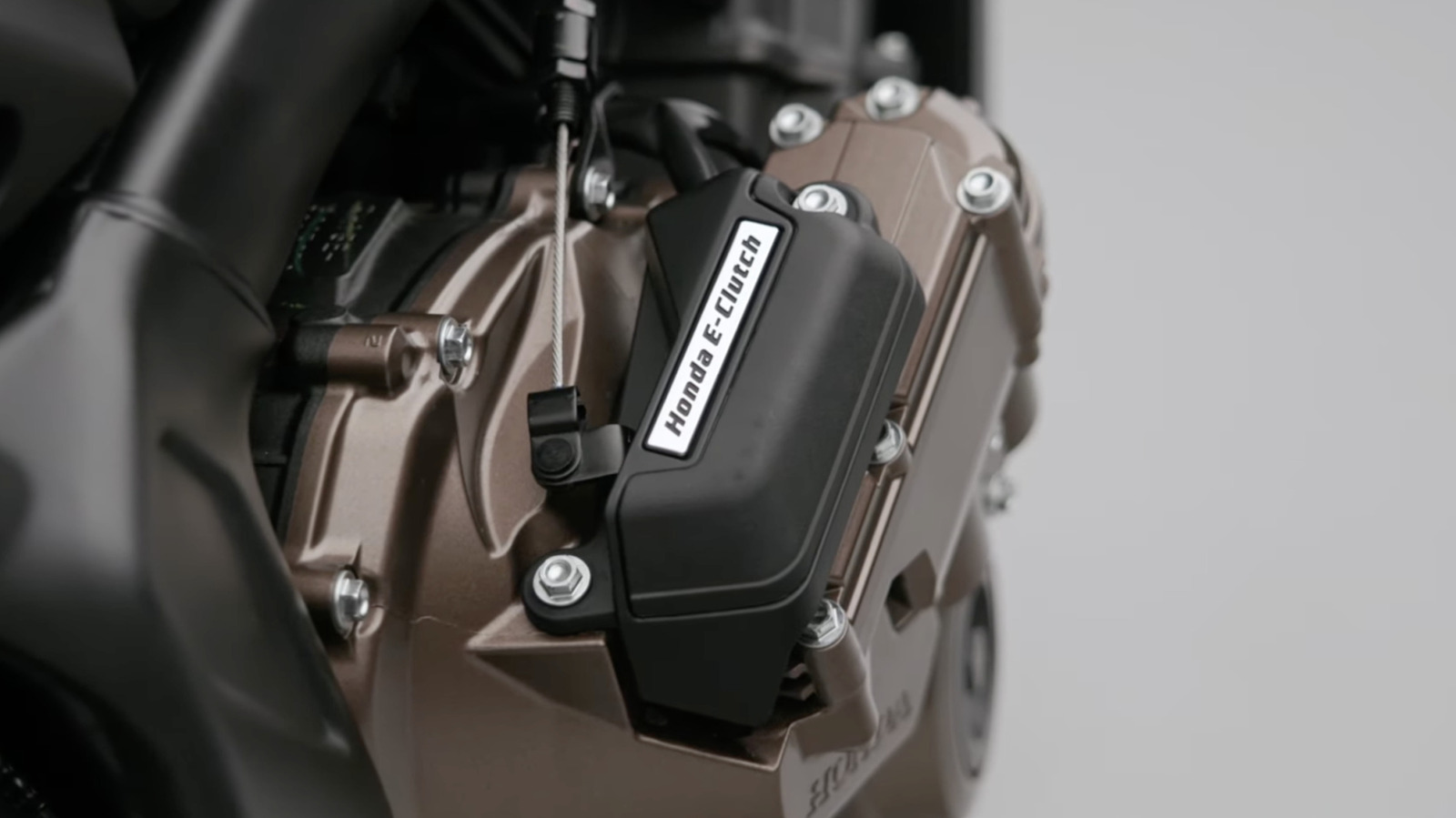
Honda’s E-Clutch system is a notable example of how motorcycle makers are trying to lower the barrier to riding without abandoning the character of a manual gearbox. Instead of replacing manual shifting with a dual-clutch or fully automatic setup, E-Clutch automates the clutch actuation itself. Riders still shift through the gears, but the system handles clutch disengagement and re-engagement electronically, reducing the risk of stalling and cutting some of the intimidation that comes with learning a conventional bike.
That middle-ground design is what makes the technology more interesting than a simple convenience feature. In motorcycles, the clutch is not just a component. It is part of how riders experience timing, control, and feedback. Automatic systems solve the learning curve by taking the whole process away. Honda’s approach keeps the manual transmission experience largely intact while removing one of its most unforgiving failure points.
How the system works
According to the supplied source text, E-Clutch uses two electric motors and a control unit working alongside the bike’s ECU. The system factors in inputs such as shift-pedal load, engine speed, gear position, and other operating parameters to disengage the clutch without requiring rider input. That allows clutch-free starts and shifts while preserving a familiar foot-shift interface.
The key engineering change is a split clutch-actuation shaft. In a conventional design, a single-piece rod would decouple the clutch pack when the rider pulls the lever. Honda divides that into a manual side and a motor-controlled side. The manual side still allows ordinary clutch-lever operation, while the motor-controlled side uses a push-style mechanism driven by the electric motors to achieve the same outcome electronically.
That architecture matters because it avoids turning the rider into a passenger. Honda built the system so it can be switched off, and the rider can also override it using the clutch lever. In practical terms, that means E-Clutch is not meant to erase skill. It is meant to make access easier and transitions smoother while preserving the option to ride the old-fashioned way.
Where Honda is deploying it
The system is no longer an experiment confined to one halo model. The candidate source says Honda currently sells five motorcycles with E-Clutch as standard in the United States: the CB650R, CBR650R, Rebel 300, CB750 Hornet, and Transalp. In other markets, the list is broader, extending to the CL300, CB500 Hornet, NX500, and CBR500R.
That spread is significant because it shows Honda treating the feature as a scalable platform technology rather than a niche novelty. The bikes mentioned in the source cover different styles and use cases, including standard, sport, cruiser, and adventure machines. When a manufacturer installs a new control system across that kind of range, it is usually testing not just consumer interest but long-term production viability.
Why this could matter for the broader market
Rider training and new-rider retention remain persistent issues for the motorcycle industry. Manual clutch work is manageable once learned, but it is also one of the first places beginners stumble. E-Clutch targets that friction point directly. A bike that lets a newcomer focus on throttle, balance, braking, and road awareness before mastering every detail of clutch timing could widen the funnel into motorcycling without turning every machine into a scooter-like experience.
There is also a performance angle. The source notes that on ride-by-wire motorcycles such as the CB750 and Transalp, E-Clutch can effectively function like an auto-blipper for smoother rev-matched downshifts. That means the system is not purely about simplification. It can also refine shift quality in ways even experienced riders may appreciate.
At the same time, the technology is not identical across Honda’s range. The source notes that downshifts can feel choppier on cable-throttle bikes than on ride-by-wire models. That suggests the best version of this experience depends on how tightly the clutch-control logic can coordinate with the rest of the motorcycle’s electronics.
A likely template for future control systems
Honda’s E-Clutch points to a broader design pattern that is increasingly common in transportation technology: preserve the form of a familiar machine while automating the hardest or least forgiving parts of its operation. In cars, that logic has shaped everything from advanced driver assistance to automated parking. In motorcycles, where rider involvement is central to the product’s appeal, the balance is more delicate.
E-Clutch looks like Honda’s attempt to strike that balance cleanly. It does not ask riders to surrender the gearbox. It does not force them into a full automatic transmission. Instead, it inserts electronics into a specific mechanical task and leaves the rest of the riding experience recognizable. If that formula proves durable, it could become one of the more influential small-step innovations in the mainstream motorcycle market.
This article is based on reporting by Jalopnik. Read the original article.
Originally published on jalopnik.com