The Pump Problem Returns
The American consumer relationship with electric vehicles has always been significantly mediated by the price of gasoline. When gas was cheap, EVs struggled to justify their price premium on monthly cost savings alone. When prices climb, the economics shift — and new data suggests that's exactly what's happening now, as soaring gasoline prices are driving consumers back toward electric and hybrid vehicles that looked less attractive just months ago.
Industry data and dealer reports indicate renewed interest in EVs and hybrids following a sustained period of elevated gas prices, reversing a trend that had seen EV demand soften across several major markets. The shift is consistent with historical patterns: every significant gasoline price spike over the past two decades has produced a measurable uptick in hybrid and fuel-efficient vehicle sales, and the current generation of EVs offers far more practical alternatives than were available during previous price cycles.
The Economics of the Switch
At current gasoline prices, the arithmetic of EV ownership is becoming increasingly compelling for high-mileage drivers. A driver covering 15,000 miles per year in a vehicle averaging 25 miles per gallon will spend substantially more annually on fuel than the same driver in a comparable EV charging primarily at home on off-peak electricity rates.
The break-even calculation — the point at which cumulative fuel savings offset the higher purchase price of an EV — has been improving steadily as EV prices fall, battery ranges extend, and the public charging network expands. Several mainstream EVs now reach purchase price parity with their gasoline equivalents before federal or state incentives, narrowing the upfront cost barrier that historically deterred mainstream buyers.
Hybrids occupy the middle ground. A plug-in hybrid electric vehicle can run on battery power for shorter trips — covering most daily commutes without burning a drop of gasoline — while the internal combustion engine provides extended range for longer journeys without charging anxiety. For buyers who are not ready to commit fully to charging infrastructure, the plug-in hybrid offers a practical hedge against fluctuating fuel prices.

Bentley's Tariff Warning
The renewed EV interest comes alongside troubling news from the luxury end of the market. Bentley Motors announced that it is cutting nearly 300 jobs, attributing the reductions to tariff impacts and the partial rollback of EV incentives in key markets. The British automaker, which has been accelerating its electrification roadmap, said the combination of trade uncertainty and reduced government support for EV purchases has forced a reassessment of its production plans.
Bentley's situation illustrates a tension running through the global automotive industry: government policy has been a major driver of EV adoption, and when those policies reverse or face uncertainty, manufacturers who invested heavily in electrification face financial exposure. The decision to cut workers reflects the difficulty of maintaining ambitious electrification timelines when market signals are inconsistent.
What Automakers Are Seeing
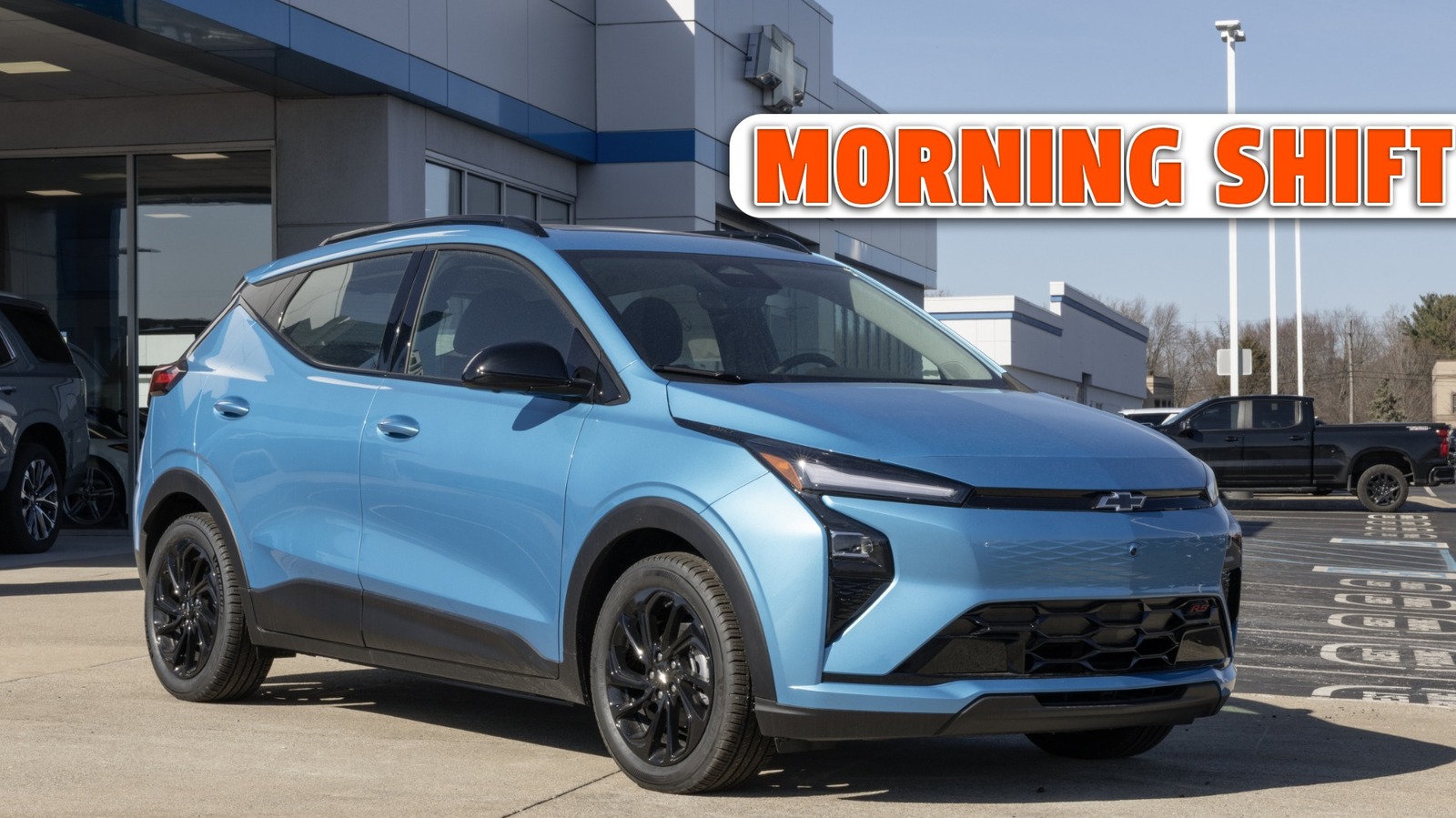
Several major automakers have reported internally that order banks for EVs and hybrids are strengthening after months of relative softness. Ford, which had pulled back on some EV production targets, is monitoring demand signals closely. General Motors has seen mixed results across its lineup but notes that the Chevrolet Equinox EV — priced to compete with conventional crossovers — continues to attract strong interest.
Toyota, which never fully abandoned the hybrid approach in favor of pure battery electrics, is seeing particularly strong demand for its Prius Prime and RAV4 Prime plug-in hybrids. The company's years of investment in hybrid drivetrain technology and its cautious approach to full battery electrics has positioned it well to benefit from a market environment where consumers want better fuel economy but are not ready for a fully electric vehicle.
![Nissan reveals its newest EV, an affordable electric city cruiser with 259 km of range [Images]](https://electrek.co/wp-content/uploads/sites/3/2026/09/Nissan-affordable-Pixo-EV.jpeg?quality=82&strip=all&resize=1200,628)
The Longer View
Gas price cycles are volatile, and consumer behavior can reverse rapidly when prices fall. The automotive industry learned this lesson repeatedly in the early 2000s and 2010s, when each spike in gasoline prices drove demand toward fuel-efficient vehicles only for that demand to evaporate when prices normalized.
What is different today is that EVs and plug-in hybrids represent a more mature and viable product category than previous fuel-efficient alternatives. The range, charging infrastructure, and user experience have improved dramatically. The technology is no longer asking buyers to make significant sacrifices in capability or convenience to access better fuel economy. If current gasoline prices persist or rise further, the market shift toward electrified vehicles may prove more durable than previous cycles — not because of price alone, but because the products themselves have finally reached a level of maturity that makes the switch genuinely appealing to mainstream buyers.
This article is based on reporting by Jalopnik. Read the original article.
Originally published on jalopnik.com