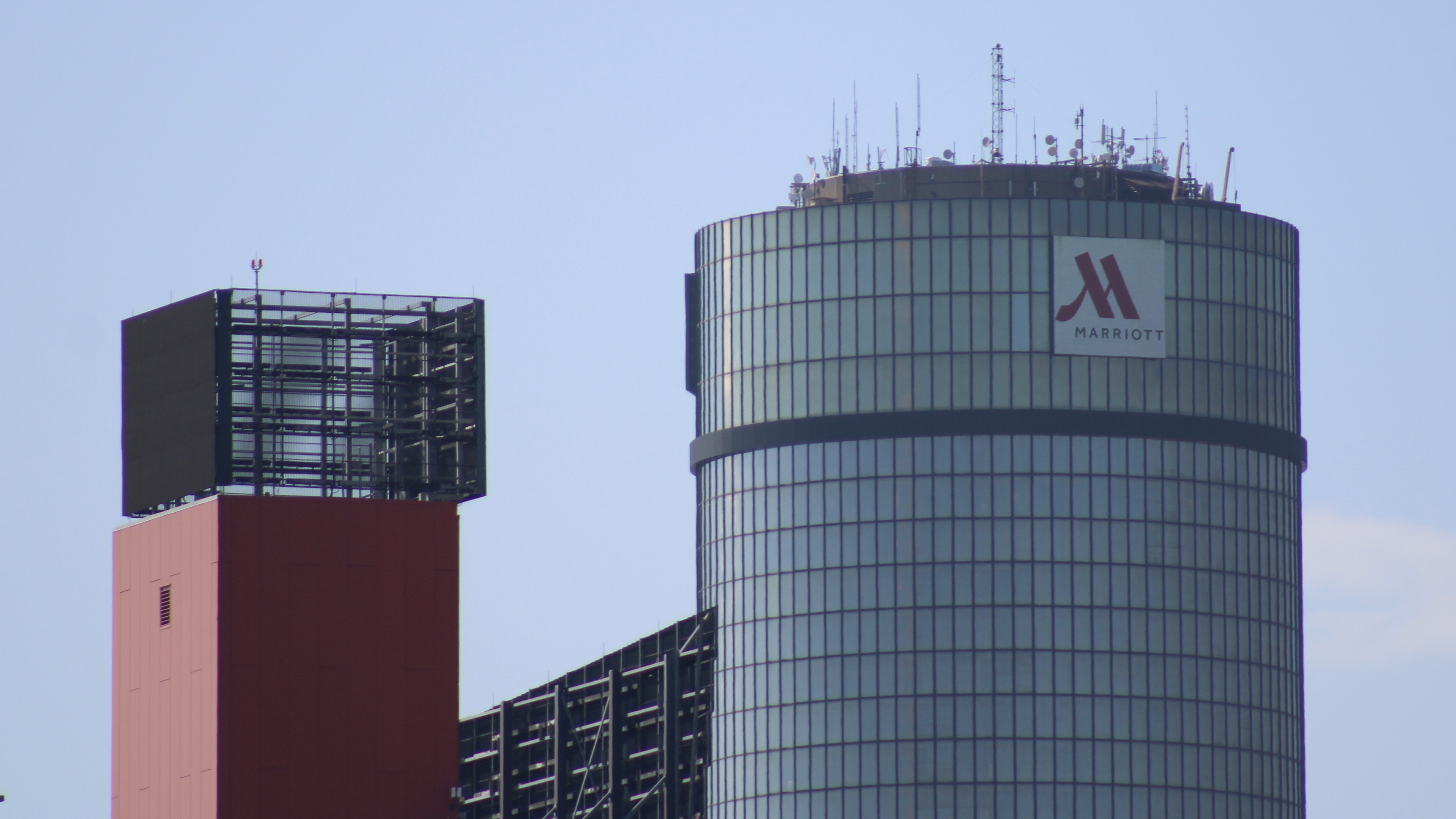
A visible change on a familiar skyline
General Motors has removed Chevrolet, GMC, Cadillac, and Buick logos from the digital signage atop Detroit's Renaissance Center, according to Automotive News. The signage now displays the Marriott hotel logo instead. On its face, that is a straightforward property and branding update. In practice, any change to the RenCen carries outsized symbolic weight because the complex has long been tied to GM's public identity in Detroit.
The Renaissance Center is more than office space in the civic imagination. For decades it has been one of the most recognizable markers of downtown Detroit and one of the clearest visual associations between the city and its largest automaker. That makes the removal of brand logos noteworthy even without a broader corporate statement attached to it in the supplied material.
Why signage changes matter
Automakers spend heavily to place their brands in high-visibility physical spaces for a reason. Buildings, headquarters, and skyline markers act as shorthand for permanence, local investment, and corporate confidence. When those signs change, observers naturally ask whether the meaning of the building is changing too.
Here, the most concrete fact is the simplest one: the four GM brand marks are gone from the top signage, while the Marriott name remains. That suggests a shift in what the building publicly communicates. Instead of serving as a rooftop billboard for Chevrolet, GMC, Cadillac, and Buick, the visible branding now emphasizes the hospitality component of the complex.
The Detroit context
In Detroit, visual details tied to landmark properties often carry more significance than they might in another market. The city has spent years reshaping its downtown identity through redevelopment, new tenants, and changing uses for older corporate spaces. Against that backdrop, the removal of GM brand logos from the RenCen invites interpretation as part of a broader transition in how legacy corporate sites are presented and used.
That does not mean the supplied report supports sweeping conclusions about strategy, ownership, or a departure from Detroit. It does not. The safe conclusion is narrower: a prominent piece of GM's public-facing rooftop branding has been taken down, and the Marriott logo now occupies that visible place instead.
Brand presence is also about what is absent
One reason this small-seeming change stands out is that absences on landmark buildings are often more noticeable than additions. People become accustomed to a skyline's visual vocabulary. When a familiar corporate signal disappears, it alters the city's mental map almost immediately, even if daily operations continue unchanged inside.
That is particularly true for GM's four core nameplates. Chevrolet, GMC, Cadillac, and Buick are not minor sub-brands. Together they represent the company's mass-market, luxury, and truck identities. Their removal from one of Detroit's defining towers is therefore not just a facilities note. It is a change to how GM's brand architecture is displayed in public.
A story about symbolism, not just real estate
The report's significance lies in symbolism. The Renaissance Center has functioned as a corporate emblem as much as a physical asset. When the emblems at the top of that structure change, the story becomes part of the city's continuing conversation about institutions, headquarters, and the evolving relationship between large companies and urban landmarks.
The fact that the Marriott logo remains visible also matters. It signals that the building's mixed-use identity is still legible from the skyline, even as GM's individual vehicle brands are no longer being promoted there in the same way. In practical terms, the signage now tells a different story about what observers are meant to notice first.
What comes next
Without additional sourcing, the best reading is restrained. The removal marks a meaningful visual shift at one of Detroit's best-known properties. It may reflect branding choices, property-use priorities, or both. What is certain is that one of the city's most recognizable automotive markers now looks different.
That alone is enough to make the move newsworthy. In a city where architecture and industry remain tightly intertwined, changing the skyline can change the conversation. GM's brands are no longer on the RenCen's digital crown. For Detroit watchers, that is a small change with unmistakably large symbolic overtones.
This article is based on reporting by Automotive News. Read the original article.
Originally published on autonews.com