SpaceMore in Space→
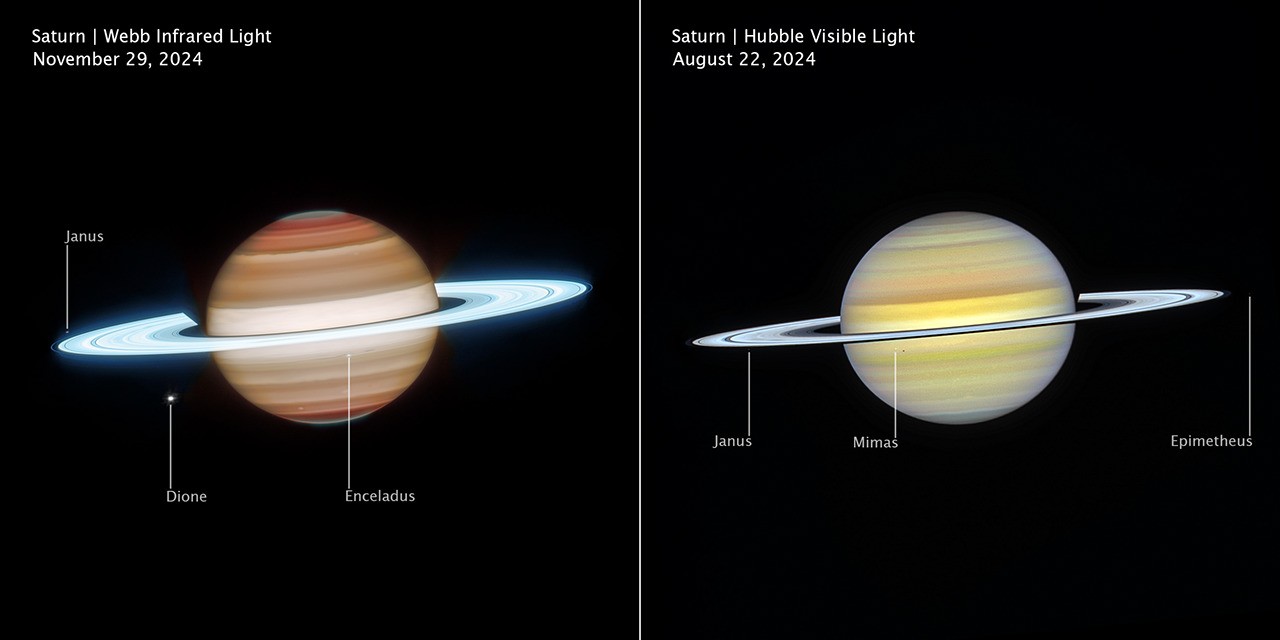
Webb and Hubble Reveal Saturn's Atmosphere Layer by Layer
Key Takeaways
- Webb infrared and Hubble visible-light observations were combined to map Saturn's atmosphere at multiple altitudes simultaneously
- Images reveal the Ribbon Wave jet stream, remnant of the 2010 Great Storm, and parts of the North Polar Hexagon
- Saturn's rings glow bright icy white in Webb infrared due to the high reflectivity of water ice particles
DE
DT Editorial Team··via science.nasa.gov