Europe's New Fighter Geometry
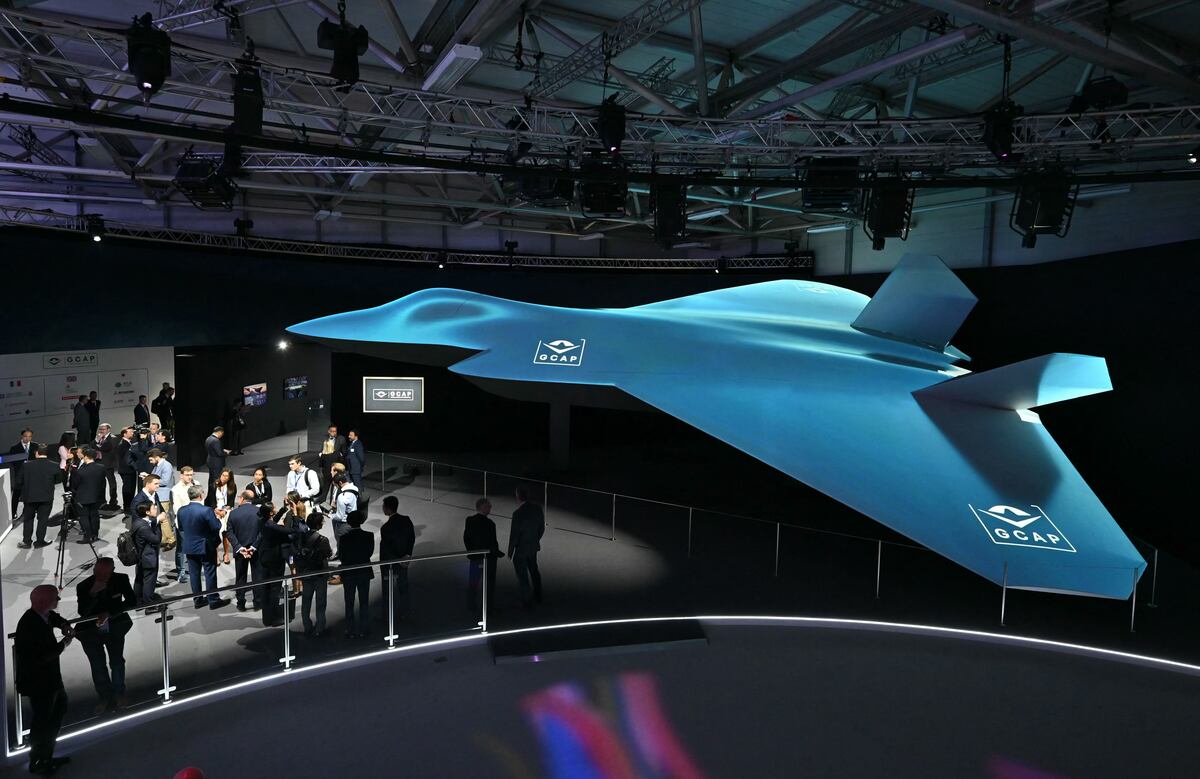
The Global Combat Air Programme, known as GCAP, represents one of the most ambitious Western defense industrial projects of this decade. The initiative brings together the United Kingdom, Italy, and Japan to develop a next-generation combat aircraft intended to replace aging platforms — the Eurofighter Typhoon for the UK and Italy, the Mitsubishi F-2 for Japan — with a sixth-generation system that integrates advanced stealth, artificial intelligence-driven mission management, and the ability to coordinate with autonomous wingmen and networked sensor architectures. Now Poland, one of NATO's most defense-serious member states, is signaling interest in joining the program.
Polish defense officials have confirmed that discussions about potential GCAP membership have taken place with Italian and Japanese stakeholders, though the precise scope and formality of those conversations remains unclear. No formal government-to-government negotiations have been announced, and the UK, Italy, and Japan have not publicly confirmed that Poland has been offered or formally invited to explore partnership terms. The signals from Warsaw are nonetheless significant: they reflect Poland's growing appetite for engagement in major European and transatlantic defense industrial partnerships.
Why Poland Is Interested
Poland's interest in GCAP is rooted in both operational and industrial considerations. On the operational side, Poland operates F-16s and is acquiring F-35s through the US foreign military sales process. The F-35 is a formidable fifth-generation platform, but it represents a weapon system where Poland is a customer rather than a partner — dependent on Lockheed Martin and the US government for sustainment, upgrades, and access to the platform's most sensitive capabilities. Participation in GCAP would give Poland a stake in a sovereign European-Japanese platform, with the associated technology access, maintenance capability, and industrial participation that partnership in major defense programs traditionally provides.
The industrial dimension is significant. Poland has been building a domestic defense industrial base with notable ambition, investing in domestic tank production, ammunition manufacturing, and aerospace capabilities. GCAP participation would offer Polish aerospace companies a pathway into the supply chain for one of the most technologically complex defense programs of the coming generation. For a government that has made defense industrial sovereignty an explicit national priority, that opportunity has strategic value beyond the aircraft itself.
The Geopolitical Context
Poland's interest in GCAP also reflects the broader reconfiguration of European security relationships triggered by Russia's ongoing war against Ukraine. Poland has emerged as arguably the most defense-committed NATO member in Europe, spending well above the NATO two-percent target and advocating consistently for stronger alliance deterrence postures on the eastern flank. Warsaw's relationships with both the UK — which despite Brexit remains deeply embedded in European security structures — and with Japan, with which Poland has been developing a growing security partnership, create natural diplomatic pathways for the GCAP conversation.
The Indo-Pacific dimension of GCAP is also relevant. Japan's participation in the program is a marker of the deepening security convergence between NATO's European members and Indo-Pacific democracies. For Poland, which has been an enthusiastic supporter of this transatlantic-plus architecture, alignment with a program that structurally connects European and Japanese defense industries carries symbolic as well as material value.
What Membership Would Actually Entail
Joining an established major defense program as a new partner is rarely simple. The UK, Italy, and Japan have already agreed on the fundamental architecture of the GCAP aircraft and the governance structures of the program. A new member would need to contribute funding, accept assigned work share, and integrate with existing program management structures — negotiations that can be technically and diplomatically complex even when all parties are broadly aligned.
Poland's defense budget, while large by historical standards, is not at the scale of the UK, Italy, or Japan, which would presumably limit the work share and technology access commensurate with its contribution. The precise terms under which a smaller partner could participate — whether as a full design partner, an associate partner, or a future customer with industrial offset arrangements — would be central to any negotiation.
The Larger Stakes for European Air Power
GCAP and the rival FCAS program — the Future Combat Air System being developed by France, Germany, and Spain — represent competing visions for European air power in the 2040s and beyond. The two programs have had difficulty finding a path to consolidation, and their parallel existence suggests that Europe will sustain two distinct sixth-generation fighter programs with different partnerships and different visions of defense industrial sovereignty.
Poland's interest in GCAP, if it leads to formal membership, would tilt one more European state toward the Anglo-Italian-Japanese camp and away from the Franco-German-Spanish one. In the intricate politics of European defense, the alignment choices made by major military spenders carry weight that extends beyond any individual program decision. The shape of European air power for the next generation is being decided, one partnership conversation at a time.
This article is based on reporting by Defense News. Read the original article.
Originally published on defensenews.com