A Coating That Cleans Itself
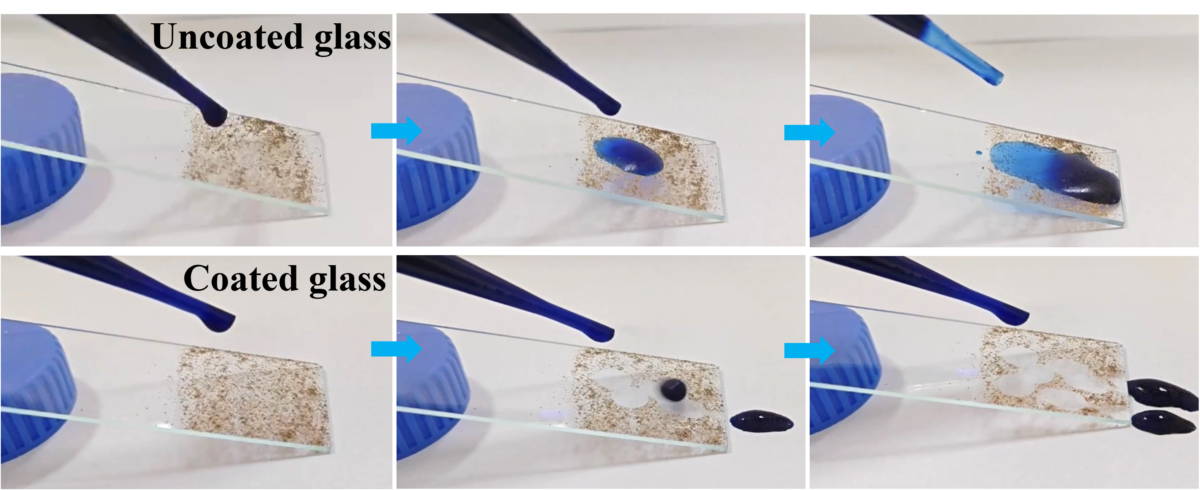
A research team has developed a transparent superhydrophobic self-cleaning coating that increases solar cell efficiency by 4.75 percent, addressing one of the most persistent and costly problems in solar energy: dirty panels. The coating causes water droplets to bead up and roll off the surface, carrying dust, pollen, and other debris with them in a process that mimics the self-cleaning properties of lotus leaves.
The technology could save the solar industry billions of dollars in maintenance costs while simultaneously increasing energy yields across installations worldwide. Soiling losses, the technical term for efficiency reductions caused by dirty panels, typically reduce solar output by 5 to 25 percent depending on location, climate, and cleaning frequency.
How the Coating Works
The coating is based on a nanostructured silica formulation that creates a hierarchical surface texture at the microscopic level. This texture traps air beneath water droplets, dramatically reducing the contact area between droplet and surface. The result is a contact angle greater than 150 degrees, meaning water sits almost spherically on the surface before rolling off at the slightest tilt.
As droplets roll across the panel, they pick up particulate matter through a combination of adhesion and capillary forces. This passive cleaning mechanism works with natural rainfall, morning dew, or even humidity condensation, meaning panels in most climates receive regular cleaning without human intervention or mechanical systems.
Critically, the coating maintains high optical transparency across the solar spectrum. Previous attempts at superhydrophobic coatings often sacrificed light transmission for water-repelling properties, resulting in a net wash or even a reduction in energy output. The researchers solved this by optimizing nanostructure dimensions to minimize light scattering while preserving the superhydrophobic effect.

Testing and Performance Data
The 4.75 percent efficiency improvement was measured over a six-month field trial comparing coated and uncoated panels in identical conditions. The coated panels maintained consistently higher output, with the performance gap widening during dry, dusty periods when uncoated panels accumulated significant soiling.
Durability testing showed the coating retained its superhydrophobic properties after exposure to UV radiation, temperature cycling between minus 20 and 85 degrees Celsius, and simulated hail impact. The researchers report the coating maintained performance characteristics for at least 18 months of accelerated aging tests, equivalent to approximately five years of field exposure.
The coating can be applied to existing solar panels through a spray-on process that does not require disassembly or specialized equipment. This retrofit capability means the technology can benefit the enormous installed base of solar panels worldwide, not just new installations.
Economic Impact on Solar Operations
Panel cleaning is a surprisingly expensive component of solar farm operations. Large-scale installations in arid regions like the Middle East, North Africa, and the American Southwest may require cleaning every few weeks, using robotic systems, manual labor, or water-intensive washing. The International Energy Agency estimates that soiling costs the global solar industry between $3 billion and $5 billion annually in lost output and cleaning expenses.
A coating that eliminates the need for active cleaning while boosting energy output could fundamentally change the economics of solar operations. Even in temperate climates where soiling is less severe, the cumulative efficiency gain over a panel's 25 to 30 year lifespan represents significant additional revenue.
The researchers estimate the coating adds less than two percent to panel cost while delivering efficiency gains that pay for themselves within the first year. For utility-scale installations with tens of thousands of panels, the savings in cleaning costs alone would be substantial.
Next Steps
The research team is working with manufacturing partners to scale production and develop automated application systems for solar panel factories. They expect commercial availability within 12 to 18 months, with initial deployment targeting utility-scale installations in high-soiling environments. As global installed solar capacity continues rapid expansion, technologies that improve performance and reduce operating costs of existing panels become increasingly valuable.
This article is based on reporting by PV Magazine. Read the original article.
Originally published on pv-magazine.com