A Once-in-a-Lifetime Visitor Leaving Behind a Scientific Gift
Interstellar comet 3I/ATLAS is on its way out. Having entered the solar system from interstellar space, made its closest approach to the sun, and begun its outbound journey, 3I/ATLAS will soon exit the solar system on a hyperbolic trajectory—never to return. Before it goes, NASA has released the complete observational dataset gathered during its passage, making it freely available to researchers worldwide in an open science initiative designed to maximize the scientific returns from one of the rarest cosmic events astronomers have ever had the opportunity to study.
What Makes Interstellar Objects So Scientifically Valuable
Interstellar comets like 3I/ATLAS are pieces of other planetary systems—material that formed around different stars and was ejected into interstellar space, eventually crossing through our solar system. They represent the only way to study extrasolar planetary material in situ, using telescopes rather than having to physically travel to another star system. The composition, structure, and behavior of interstellar comets encode information about the chemical and physical conditions of their home planetary systems.
The first confirmed interstellar object, 'Oumuamua, was detected in 2017 but passed through the solar system so quickly and at such distance that observational data was limited. The second, Comet 2I/Borisov, detected in 2019, was more thoroughly characterized and proved to be compositionally similar to solar system comets—suggesting that comet chemistry may be broadly universal across planetary systems. 3I/ATLAS offered another opportunity to test this hypothesis and probe the chemical and structural properties of material from yet another stellar origin.

The Dataset and What It Contains
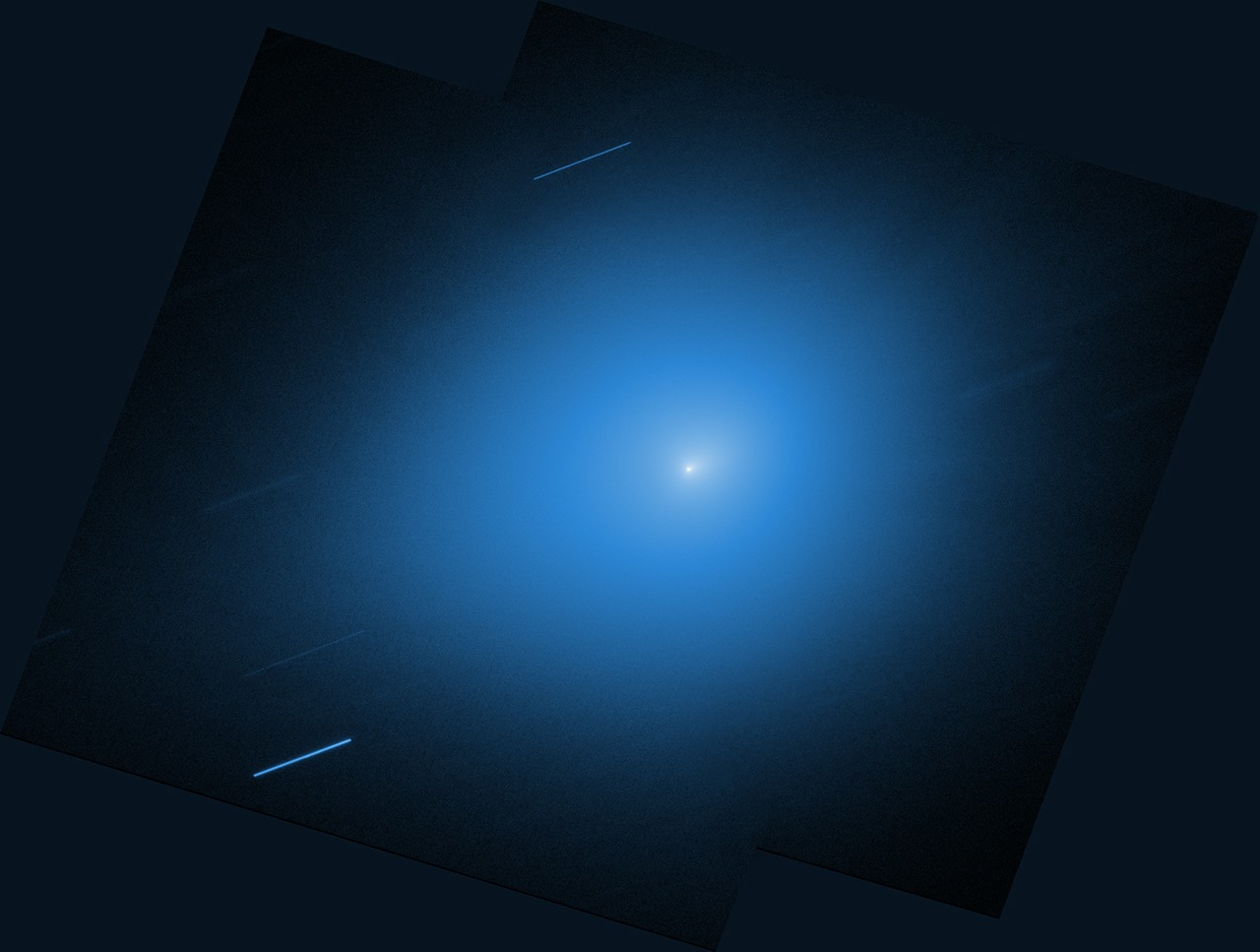
The NASA-released dataset encompasses observations from multiple ground and space-based observatories collected throughout 3I/ATLAS's solar system transit. It includes photometric measurements tracking the comet's brightness as it approached and receded from the sun, spectroscopic data revealing the chemical composition of its coma—the gas and dust envelope that develops as cometary material sublimates—and high-resolution imaging documenting its morphology and any structural changes over time.
Particularly valuable are the spectroscopic observations, which allow scientists to identify the molecular species present in the comet's coma. Water, carbon monoxide, carbon dioxide, methanol, and various organic compounds are common in solar system comets; whether the same molecules dominate in interstellar comets, and in what ratios, provides direct information about chemistry in the interstellar comet's home system.
Open Science as Force Multiplier
NASA's decision to release the full dataset publicly rather than restricting it to the instrument teams that gathered the data reflects a growing commitment to open science in astronomy. The observational window for studying 3I/ATLAS was finite—once it exits the solar system, no further observations are possible. By making the dataset universally accessible, NASA allows the global astronomical community to analyze the data using diverse methods and ask questions that the original observing teams may not have prioritized.
This approach has proven effective with other astronomical datasets. The public release of Hubble Space Telescope archive data, for example, has enabled discoveries by researchers who were not part of original observing programs. For a unique and non-renewable dataset like 3I/ATLAS observations, the force-multiplication effect of open access is particularly significant.

What Future Interstellar Visitors May Reveal
The detection of multiple interstellar objects in less than a decade suggests that interstellar comets pass through the solar system more frequently than astronomers previously estimated. The Vera Rubin Observatory, which began full science operations recently, is expected to dramatically increase the discovery rate of interstellar objects due to its unprecedented sky coverage and sensitivity. Future interstellar visitors detected earlier in their solar system transit—providing more time for observation—could be characterized with far greater completeness than 3I/ATLAS or its predecessors.
The 3I/ATLAS dataset, now available to the global research community, will serve as a reference point for interpreting these future discoveries and refining models of interstellar object populations, composition, and origins. The science from this one visitor will continue accumulating long after the comet itself has vanished into interstellar darkness.
This article is based on reporting by science.nasa.gov. Read the original article.
Originally published on science.nasa.gov