A Strategic Expansion Beyond Florida
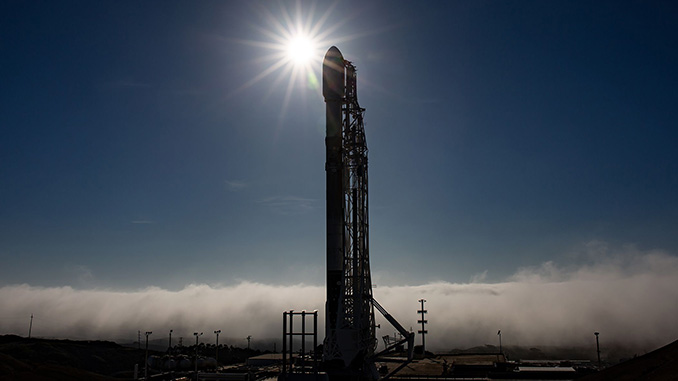
Blue Origin is a step closer to establishing its first California launch site for New Glenn after the U.S. Space Force selected the company to continue in the process for developing Space Launch Complex 14 at Vandenberg Space Force Base. The decision does not yet amount to a final lease, but it moves Blue Origin into a more concrete phase of planning for West Coast launch operations and signals that New Glenn’s long-term ambitions extend well beyond Cape Canaveral.
The timing is notable. The development was announced just days before Blue Origin’s planned third New Glenn launch, linking near-term flight activity with a much larger infrastructure push. If Blue Origin ultimately secures the site, it would gain a major foothold at one of the country’s most strategically important spaceports, especially for missions that benefit from polar and sun-synchronous trajectories commonly associated with West Coast launches.
Why SLC-14 Matters
According to the supplied source text, Space Launch Delta 30 issued a request for information in December 2025 to gauge launch-provider interest in the site and gather preliminary proposals. Blue Origin has now emerged from that process as the selected proposal moving forward. That alone says something about how the Space Force is thinking about future heavy and super-heavy launch demand: it wants expanded capacity, and it is willing to back greenfield development to get there.
Colonel James Horne III, commander of SLD 30, described the decision as a critical milestone for the Vandenberg spaceport and framed the project as part of a broader effort to expand launch capability for national space operations. The site itself currently lacks infrastructure, making it what Horne called a greenfield development. That means the path from selection to actual launch operations will depend on both public and private build-out. The Space Force would provide enabling infrastructure up to the boundary of the launch area, while Blue Origin would fund and develop the pad on its side of that line.
That arrangement matters because it defines the practical division of labor. The government’s role is to make the site usable. Blue Origin’s role is to invest in the launch complex itself. The pace of progress will therefore depend not only on permitting and planning, but on how quickly both sides can synchronize civil works, operational requirements, and pad design.

National Security Demands Are in the Background
There is also a more specific strategic dimension. Horne pointed to a longstanding requirement in the National Security Space Launch program that providers must be able to vertically integrate payloads onto their rockets. That point may prove especially important in shaping what Blue Origin ultimately builds at SLC-14. Vertical integration capability is a major factor for some sensitive government missions, and launch providers that can meet it may be better positioned to compete for higher-value national security work.
In that context, a Vandenberg site is not merely a geographic expansion. It is part of a capability posture. United Launch Alliance already supports vertical integration on its vehicles, while newer systems across the industry are adapting infrastructure to satisfy that requirement. For Blue Origin, a West Coast launch site capable of serving demanding government payloads would strengthen its standing in a market where reliability, infrastructure, and mission flexibility all count.
The announcement does not answer what the finished pad will look like, and the source text explicitly says those specifics remain with Blue Origin. But the direction is unmistakable. The company is moving from being a Florida-based heavy-launch entrant toward becoming a more nationally distributed launch operator with stronger access to defense and polar-orbit mission profiles.
- Blue Origin was down-selected to continue toward a lease at SLC-14 at Vandenberg.
- The site is a greenfield development with no current launch infrastructure.
- The move could expand New Glenn’s ability to support heavy launch and national security missions from the West Coast.
For Blue Origin, the significance is straightforward: rockets matter, but real market position is built on pads, logistics, and sustained access to strategic launch ranges. This decision does not complete that transition, but it is one of the clearest signs yet that the company is trying to build for that scale.
This article is based on reporting by Spaceflight Now. Read the original article.
Originally published on spaceflightnow.com