NASA is bringing its first crewed moon mission in decades back to a familiar stretch of ocean
Artemis 2, the first crewed moon mission since Apollo 17 in 1972, is scheduled to end with a Pacific Ocean splashdown near San Diego, according to Space.com. If all proceeds as planned, NASA’s Orion capsule will hit the water at 8:07 p.m. EDT on April 10, which corresponds to 0007 GMT on April 11. The timing closes out a mission with unusually high symbolic weight: a human return to deep-space lunar flight after more than half a century.
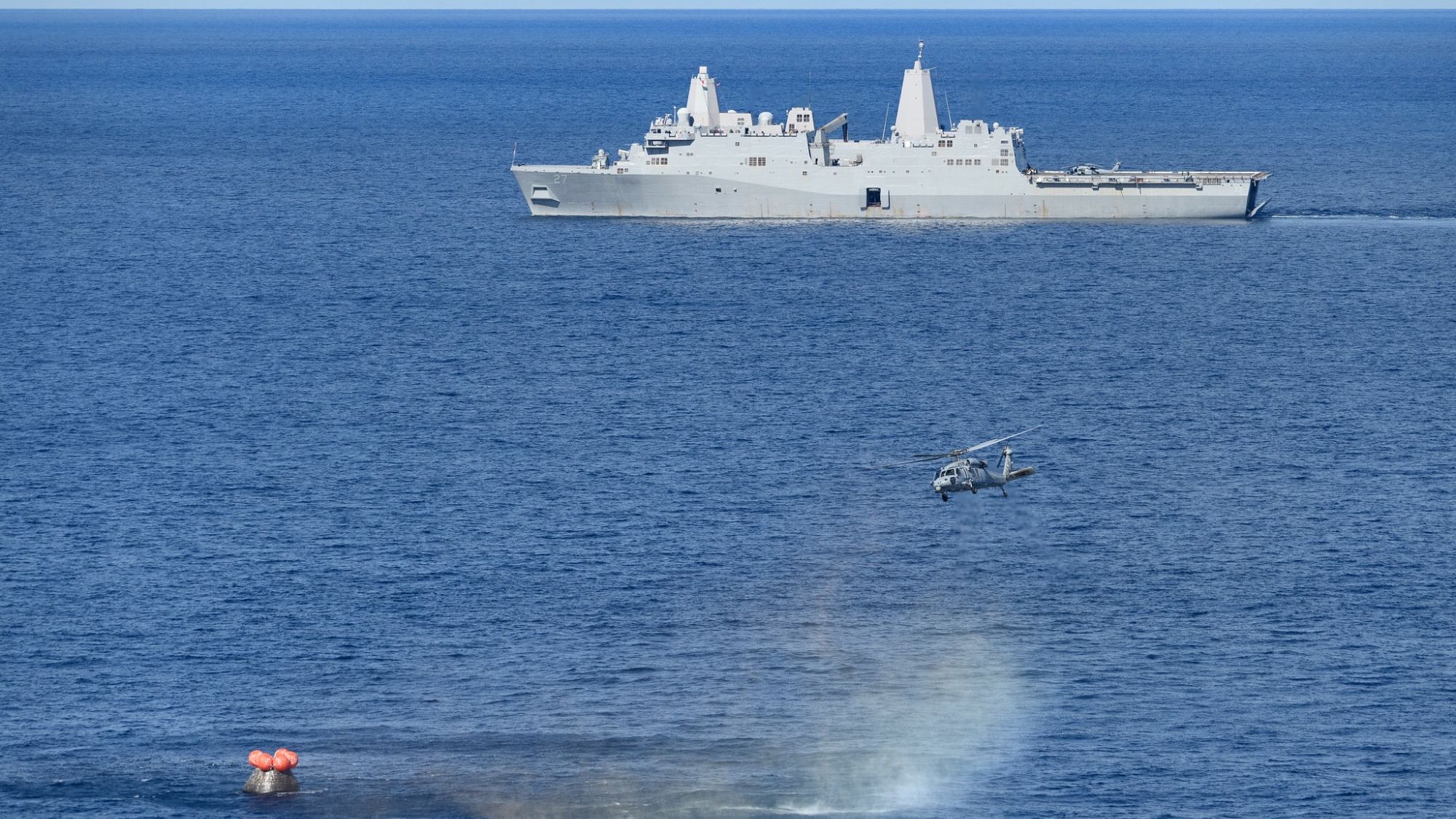
The landing site is not arbitrary. Space.com notes that NASA selected the same general area used for the uncrewed Artemis 1 return in December 2022. That continuity suggests the agency is leaning on a recovery zone it already knows well as Artemis transitions from test milestones to repeatable operational procedures.
A mission built around return as much as departure
Space missions often command the most public attention at launch, but the return sequence is where engineering complexity compresses into a narrow and unforgiving timeline. Reentry, descent, parachute deployment, splashdown, and crew recovery all have to unfold in order, under tight constraints, and with little room for improvisation once the sequence begins.
That is part of why the Artemis 2 splashdown matters beyond the immediate spectacle of astronauts coming home. The mission is not only about proving that a crew can travel around the moon and return. It is also about demonstrating that NASA and its partners can recover a deep-space crew safely and predictably, using procedures that support future missions in the Artemis architecture.
The use of a known Pacific recovery area fits that objective. A familiar zone can simplify logistics, support planning, and coordination with the recovery forces needed to secure the capsule and assist the crew after landing. Space.com’s framing makes clear that NASA had “very good reasons” for choosing the site again, even if the broader public mostly experiences the decision as a simple location note on a countdown schedule.
Why the San Diego-area splashdown zone matters
The region off the coast of San Diego offers NASA a recovery environment that has already been exercised in the Artemis program. Artemis 1, the uncrewed precursor mission, returned to the same general area in 2022. Reusing that part of the Pacific gives NASA continuity between the uncrewed test and this crewed follow-up.
That matters because Artemis 2 is not an isolated demonstration. It is a bridge mission, one that must turn lessons from an earlier flight into validated practice for the next phases of lunar exploration. A repeat splashdown zone helps reduce variables in one part of the mission profile, allowing engineers and recovery teams to build on prior experience rather than start from scratch.
There is also an operational logic in choosing a coastal area that supports naval and mission recovery resources. Orion is designed for ocean landing, and post-splashdown operations are an essential part of the mission. The capsule must be located, secured, and processed, and the astronauts must be extracted safely. A location with established recovery planning is therefore part of the mission system, not merely the final backdrop.
The end of one mission and a signal for the program
Artemis 2 carries significance well beyond the four astronauts aboard Orion. The mission tests the credibility of NASA’s larger campaign to return humans to lunar space under the Artemis banner. A successful splashdown would reinforce the argument that the program is progressing from concept and hardware development to repeatable human operations.
The comparison point in the report is Apollo 17, which flew in 1972. That gap is central to the meaning of Artemis 2. This is not just another crewed mission in an ongoing sequence, the way a low-Earth-orbit flight might be. It is a restart of crewed lunar-era operations after a pause measured in generations. That creates a higher burden of demonstration. Every major phase, including the return to Earth, carries outsized symbolic and technical importance.
For NASA, that means splashdown is both closure and proof. It closes a historic flight, but it also serves as evidence that the agency can deliver crews back from beyond low Earth orbit under the framework it intends to use for future missions. A clean return will not answer every remaining question about Artemis, but it will remove one major source of uncertainty from the near-term roadmap.
What the public sees versus what NASA is validating
Public coverage of splashdown tends to focus on timing, visuals, and the human moment of recovery. Those elements matter, especially for a mission positioned as a milestone in the return to the moon. But the deeper value of Artemis 2’s ending lies in validation. NASA is testing systems, procedures, and institutional readiness, all under live mission conditions.
That is why the apparently simple details in the report, the scheduled landing time, the Pacific site, the reuse of the Artemis 1 recovery region, are more significant than they first appear. They point to an agency trying to turn a historically significant mission into a disciplined operational template. Familiarity in the recovery zone is part of that discipline.
If Orion splashes down as planned near San Diego, Artemis 2 will stand as more than the first crewed moon mission since Apollo. It will also mark a successful round trip for the Artemis system, including the hard final steps that turn a deep-space voyage into a completed mission rather than an unfinished test.
For the Artemis program, that distinction matters. Launches begin missions, but recoveries are what prove they can be done again. Artemis 2’s Pacific return is therefore not just the end of a headline-grabbing flight. It is a measure of whether NASA’s modern lunar effort can close the loop, safely, visibly, and in a form sturdy enough to support what comes next.
This article is based on reporting by Space.com. Read the original article.
Originally published on space.com