At a gaming convention around 2010, board game designer James Ernest posed a seemingly lighthearted question to mathematician Eric Harshbarger over dinner: could anyone craft a set of dice that would let every player in a group, whether two or twelve, roll once for a perfectly equal chance at going first? The demand was stricter than it sounds. No ties. No rerolls. Just one roll per player and a completely random, yet fair, decision.
Harshbarger, now a mathematician at Auburn University in Alabama, could not answer that evening. But the question stuck for more than a decade. It became known as the ‘go first dice’ problem, a puzzle that blended combinatorics, geometry and the everyday randomness of tabletop games. Now, after fifteen years of intermittent collaboration, Harshbarger and a network of mathematical friends have announced the solution: a set of five 60-sided dice that can determine turn order with perfect fairness for any number of players.
The Problem That Sounds Easy
At first glance, the challenge seems trivial. To avoid ties, simply put a unique number on every face of every die. With five 60-sided dice, that means engraving numbers from 1 to 300, each appearing exactly once. Any player who rolls a 300 obviously wins, and since no two players can roll the same number, a tie is impossible. But ‘fairness’ is a more demanding requirement than avoiding duplicates.
The subtlety appears when you ask what happens with any subset of players. The dice must be designed so that every player in a group of two, three, four, or five has an exactly equal probability of rolling the highest number. If the numbers are distributed unevenly, one die might be far more likely to produce a high number, giving an unfair advantage to whoever picks it. Harshbarger explained it this way: “The easy thing is to avoid ties; you just put different numbers on all the dice. The problem comes in how you distribute those different numbers across the dice so that the probability is equal not only for the whole set but for any subset.”
This condition is what made the puzzle so deceptively hard. A random distribution of numbers across the dice will almost never satisfy the fairness requirement for every subset. Even a seemingly balanced arrangement often fails when you compare only two of the dice against each other. To achieve true fairness, the numbers must be arranged with mathematical precision, balancing high and low values across each die so that every die is, in effect, equally powerful.

A 15-Year Mathematical Journey
The question first surfaced at that convention dinner, but Harshbarger did not pursue it with frantic urgency. Instead, it lingered as a “casual project” shared among friends, mathematicians and puzzle enthusiasts who enjoyed circling back to it at conferences and online forums. What made the problem attractive was not just its practicality but its theoretical depth.
Designing a fair set of dice is related to a well-known concept in probability called ‘nontransitive dice.’ Normally, a set of dice can create a rock-paper-scissors style cycle, where die A beats die B, die B beats die C, and die C beats die A. But the go-first dice problem asks for something stronger: total symmetry among all dice, so that no die is weaker or stronger than any other. In mathematical terms, the dice must be ‘exchangeable’ in a probabilistic sense. For any pair of dice, each must have an equal chance of rolling a higher number, and this must hold for any triplet, quartet, or the full set.
Over the years, the collaborators tried different approaches: iterative search algorithms, combinatorial inequalities, and a great deal of clever guessing. But a brute-force search was infeasible. The number of possible assignments of 300 numbers across 300 faces is astronomical, and no obvious symmetry simplifed the search. Progress came in fits and starts. Occasionally a promising candidate would emerge, only to fail when tested against a specific subset. At other times, the team would prove why a whole family of designs could not work, narrowing the hunt.
According to Harshbarger, many mathematicians and hobbyists contributed ideas, even if their names do not appear on the final paper.“It really was a community effort,” Harshbarger told Live Science. “People would bring different pieces of the puzzle, and we would slowly assemble a picture of what was possible and what was not.” The process was less about a sudden flash of insight and more about persistent, incremental refinement.
The Winning Design
After fifteen years of work, the team finally discovered a complete solution: five 60-sided dice, each a polyhedron known as a hexecontahedron, collectively engraved with the numbers 1 through 300, with no repeats. The distribution of numbers across the dice is not random; it is a carefully designed arrangement in which every die has the exact same probability of winning against any other die, and also the same probability of being the highest in any larger subset.
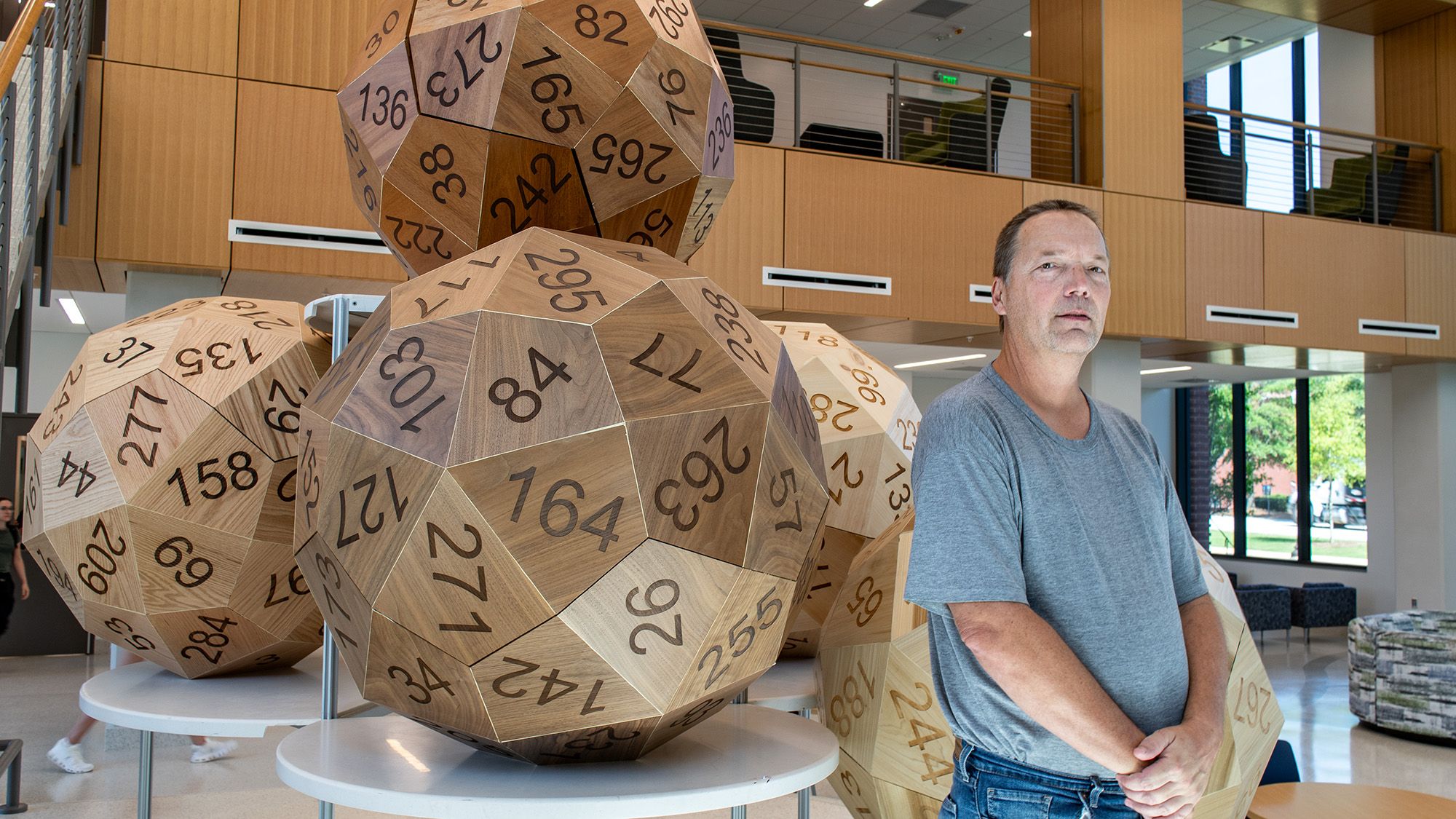
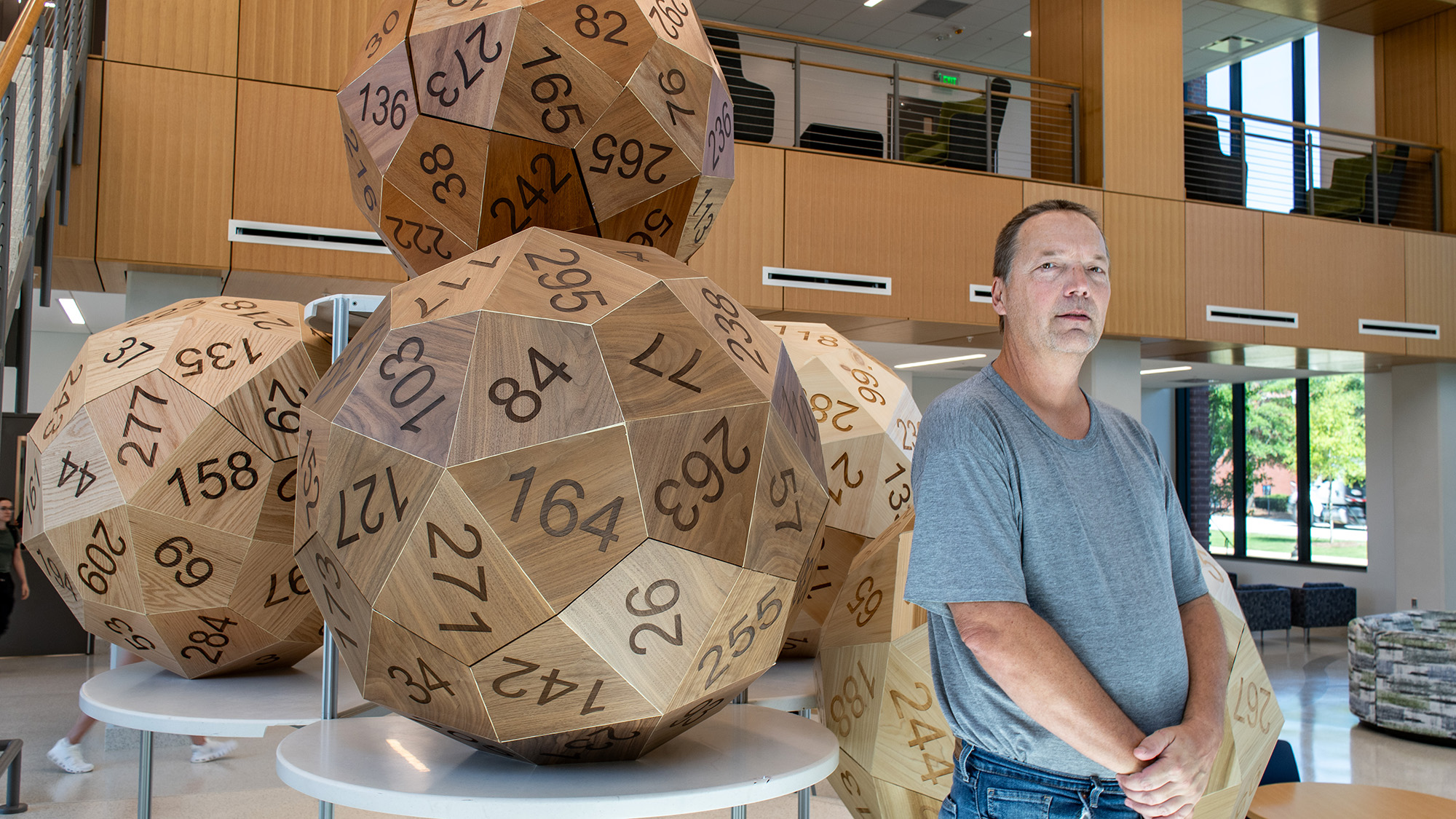
To demonstrate the achievement publicly, Harshbarger commissioned or built five giant wooden replicas of the dice, each carved from a different type of wood. The oversized dice help people visualize the complexity of the object. A 60-sided die looks almost like a sphere, and handling it conveys the geometric sophistication that was needed for the design. These artistic versions are now on permanent display in Auburn University’s new mathematics building, serving as both a celebration and an inspiration for students who may go on to solve their own mathematical puzzles.
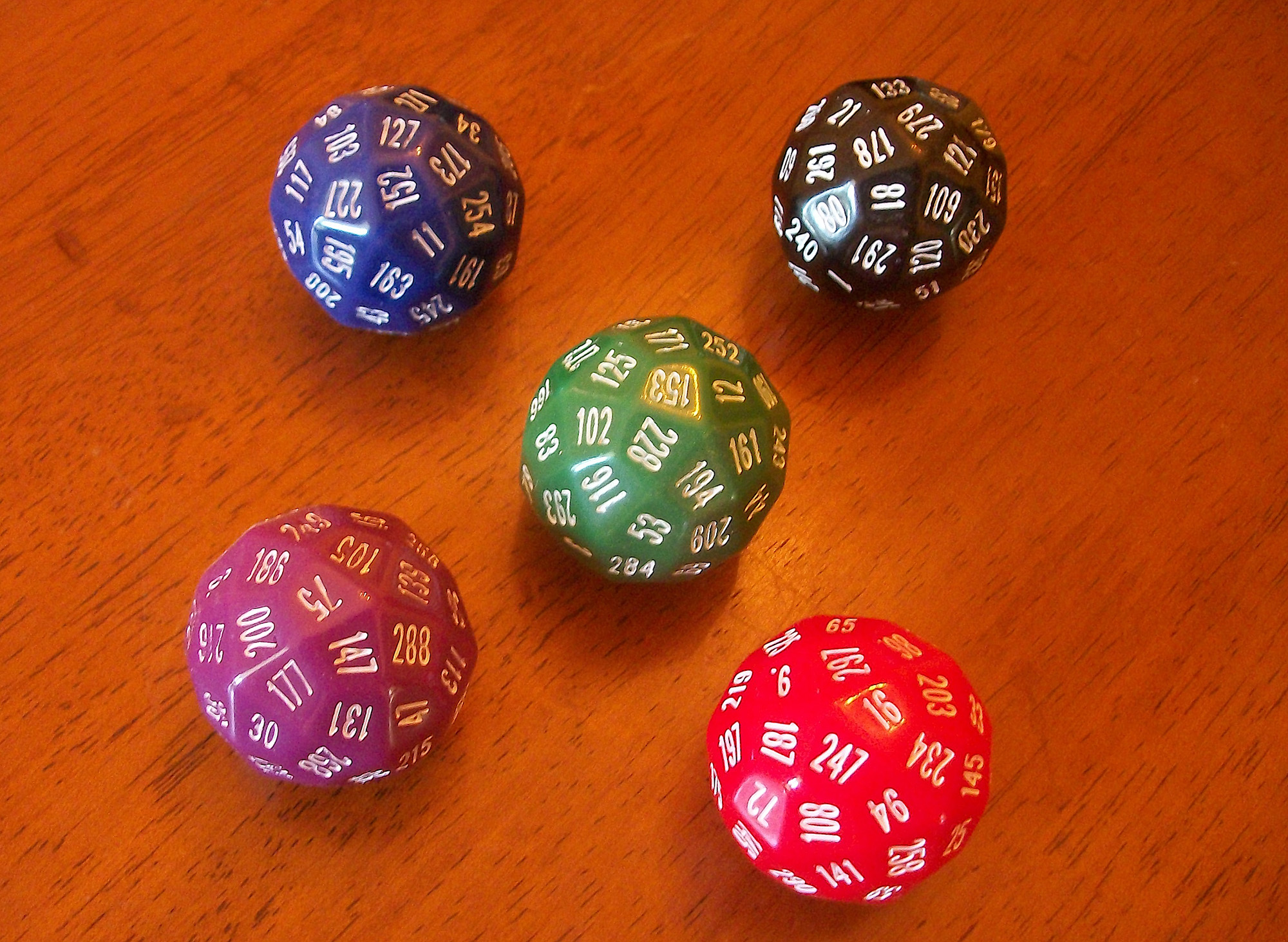
The discovery has immediate implications for board game designers. Instead of using complicated rules for turn order, players could simply grab one of the five dice and roll. The system works with any number of players from one to five. If you have two players, each picks a die and rolls; the higher number wins. With five players, the same rolls decide who starts, and every player has a one-in-five chance of winning. The dice even work with six or more players if you allow ties? No, the design guarantees no ties, but the problem only asks for fairness within the full set. Yet the team’s achievement specifically addresses groups up to five, because each set has five dice.
It is worth noting that the guarantee holds even when players choose dice strategically. Since every die is fair against every other die, no die has an inherent advantage. A player could try to predict which die another player might choose, but because all dice are symmetric, there is no way to gain an edge through selection. This property is what makes the design so remarkable: it transforms a seemingly simple tool into a perfectly impartial randomizer.

Why 60 Sides?
Why did the solution require 60-sided dice instead of, say, standard 6-sided cubes? The answer lies in the mathematics of fairness. For a set of dice to be perfectly unbiased for any subset, the number of faces must be large enough to allow a highly balanced distribution of values. With only six sides, it is impossible to distribute 30 numbers (for a five-die set) in a way that equalizes probabilities for every subset. The geometry of 60-sided dice provides enough faces to permit the delicate balancing act that the problem demands.
Harshbarger’s work is an elegant example of how pure mathematics can emerge from a playful question. What began as a ‘joke’ at a gaming convention became a serious research effort that touched on probability theory, combinatorics, and polyhedral geometry. And in the end, it produced something tangible: a set of dice that players can hold, roll, and trust.
The five wooden dice sitting in Auburn’s mathematics building are not just relics; they are tactile proof that some problems require patience, collaboration, and a willingness to keep rolling the dice.
This article is based on reporting by Live Science. Read the original article.
Originally published on livescience.com