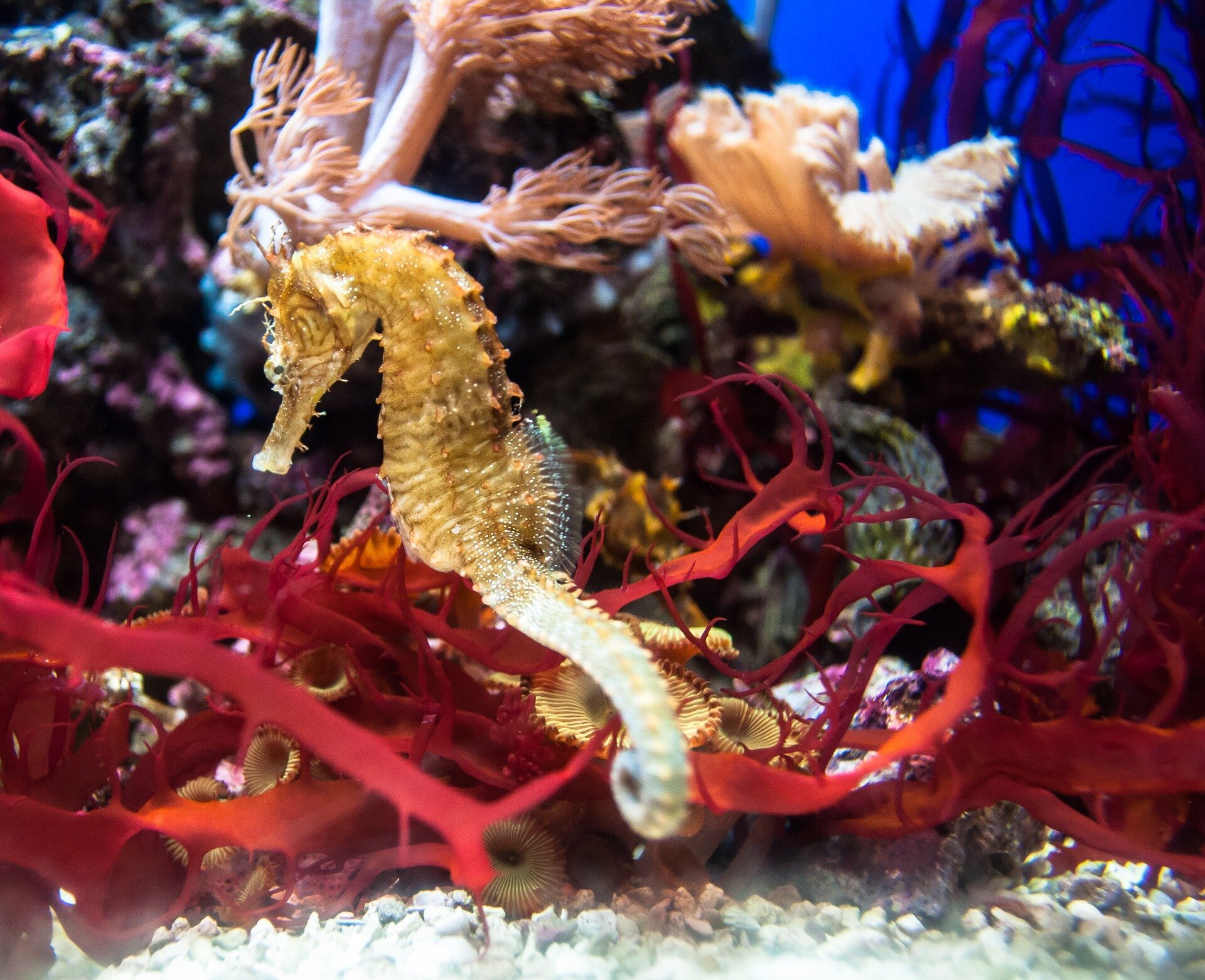
Male pregnancy creates an unusual waste-management problem
Seahorses are unusual among vertebrates because males carry the developing young. After a female transfers her eggs into the male’s brood pouch, the embryos develop inside a protected chamber on the fish’s underside. The pouch is widely understood to protect embryos and is thought to support nutrient exchange, but pregnancy inside an enclosed pouch also presents a basic physiological challenge: the embryos produce metabolic waste that must be removed.
A study led by researchers at Sophia University in Japan has examined one possible mechanism for handling that problem. The work focuses on ammonia, a major nitrogen-containing waste product in fish that can become toxic at high concentrations. The researchers report evidence that several rhesus glycoproteins, or Rh proteins, are expressed in the brood pouch of seahorses and may form part of a pathway that transfers ammonia away from developing embryos.
The research was published in Cell and Tissue Research. It does not establish every step of ammonia removal during seahorse pregnancy, but it provides a cellular map that helps explain how the pouch could keep the embryonic environment suitable for development.
Why ammonia matters
Animals continuously generate waste as they process nutrients and produce energy. In fish, ammonia is an important nitrogenous waste product. Because excessive ammonia can be harmful, moving it out of tissues and into routes where it can be carried away or excreted is essential.
That task is particularly notable in a seahorse brood pouch. Developing embryos release ammonia into the pouch lumen, the internal space that surrounds them. The embryos are not simply exposed to the open water, so the male’s pouch must mediate the exchange of materials between the embryos and the father.

Previous work had identified Rh proteins in fish. These proteins function as channels that can transport ammonia across cell membranes. What had remained unclear was whether they were present in the seahorse brood pouch and whether their locations were consistent with a role in clearing embryonic waste.

A proposed route from pouch to blood
The team investigated the expression and localization of Rh proteins in seahorse brood pouches and gills. Their proposed model describes a sequence through which ammonia released by embryos could move from the pouch lumen into the father’s circulation.
According to the model, ammonia first passes through cells in the pouch’s inner epithelium using RhCG2 and RhBG proteins. It may then move through endothelial cells and erythrocytes, or red blood cells, that express RhAG, entering the bloodstream. This arrangement would connect the enclosed embryonic environment to the father’s transport system.
The distinction matters because it shifts the brood pouch from a simple protective container to an active exchange interface. The pouch appears to be positioned not only to shelter embryos but also to help regulate their chemical environment as they grow.
The research was led by Professor Mari Kawaguchi of Sophia University’s Department of Materials and Life Sciences. Kawaguchi worked with Hiroki Yamazaki and Professor Shigeki Yasumasu of Sophia University, as well as Professor Junya Hiroi of St. Marianna University School of Medicine.

What the finding adds to seahorse biology
Seahorse pregnancy has long drawn attention because it reverses the more familiar pattern of gestation, with the male taking on the role of carrying embryos. Yet the biological mechanisms that sustain those embryos are still being pieced together.
The new study addresses one of the practical requirements of pregnancy in the pouch: keeping waste from accumulating. Locating ammonia-transporting proteins in specific pouch tissues offers a concrete basis for testing how maternal-style support functions may have evolved in a male reproductive organ.
It also underlines that parental care can depend on specialized transport systems, not just physical protection. In this case, the father may be contributing a controlled route through which a harmful metabolic byproduct is moved away from the embryos.
Questions that remain
The researchers’ pathway is a proposed one, based on the proteins’ expression and localization. Further studies will be needed to measure ammonia movement directly, determine how the pathway changes over the course of pregnancy, and establish how it interacts with the seahorse’s gills and other organs involved in waste handling.
Even so, the work adds a detailed cellular perspective to a distinctive form of reproduction. By identifying Rh proteins in the brood pouch and showing how their placement could connect embryos to the paternal bloodstream, the study points toward an answer to a fundamental question of male seahorse pregnancy: how an enclosed nursery avoids becoming a toxic one.
This article is based on reporting by Phys.org. Read the original article.
Originally published on phys.org


