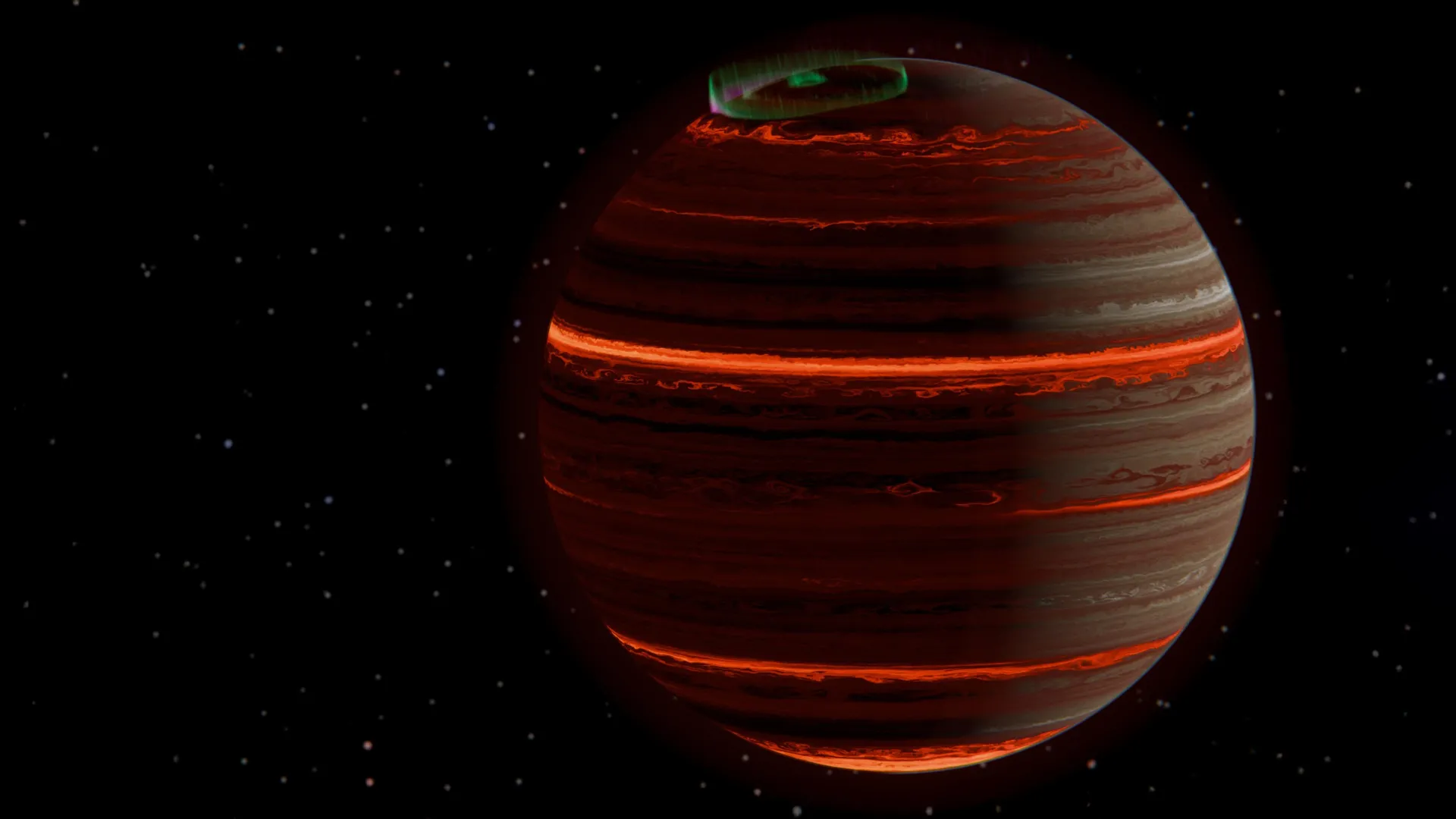
A milestone in the search for potentially habitable worlds
Astronomers have reported what appears to be the clearest evidence yet that a rocky planet in the habitable zone of another star has an atmosphere. The planet, LHS 1140 b, orbits a small red dwarf about 48 light-years from Earth, and researchers say they detected helium escaping from the planet. That signal matters because it suggests the world has managed to retain a gaseous envelope over billions of years, despite the challenges planets around active small stars can face.
The result stands out because atmospheres are central to habitability. They can regulate temperature, redistribute heat, protect a surface from harsh radiation to some degree, and provide the medium through which water vapor and other potentially important molecules might persist. Scientists have long known that many exoplanets exist in the so-called habitable zone, where liquid water could in principle exist. But showing that a rocky world in that zone has actually kept an atmosphere has been much harder.
According to the supplied source material, the findings were published July 16 in Science. The report describes the detection as the first evidence of an atmosphere around a rocky planet orbiting in another star’s habitable zone. That does not mean LHS 1140 b is confirmed to be habitable, let alone inhabited. It does mean one of the major prerequisites for long-term surface habitability may be present.
Why LHS 1140 b matters
LHS 1140 b is classified as a super-Earth, with a mass about 5.6 times that of Earth. It is larger than our planet but still far smaller than gas giants such as Neptune. The world receives less than half the sunlight Earth gets. Previous estimates cited in the source text put its temperature around minus 53 degrees Fahrenheit, or minus 47 degrees Celsius, without accounting for the warming effects an atmosphere could provide.
That combination makes the planet intriguing. It sits in a range that astronomers consider potentially compatible with liquid water under the right atmospheric conditions, even if its raw equilibrium temperature appears cold. In other words, LHS 1140 b is not interesting because it is obviously Earth-like. It is interesting because it may occupy a narrow but scientifically rich middle ground: rocky, temperate by exoplanet standards, and now apparently not airless.
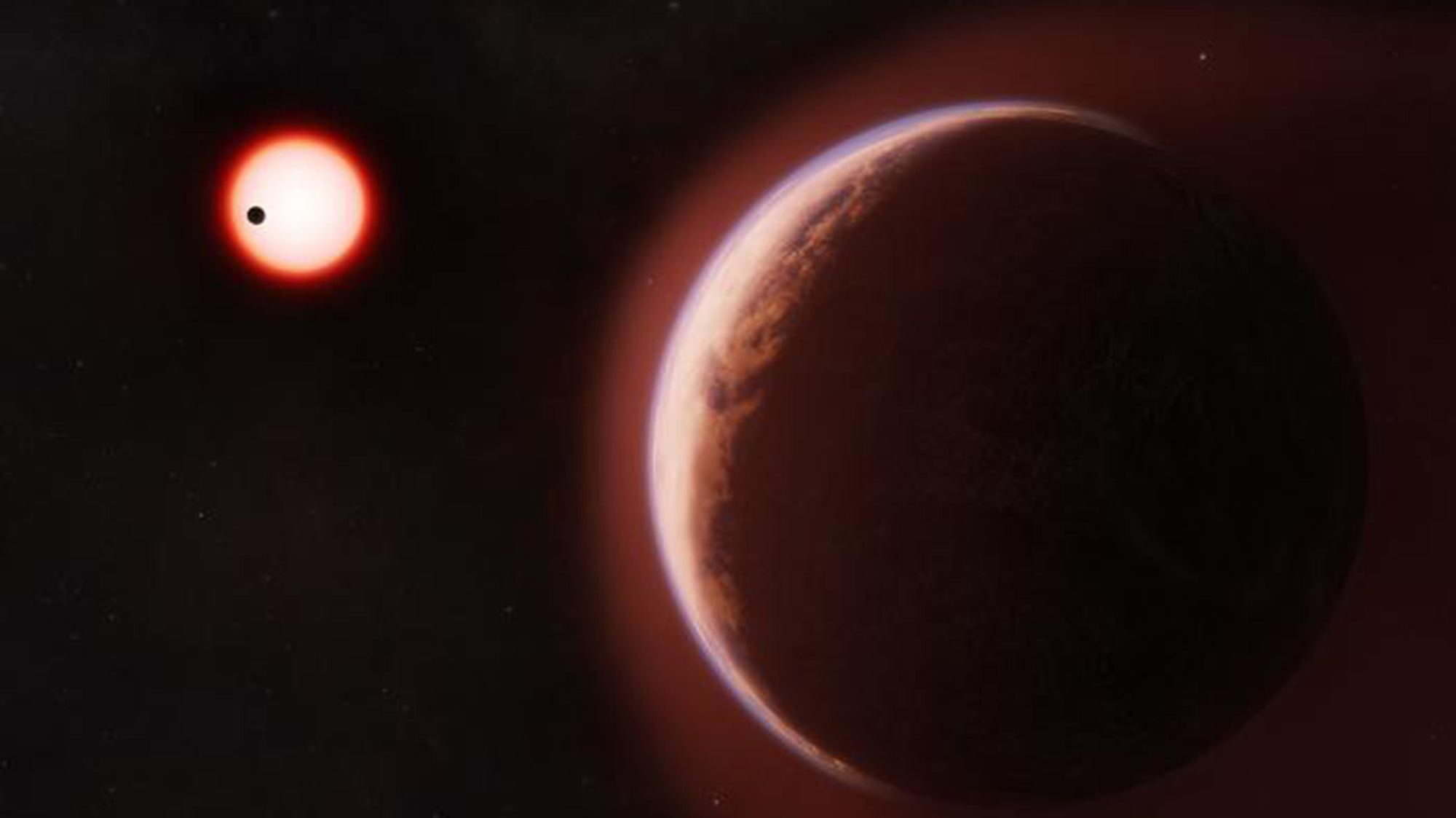
For exoplanet researchers, that is a major distinction. Many rocky planets found around red dwarfs are exposed to intense stellar activity, especially early in their histories. Such activity can strip atmospheres away. If LHS 1140 b has preserved one, it becomes an important test case for models of atmospheric survival, planetary evolution, and the long-term prospects of red-dwarf systems as homes for habitable worlds.

What the helium signal suggests
The source text says astronomers detected helium escaping from the planet. That kind of observation does not provide a full census of the atmosphere’s composition, and it does not directly reveal whether the surface has oceans, clouds, or a breathable mixture. What it does provide is a physically meaningful sign that a gaseous outer layer exists and is interacting with the environment around the planet.
Helium is useful in this context because escaping gas can be easier to detect than a static atmosphere seen edge-on against a star. If researchers can catch the planet during transit and identify a helium signature, they gain evidence that material is present above the planet and not merely inferred from indirect modeling. The result therefore strengthens the case that this is a persistent atmosphere rather than a speculative possibility.
That distinction matters for the next phase of exoplanet science. The field is moving from counting planets toward characterizing them. Researchers increasingly want to know which worlds are rocky, which have atmospheres, how those atmospheres behave, and which targets deserve the scarce observing time of major telescopes. A promising detection on LHS 1140 b immediately raises its scientific priority.
A careful step, not a declaration of life
The finding is easy to overread, so caution is essential. An atmosphere alone does not establish a friendly surface environment. Venus has a thick atmosphere and is extremely hostile. Mars has an atmosphere too, but it is thin and cold. The same principle applies to exoplanets: the presence of gas tells scientists that an important ingredient exists, not that the full recipe for life is in place.

There are also open questions about how thick the atmosphere is, what molecules dominate it, and how strongly the host star shapes its chemistry over time. Red dwarfs are common in the galaxy, making them attractive targets for habitable-zone searches, but they can be difficult neighbors. Their radiation and flaring histories may alter planetary atmospheres in ways that complicate simple comparisons with Earth.
Still, the result narrows the gap between theory and observation. For years, the idea of a rocky habitable-zone planet with a measurable atmosphere was mostly a target for future instrumentation. LHS 1140 b now looks like a real-world laboratory for that effort.

What comes next
The most immediate consequence of the detection is likely to be more scrutiny. Researchers will want follow-up observations to confirm the result, refine the atmospheric picture, and determine whether additional gases can be identified. Each new measurement would help move LHS 1140 b from an intriguing candidate to a benchmark world for comparative exoplanetology.
The broader consequence is strategic. The search for habitable planets is not only about finding the right orbital distance from a star. It is about finding planets that kept enough of their volatile inventory to sustain complex climate behavior over geological time. Evidence that one such world exists nearby, at least in astronomical terms, gives that search a more concrete shape.
For now, LHS 1140 b is best understood as a threshold discovery. It is not the announcement of a second Earth. It is a sign that astronomers are finally beginning to probe one of the hardest and most consequential questions in planetary science with real data: whether rocky worlds in habitable zones can hold onto atmospheres long enough to matter.
- The planet LHS 1140 b orbits about 48 light-years from Earth around a cool red dwarf star.
- A helium detection is being treated as the strongest evidence yet that a rocky habitable-zone exoplanet has an atmosphere.
- The finding could make LHS 1140 b a priority target for future atmospheric follow-up studies.
This article is based on reporting by Live Science. Read the original article.
Originally published on livescience.com