Seventeen Years of Climate Authority, Erased
In what environmental groups are calling one of the most consequential regulatory rollbacks in modern American history, the Environmental Protection Agency has moved to formally revoke its 2009 endangerment finding — the scientific determination that greenhouse gas emissions threaten public health and welfare. The action effectively demolishes the legal foundation upon which virtually all federal climate regulation has been built for nearly two decades.
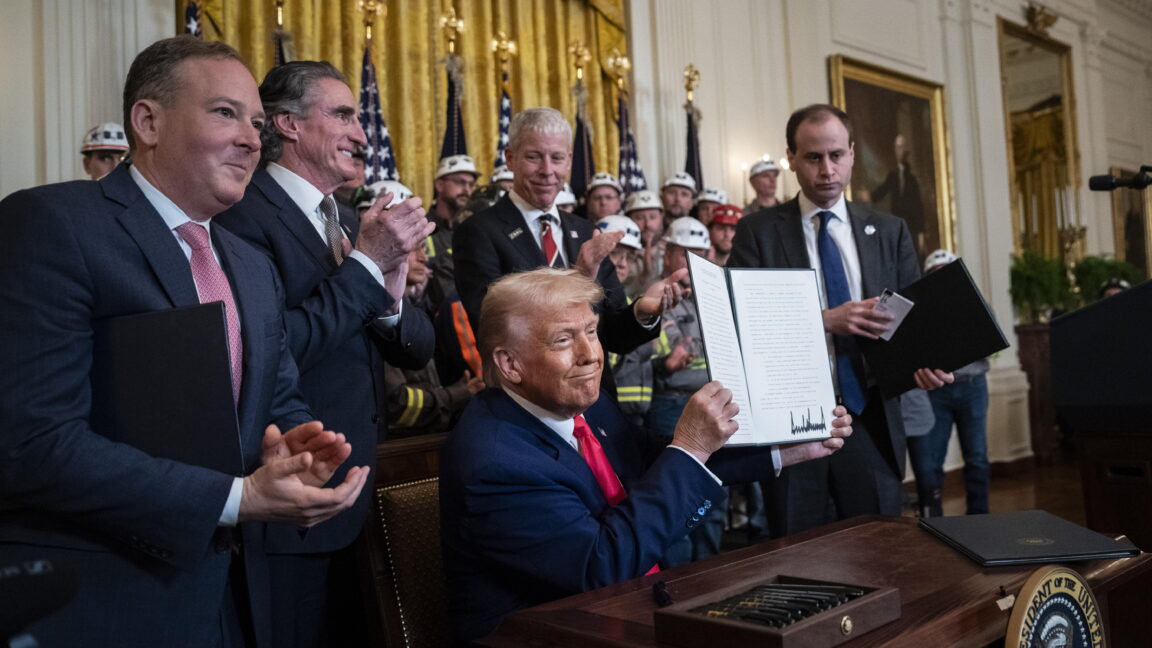
EPA Administrator Lee Zeldin joined President Trump at the White House to formalize the decision, fulfilling a directive the president issued via executive order on the very first day of his second term. The move comes on the heels of three consecutive years of record-breaking global temperatures, a fact that has made the timing particularly jarring for climate scientists and environmental advocates.
What the Endangerment Finding Actually Did
The original 2009 finding was not merely a policy statement — it was a formal scientific determination, rooted in years of research and public comment, that six key greenhouse gases (carbon dioxide, methane, nitrous oxide, hydrofluorocarbons, perfluorocarbons, and sulfur hexafluoride) endanger public health and welfare through their contribution to climate change. The EPA received more than 380,000 public comments during the rulemaking process before finalizing the determination on December 7, 2009.
That finding served as the legal linchpin for the EPA's authority to regulate climate pollution under the Clean Air Act. Without it, the agency loses its regulatory basis for controlling emissions from:
- Coal and natural gas-fired power plants
- Automobile and truck tailpipe emissions
- Methane leaks from oil and gas operations
- Industrial greenhouse gas emissions across multiple sectors
The EPA now argues that the Clean Air Act does not grant the agency legal authority to regulate greenhouse gases at all — a position that directly contradicts the Supreme Court's landmark 2007 ruling in Massachusetts v. EPA, which held that greenhouse gases are indeed air pollutants subject to regulation under the Act.

The Science Has Only Grown Stronger
In a development that underscores the political rather than scientific nature of the repeal, the National Academies of Sciences, Engineering and Medicine recently reassessed the evidence underpinning the 2009 finding. Their conclusion was unequivocal: the original determination was "accurate, has stood the test of time, and is now reinforced by even stronger evidence," according to NPR's reporting on the matter.
Since 2009, atmospheric carbon dioxide concentrations have risen from approximately 387 parts per million to well over 420 ppm. Global average temperatures have continued their upward trajectory, with the years 2023 through 2025 shattering heat records. Sea levels have accelerated their rise, extreme weather events have intensified, and the scientific consensus on human-caused climate change has only deepened.
The endangerment finding itself had been tested in court and survived. In 2012, a three-judge panel unanimously upheld the EPA's determination, dismissing all challenges. As recently as 2023, the Supreme Court declined to hear an appeal challenging the finding, leaving its legal standing intact.
A Legal Battle Looms
Environmental organizations have already signaled they will challenge the repeal in court. Legal experts contend that revoking a scientific finding that has been repeatedly validated by independent review and upheld by the judiciary will be extraordinarily difficult to defend. According to analysis by Earthjustice, the EPA would need to demonstrate that the underlying science has fundamentally changed — a case that runs directly counter to the National Academies' assessment.
A coalition of state attorneys general, led by Massachusetts Attorney General Andrea Campbell, has also announced opposition to the rescission, echoing the same state that brought the original Supreme Court case that paved the way for the finding in the first place.
Regardless of the legal outcome, the immediate effect is chilling. Federal climate regulations will face an uncertain future as court challenges work their way through the system, potentially stalling new emissions rules and undermining enforcement of existing ones. For the United States — the world's second-largest greenhouse gas emitter — the decision represents a dramatic retreat from climate action at precisely the moment scientists say it is most urgently needed.
This article is based on reporting by Ars Technica. Read the original article.

Originally published on arstechnica.com