
A New Measurement Shakes Up Diamond Physics
Diamond is famous as the hardest natural material on Earth, but under the right extreme conditions, it can melt. A new study published Aug. 13 in the journal Nature Physics has delivered the most precise measurement yet of diamond’s melting point, and the results suggest that previous experiments were off by more than 1,300 degrees Fahrenheit (700 degrees Celsius). The research team used a powerful ultraviolet laser to zap tiny plates of synthetic diamond, creating shock waves that raced through the samples.
The new, more accurate numbers could help improve nuclear fusion experiments and studies of giant planets, according to the researchers. The work may also resolve a long-standing puzzle in diamond physics that has persisted for two decades.
Why Diamond’s Melting Point Matters
Nuclear fusion is the process that powers stars, and it is also a potential energy source for the future. To develop fusion, researchers need to understand how materials behave under the extreme conditions created by powerful lasers. Diamond is one such material. Understanding how diamond responds to shock waves from lasers is an important part of developing nuclear fusion.
Researchers have put a lot of effort into developing models that describe and predict how diamond behaves. Most of the time, experimental data and theoretical models match up pretty well. But diamond is weird. There have been some strange discrepancies scientists haven’t been able to explain. The biggest one is a 2,240 F (1,244 C) difference — roughly 20% — between previous experimental data and model-predicted melting temperatures of diamond.
There has also been debate about whether diamond reorganizes its atoms into a different kind of solid carbon before turning into a liquid at the end of the melting process. These discrepancies have been difficult to resolve because the conditions under which diamond melts are so extreme that measuring them in labs on Earth is extraordinarily difficult.

The Challenge of Measuring Diamond’s Melting Point
Diamond’s melting point is not easy to pin down. The temperatures and pressures required are far beyond everyday experience, and only powerful lasers can create the necessary shock waves. For two decades, scientists have pursued a more accurate measurement. The new experiments may finally offer the solution.
In the study, scientists zapped tiny plates of synthetic diamond with an ultraviolet laser. The laser created shock waves so powerful that, as they passed through the samples, the diamond was driven to extreme conditions. The team was able to melt the diamonds and take some of the most precise measurements of the mineral’s elusive melting point.
The result was striking: previous experiments had been off by more than 1,300 F (700 C). That is a substantial correction, and it could change how researchers model diamond’s behavior in fusion experiments and in the interiors of giant planets.
How the Laser Experiment Worked
The experiment relied on synthetic diamond plates, which were zapped by an ultraviolet laser. The laser pulses generated shock waves that traveled through the diamond. As the shock waves passed through the samples, they created the extreme temperatures and pressures needed to melt the diamond. By observing the melting process, the scientists obtained the most precise measurement of diamond’s melting point to date.
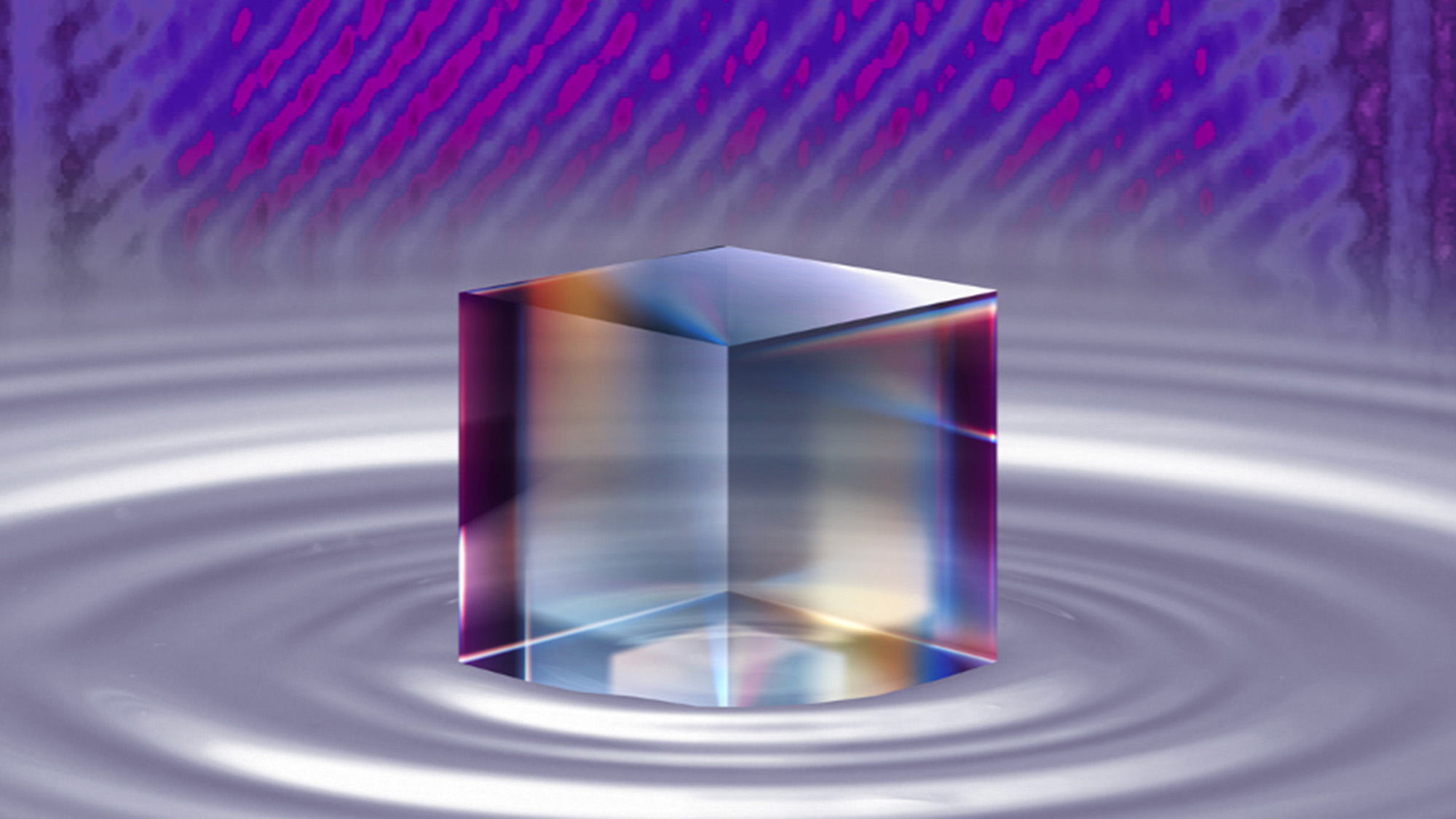
The new data suggests that the previous experimental values were too far from the true melting point. This finding may help explain why earlier experiments disagreed with theoretical models. If the new measurement is correct, it could bring experiments and models into much better agreement.
Implications for Fusion and Planetary Science
Nuclear fusion is the process that powers stars and is a potential energy source for the future. Researchers have put a lot of effort into developing models that describe and predict how diamond behaves under the extreme conditions created by lasers. More accurate numbers for diamond’s melting point could help improve fusion experiments.
Diamond is used in experiments where lasers create shock waves, and understanding its response is important for developing fusion. The new measurement could also aid studies of giant planets. Planetary scientists study the interiors of giant planets, where extreme pressures and temperatures may cause materials like diamond to melt or change phases. Better data on diamond’s melting behavior could improve those models.
The study, published Aug. 13 in Nature Physics, may finally offer the solution scientists have pursued for two decades. The new experiments could reconcile the long-standing discrepancy between experimental data and theoretical predictions.

What the New Measurement Means
The corrected melting point is more than 1,300 F (700 C) different from previous experimental values. That is a huge margin, especially for a material as well-studied as diamond. The finding highlights how extreme conditions can reveal gaps in scientific understanding. Even the hardest natural material on Earth can surprise researchers when it is pushed to its limits.
The new measurement could also have practical implications. In fusion research, diamond is used in laser-driven experiments. If models of diamond’s behavior are based on incorrect melting data, then predictions for fusion experiments could be off. The new data could lead to better models and more reliable experiments.
For planetary science, the revised melting point could help researchers interpret observations of giant planets. The interiors of these planets may contain carbon in various forms, and knowing when diamond melts is important for understanding their structure and evolution.
Key Takeaways
- Scientists used an ultraviolet laser to create shock waves in synthetic diamond plates, producing the most precise measurement of diamond’s melting point yet.
- The new measurement shows previous experiments were off by more than 1,300 F (700 C).
- The results may resolve a long-standing 2,240 F (1,244 C) discrepancy between experimental data and theoretical models.
- More accurate data could improve nuclear fusion experiments and studies of giant planets.
- The study was published Aug. 13 in the journal Nature Physics.

Conclusion
The new laser experiment has delivered a much-needed correction to diamond’s melting point. After two decades of uncertainty, researchers may now have a clearer picture of how diamond behaves under extreme conditions. The finding could help advance fusion energy research and deepen our understanding of giant planets. As the study shows, even the most familiar materials can hold surprises when examined under the most extreme conditions.
This article is based on reporting by Live Science. Read the original article.
Originally published on livescience.com