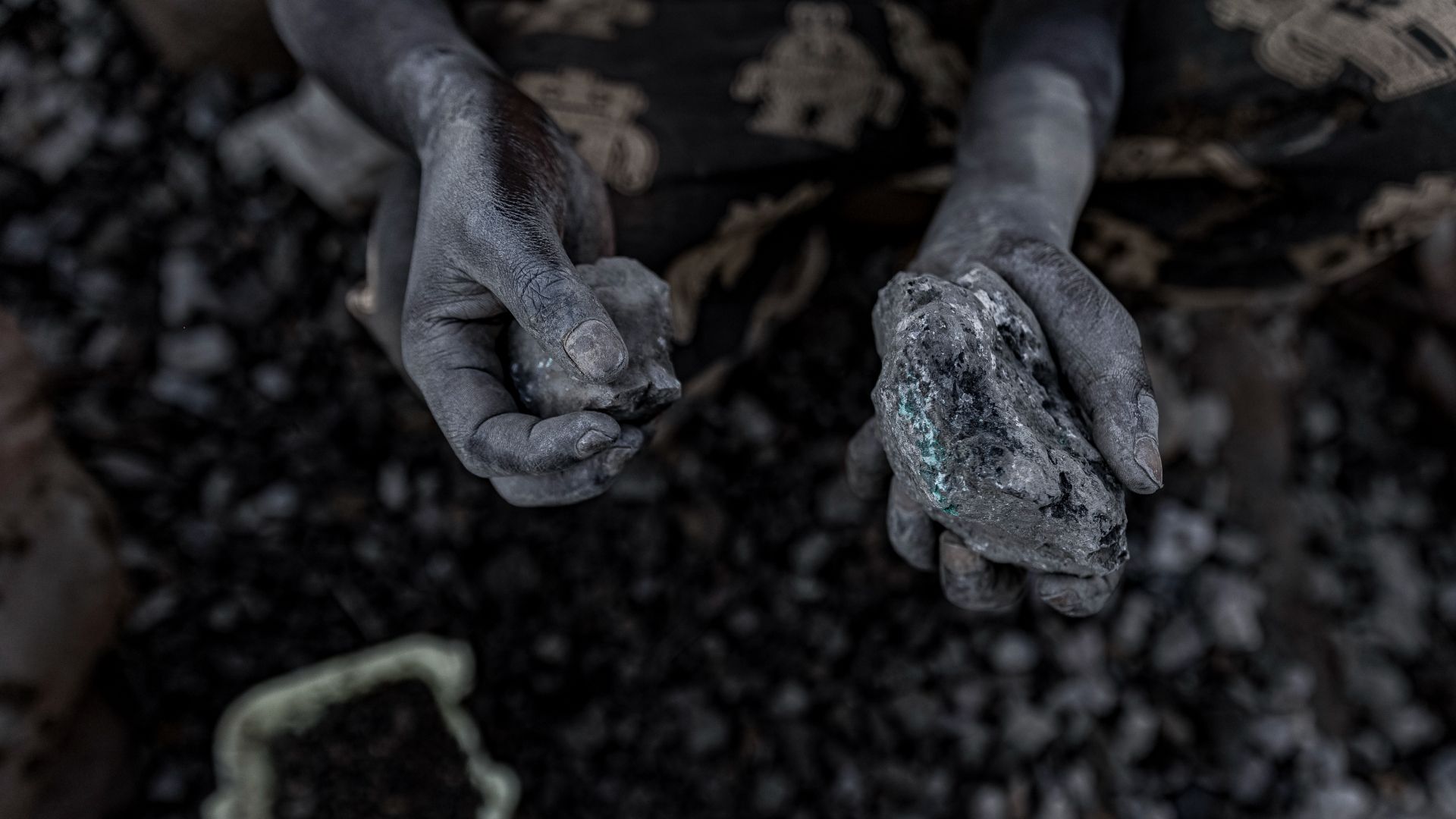
The cleaner-tech supply chain has a dirtier footprint than many buyers see
The global push into batteries, AI infrastructure, wind turbines, electric vehicles, and advanced electronics depends on a set of minerals that have become central to industrial policy. Lithium powers batteries. Cobalt helps stabilize them. Copper carries electricity. Rare earth elements support a range of digital and energy technologies. But according to researchers at the United Nations University Institute for Water, Environment and Health, the communities living near many of these extraction sites are paying a steep price.
The authors describe the emergence of “sacrifice zones” around critical mineral mines, places where the benefits of the energy and technology transition are exported elsewhere while the costs stay local. Their warning is that without tighter monitoring and regulation, the supply chains behind the next generation of clean and digital systems could worsen health and water conditions for some of the world’s poorest communities.
Water stress sits at the center of the problem
The article frames water as one of the most immediate fault lines. Critical mineral extraction is water-intensive, and many of the minerals most essential to modern technology also carry toxic risks. That means mining can pressure already fragile water systems in multiple ways: by consuming large volumes, by degrading water quality, and by leaving nearby communities exposed to contamination that undermines both health and livelihoods.
This is especially significant because many of the world’s major mining regions are also places where governance capacity, environmental enforcement, or local political leverage may already be limited. The result, according to the researchers, is a familiar extractive pattern: global demand accelerates, supply chains celebrate strategic importance, and frontline communities absorb polluted water, weaker public health, and deeper precarity.
A transition can still repeat older extractive mistakes
One of the article’s strongest arguments is that the green and high-tech transition is not automatically just because its end uses are cleaner. The authors explicitly connect today’s mineral boom to older energy histories in which producing regions bore the social and environmental damage while consuming regions captured most of the economic gains. That comparison matters because it challenges a common assumption that replacing fossil systems with battery and digital systems is enough on its own to make the transition equitable.
Instead, the researchers argue that the same structural risks can reappear under a new banner. If supply chains are rewarded mainly for speed, scale, and geopolitical resilience, then local pollution, labor abuse, and health damage can remain externalized. The article references harms including polluted water, child workers, and birth defects, presenting them as part of a broader pattern rather than isolated incidents.
Why this matters for AI and energy alike
The issue is not confined to electric vehicles or renewable energy. The article explicitly places AI, defense systems, consumer electronics, and other technologies inside the same materials economy. That broadens the relevance of the warning. Critical minerals are no longer a niche environmental topic. They are becoming foundational to nearly every strategic technology agenda, from grid modernization to military hardware to digital infrastructure.
That convergence raises the stakes for oversight. If governments and companies want secure and scalable supplies of these materials, they will face growing pressure to show not only where minerals come from, but under what conditions they are extracted and processed.
The next phase of the transition needs governance, not just demand
The source article does not argue against mining outright. Its point is that mineral demand is rising fast and that the world needs stronger systems to monitor and regulate what follows. In practice, that means supply chains cannot be judged solely on whether they enable decarbonization or technological progress. They also have to be judged on whether they protect water, workers, and communities at the point of extraction.
That is the harder version of transition politics now taking shape. The world wants more batteries, more electrification, more AI capacity, and more strategic autonomy. The question raised by this report is whether those ambitions will be built on transparent and enforceable standards, or on sacrifice zones that remain largely invisible to the consumers and governments benefiting from them.
This article is based on reporting by Live Science. Read the original article.
Originally published on livescience.com